
The short version
Two days is the right length for Craiova, and it is right for a specific reason: the city is one day and Oltenia is the other. Trying to stretch the city across both leaves you walking Calea Unirii for the third time on a Sunday afternoon; trying to compress both into one leaves you doing neither properly.
- Day one — the city, on foot. The square, the Brâncuși room, Casa Băniei, Calea Unirii, Romanescu Park. No taxis, no car, about eleven kilometres of flat walking across the whole day.
- Day two — one trip out, by car. Pick exactly one of: Târgu Jiu for Brâncuși, Horezu for UNESCO, Drobeta for the Danube and Rome, or Segarcea for wine if you want a half-day and a lie-in.
Checked October 2026. Drive times here are measured on the actual roads rather than taken from a straight line. Museum hours and ticket prices in Craiova and across Oltenia are not reliably published — the honest advice throughout is to telephone on the morning, and the reasons are set out below.
Day one, hour by hour
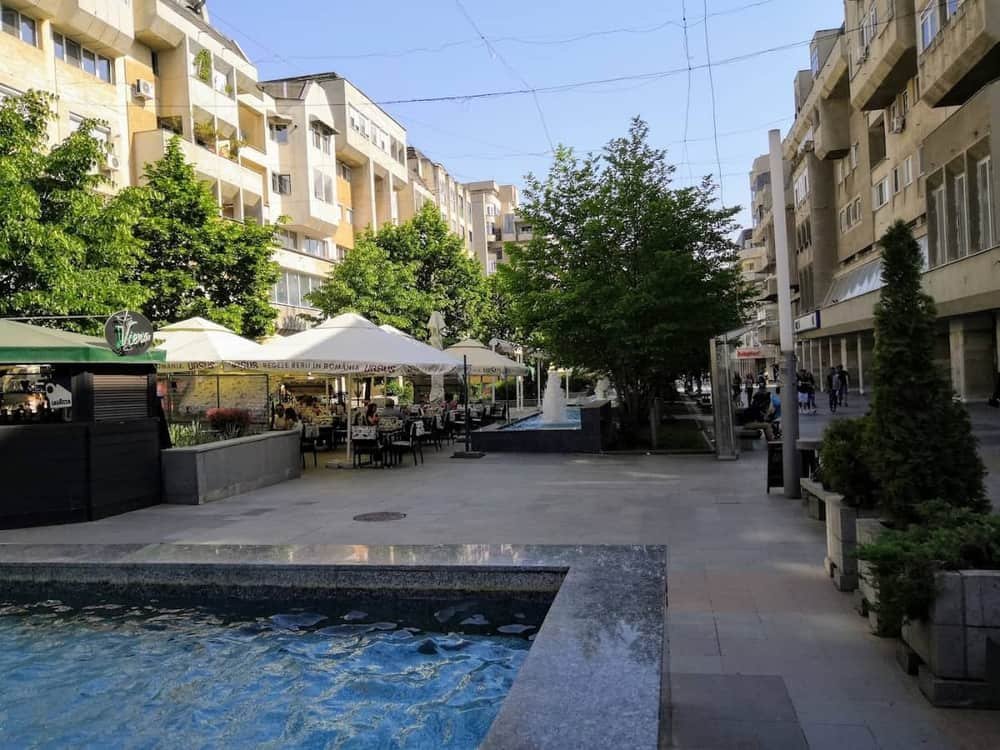
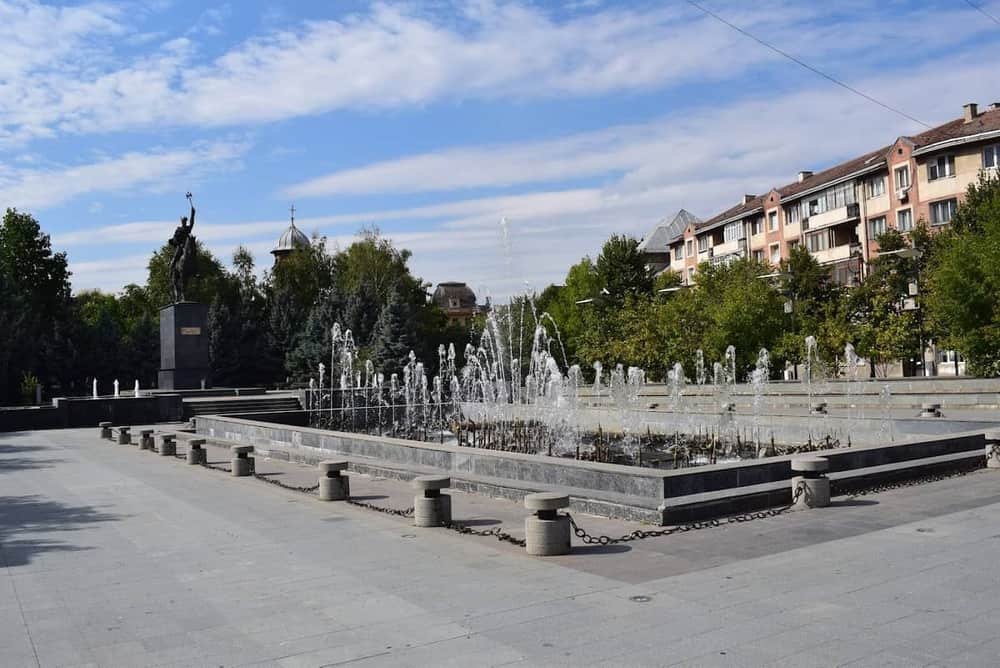
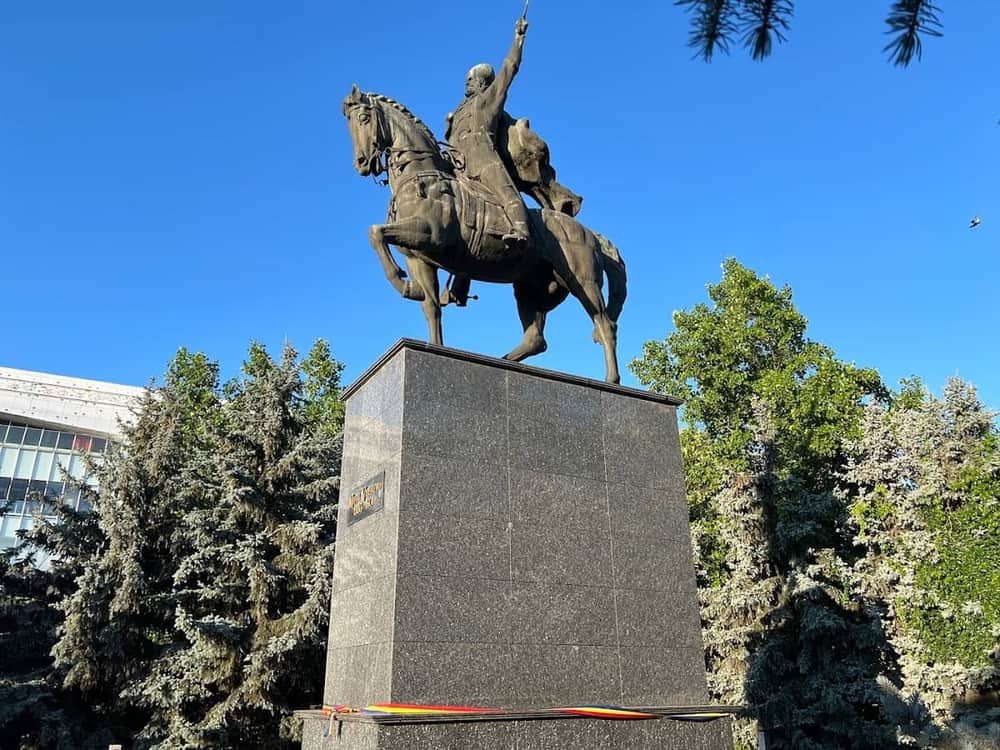
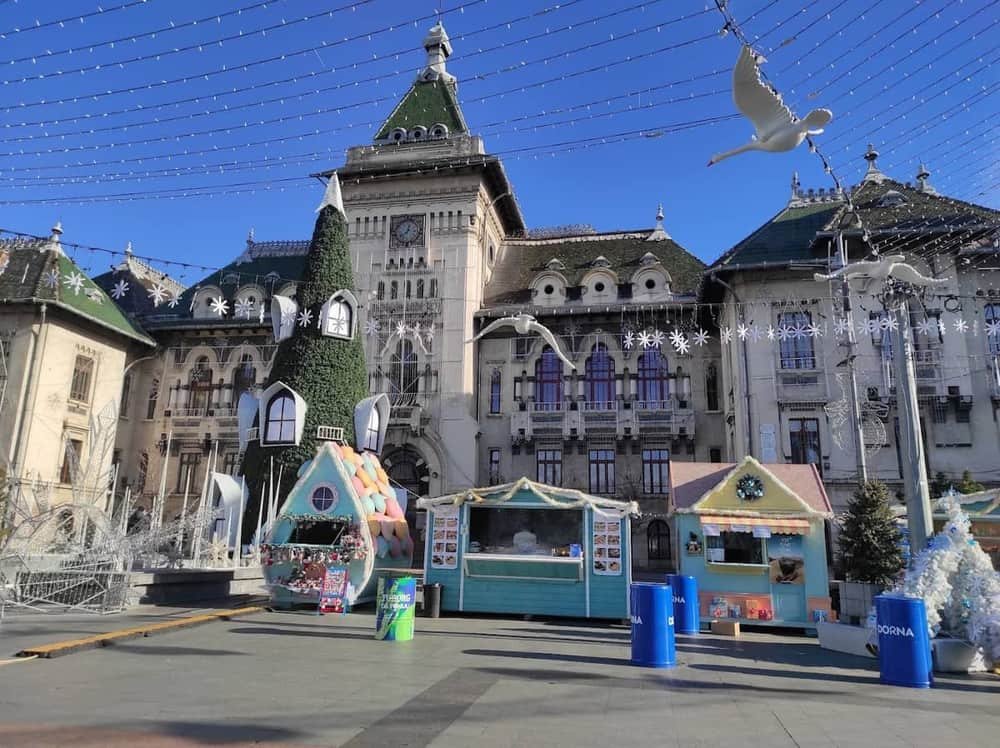
The full timed version is in One day in Craiova, and the short form is this. Start at Piața Mihai Viteazul at about half past nine, while the terraces are still empty and the light is on the facades rather than in your eyes. The equestrian statue of Michael the Brave is at one end and the Administrative Palace closes the view at the other.
Then the Art Museum, two minutes north in the Jean Mihail Palace of 1900–07. Go to the Brâncuși room first, while you are fresh: six originals, among them the student bust of 1898 and *The Kiss* of 1907. He enrolled at the School of Arts and Crafts in this city in 1894, four streets from where those pieces now stand, which is why the collection reads as the beginning of a story rather than a selection from one.
Before lunch, the museum quarter: the Ethnographic Museum in Casa Băniei — the oldest building in Craiova — and the Oltenia Museum of History and Archaeology with its natural sciences wing.
Lunch on or just off Calea Unirii. Casa Ghincea on Madona Dudu is the city's reference for Romanian food; Maestro and Ardelenesc Oșanu' are both on Strada Olteț in the old town.
The afternoon belongs to Nicolae Romanescu Park, ten minutes south. Ninety-six hectares laid out between 1900 and 1903 by the French landscape architect Émile Redont, whose design took a gold medal at the 1900 Paris World Exposition before a tree went in. Free, open at any hour, with lakes, a suspension bridge, a mock ruined castle and the zoo inside it. The full parks guide covers the rest of the green city.
Finish on Calea Unirii in the evening light and eat in the centre. Craft on Eugeniu Carada is the best-reviewed bar in the city; Strada Traian Demetrescu, two minutes off the square, is where the rest of the drinking happens.
Places in this piece

Day two: choosing the trip out
This is the decision that makes or breaks a two-day visit, and the honest framing is that these four options are not interchangeable. Pick on what you actually like, not on what is closest.
Târgu Jiu — if you want the one unarguable masterpiece
110 km north, measured at 1 h 50 min. Brâncuși's Heroes' Way runs 1.3 km across the town on a single straight axis: the Table of Silence by the Jiu, then the Gate of the Kiss, then — through the central park and over the main street — the Infinite Column, cast in 1938 and 29.33 metres high. It was built as a First World War memorial, it is entirely free, it is outdoors at any hour including after dark when the Column is lit, and since 2024 the whole ensemble has been a UNESCO World Heritage Site.
Walk it in Brâncuși's intended order at an unhurried pace and it takes about twenty-five minutes. Most visitors photograph the Column and leave, which misses the work entirely: the axis is the piece. Pair it with day one's museum visit and the two halves of his life bracket your weekend — see Brâncuși in one day for the case.
If you have the appetite, Tismana monastery is 20 km further on: the oldest surviving monastic foundation in Wallachia, begun by Saint Nicodim in the 1370s on a rock above the gorge, with the waterfall behind the church. That makes a genuinely full day. The Târgu Jiu area page has where to eat.
Horezu — if you want UNESCO and craft rather than art
113 km north-east, about 1 h 57 min. Two UNESCO entries in one small town. Hurezi Monastery is the largest and most complete thing Constantin Brâncoveanu built — founded 1690, finished around 1697 — and the building that named the entire Brâncovenesc style. It was inscribed in 1993 under reference 597, it is a working convent, entry to the courtyard is free, and services take precedence over visitors.
The second entry is not a building at all: Horezu ceramics went onto UNESCO's intangible heritage list in 2012, and the workshops are in the village and along the road. Buying from a potter directly costs less than the roadside stalls and is the point of the trip.
It pairs with Peștera Muierilor at Baia de Fier on the same road — but *not* with Târgu Jiu, which is two hours away on the opposite side. People try. Do not.
Drobeta-Turnu Severin — if you want the river and the Romans
112 km west, measured at 1 h 45 min. Apollodorus of Damascus built Trajan's Bridge here in 103–105 AD to carry the Roman army into Dacia, and for a thousand years afterwards it was the longest arch bridge ever built. One pier stands on the Romanian bank, free and in the open, with its twin visible across the Danube in Serbia. The Iron Gates Region Museum next door explains it, and the medieval Fortress of Severin is the other major site.
This is the trip with the most actual town attached to it — seventeen listed sights, including the Water Castle of 1913 and the Fântâna Cinetică, the kinetic fountain that half the internet wrongly places in Craiova. See the Drobeta area page.
Segarcea — if you want a lie-in
29 km south, 34 minutes. The only genuine half-day on the list: leave after breakfast, be back for lunch, and spend the afternoon on whatever you did not finish on day one. Crama Domeniul Coroanei Segarcea was planted as one of the royal Crown Domains and is the best-known producer in Dolj. Tastings need booking ahead, because there is nothing else in Segarcea to fall back on. The wine page has the wider picture.
One hard rule: Romania enforces a zero-tolerance drink-drive limit and the road back is a main road. Designated driver, or a taxi from Craiova.
Where to stay nearby
Live prices and availability on a map centred on this exact spot — hotels, apartments and hostels, so you can judge the walk from here rather than guess from an address.
Bookings made through this map earn us a commission. Your price is unaffected.
What this plan deliberately leaves out
Rânca and the Transalpina. 134 km and a measured 2 h 15 min, at 1,600 m. It is the best thing within reach of Craiova in July and August, when the city averages a 30 °C high — but it is a long day for a two-day trip, and the high road over the Urdele pass is shut for winter. Save it for three days, or make it the whole of day two and accept that you will see nothing else.
Calafat and the Danube crossing. 89 km south, 1 h 18 min, and honestly the weakest of the out-of-town options measured as a sight. Worth it only if crossing into Bulgaria for the afternoon appeals.
A second city day. Craiova's centre is genuinely compact — that is its virtue — and it does not reward a second pass. If you have three days, the third is another trip out, not more Calea Unirii.
When to come
Mid-November to early January is the standout, and not by a small margin. Craiova's Christmas market opens in mid-November — the 2026 edition on 13 November, running to 3 January 2027 — which is roughly a fortnight before Sibiu, Bucharest and Brașov. For those two weeks it is the only large Christmas market open in Romania, and hotel rates are still at off-season levels until the opening day. That fortnight is the best value in the entire year.
Late May every second year is the other one: the International Shakespeare Festival at the National Theatre, which in 2026 filled eleven days with close to five hundred events across more than sixty venues. Next edition 2028.
July and August are hot — 30.0 °C and 30.1 °C average highs, on 358 and 338 hours of sun. That is not a reason to stay away, but it changes the plan: see how to beat the heat, and read the month-by-month weather before booking.
Getting here and getting around
From Bucharest it is about 230 km — the full comparison of train, car and coach is in Bucharest to Craiova. Craiova airport (CRA) is eight kilometres east and Wizz Air flies most of the routes; if your trip is Oltenia rather than Transylvania, flying into CRA instead of Otopeni saves roughly four hours each way.
In the city you need nothing but shoes. For day two you need a car — none of the four options above is served well enough by train or bus to attempt without one, which is the single most important practical fact on this page. Getting around has the detail, and where to park covers the one genuine annoyance of the pedestrian centre.
On the opening hours, one more time
Across Oltenia almost nothing is citably published. The cave at Baia de Fier circulates its timetable as a photograph of a printed sheet. Hurezi's own page has carried a placeholder e-mail address for years. The aggregators quote the same cave at both 5 and 20 lei with four different closing times, and the Art Museum in Craiova does not publish a dependable schedule at all.
So: the distances and drive times on this page are measured and dated. The historical facts are stable and stated plainly. Anything that is an hour or a price, you telephone about on the morning you intend to go. That is not caution for its own sake — it is the difference between a good second day and a two-hour drive to a locked door.









