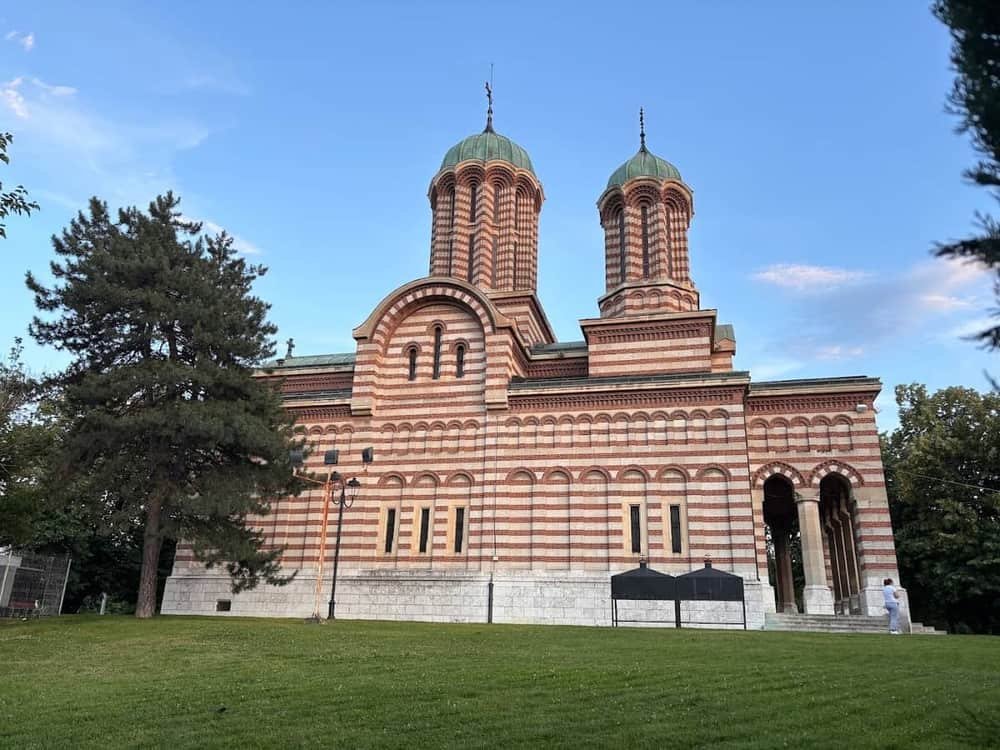
Why Craiova looks like this
Between roughly 1880 and 1914, Oltenia's landowners got rich on grain and spent the money on French architects. That is the whole explanation, and it is why a city on the Danubian plain has a centre that looks like a provincial French town with better weather.
The money came from land. The taste came from Paris. The result is the most coherent Belle Époque street in southern Romania, and almost nobody photographs it, because the people who write about Romanian architecture go to Sibiu and Brașov for Saxon Gothic and to Bucharest for the interwar.
The one thing to see
The Jean Mihail Palace, on Calea Unirii, now the Art Museum. It is the most complete surviving interior of the period in the city, and it is the only one you can walk into without an appointment — which is the practical reason it is first on this list.
Inside are six original Brâncuși works including The Kiss, which means the building gives you the architecture and the single most important thing in the city in the same hour. The Art Museum guide.
Places in this piece

The street itself
Calea Unirii is the set piece: a long pedestrianised run of façades built within a generation of each other, which is what gives it coherence. Most European cities of this size have three good buildings scattered across a centre. Craiova has a street.
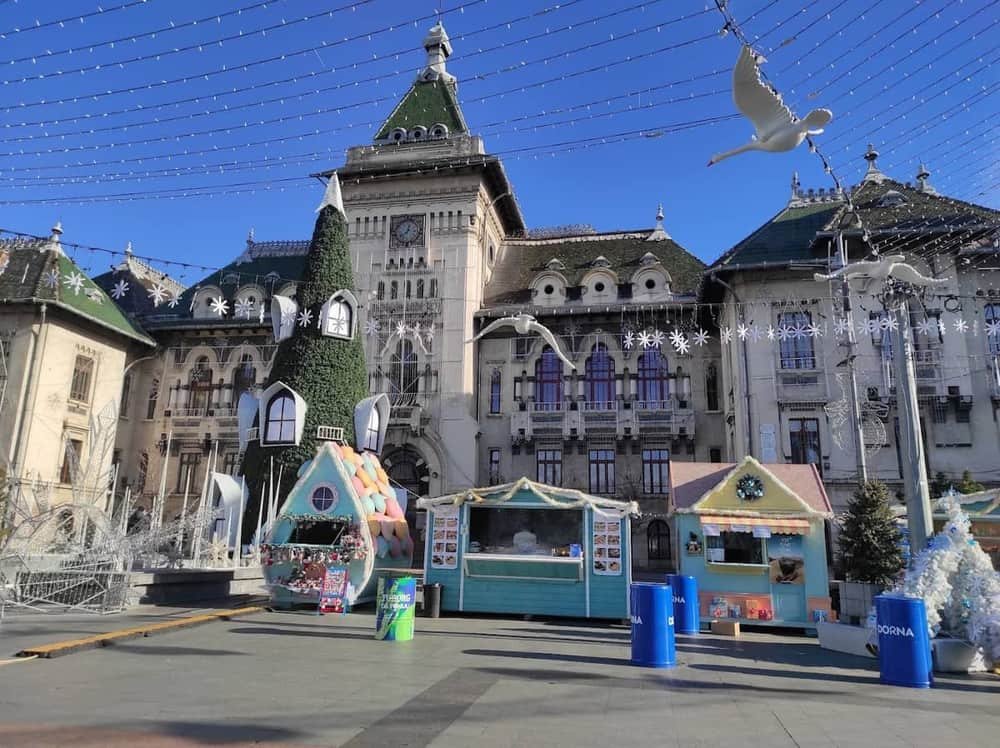
The Administrative Palace is the civic anchor — the big one at the end that appears in every photograph of the city that does exist.
Palatul Ramuri is the other named palace on the stretch and the one visitors walk past.
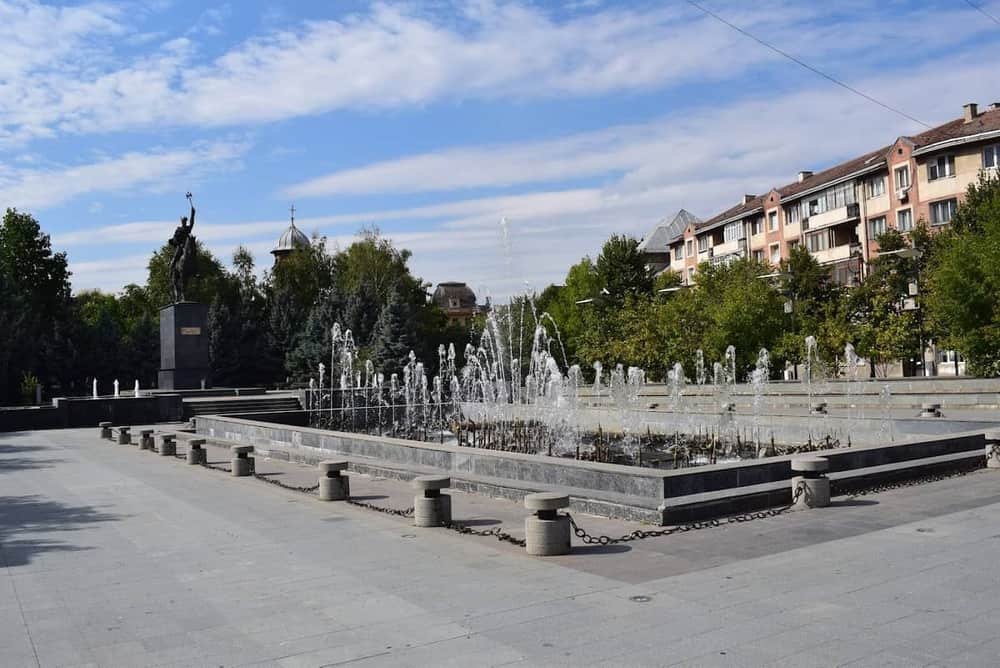
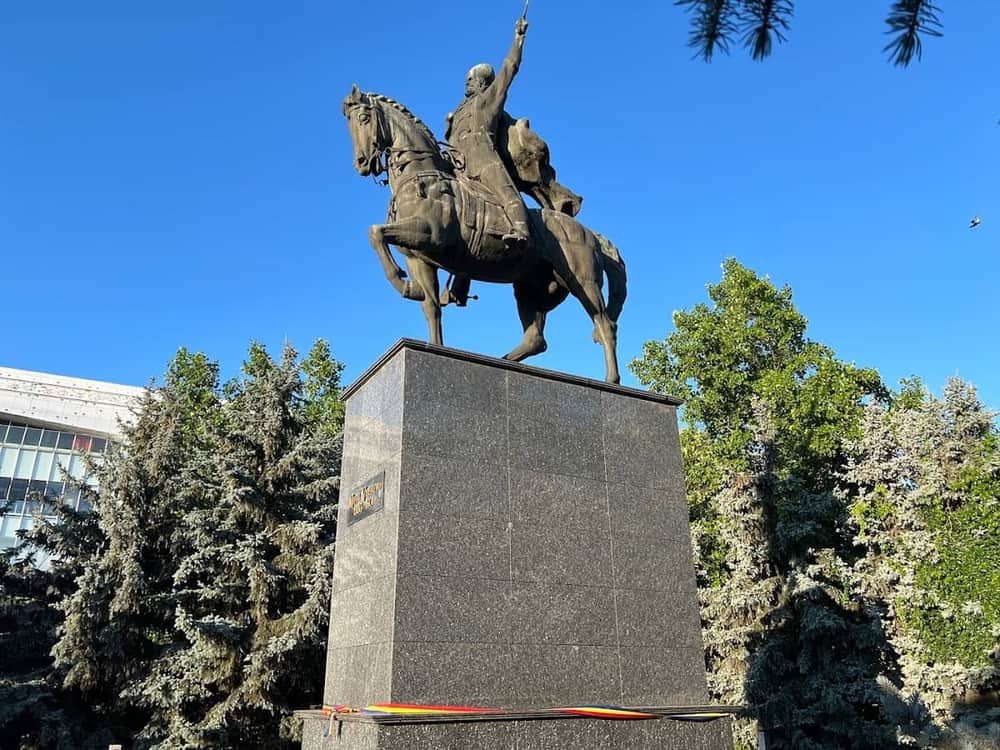
Mihai Viteazul Square is where it all converges, with the equestrian statue in the middle. In winter the Christmas market fills it, which is the one time of year the architecture gets photographed by accident.
How to look at it
Go early. The best hour for the façades is the first one, before the street fills and while the light is low along it. This is the single most useful piece of advice on this page and it costs nothing.
Look up. The ground floors have been shop-fronted for a century and tell you nothing. The storeys above them are intact in a way that surprises people — ironwork, window surrounds, the whole French vocabulary.
Walk it twice, in both directions. Façades read differently depending on which way the light hits, and the street is short enough that this is fifteen minutes rather than an expedition.
Fog is the enemy, not rain. The Oltenian plain holds low cloud for days in winter, and it flattens exactly what you came to see. Craiova in winter and the weather page are honest about it; Craiova in the rain has the indoor fallback.
Where to stay nearby
Live prices and availability on a map centred on this exact spot — hotels, apartments and hostels, so you can judge the walk from here rather than guess from an address.
Bookings made through this map earn us a commission. Your price is unaffected.
The other layers
The Belle Époque is the headline but not the whole city.
Older. Casa Băniei is the oldest civil building in Craiova and predates everything above by centuries. It now holds the ethnographic collection — Casa Băniei and the Oltenia Museum.
Religious. The Metropolitan Cathedral and the older churches scattered through the centre are a separate tradition entirely, and worth their own walk.
The park. Romanescu is the same era and the same impulse — 96 hectares laid out around 1900 in the French landscape manner, with a lake, a hippodrome and a suspended bridge. It is the Belle Époque project the city is proudest of, and it is a park rather than a building. The park guide.
Later. The socialist decades added the housing blocks that most of Craiova actually lives in, out in Craiovița Nouă, Rovine and Brazda lui Novac. That is a different city and a different walk.
Where this sits regionally
The same money built the same thing elsewhere in Oltenia, at smaller scale, and two examples are worth the drive:
Calafat, 89 km south — the Marincu Palace, built by a local landowner at the turn of the century and now the town museum. It is the same architectural moment as Calea Unirii, transplanted to a river town.
Segarcea, 29 km — the Crown Estate, which is the aristocratic rather than mercantile version of the same period.
Distances measured from Piața Mihai Viteazul and dated on the Oltenia page.
If you only have an hour
Start at the square. Walk the length of Calea Unirii looking at first-floor level. Go into the Art Museum. That is the city's architectural case, made completely, in sixty minutes — and it is the first half of one day in Craiova.