The short version
Craiova is the best short-notice weekend out of Bucharest that most people in Bucharest have never considered, and the reason is arithmetic: 230 km, under three hours by car, and a centre you can cover on foot in twenty minutes. You leave Saturday morning and you are drinking coffee on Calea Unirii before eleven.
- Friday evening or Saturday morning out, Sunday evening back. Two nights, or one if you leave early.
- By car: A1 motorway then DN65 and DN6, about 230 km across flat country. No mountain pass, no serious gradient.
- By train: from București Nord on the line through Videle and Roșiori, arriving at Piața Constantin Brâncuși in the city — twenty-five minutes' walk from the centre, not a ring road.
- The weekend that justifies the trip: mid-to-late November, for the Christmas market, which opens about a fortnight before Bucharest's own.
Checked October 2026. The 2026 market dates are confirmed. Drive times in the Oltenia section are measured on the roads rather than taken from a straight line, and museum hours in Craiova are not reliably published — the reasons are in the prices page.
Getting there, and which way to pick
The full comparison is in Bucharest to Craiova. For a weekend specifically:
Drive if the weekend includes Oltenia. And it should, at least on the second day. The road is A1 then DN65 and DN6 — flat, straightforward, no pass to cross — and a car is the thing that turns Craiova into Oltenia. Without one you are confined to the city, which is one good day rather than two.
Take the train if the weekend is the city alone. It is one of the better main lines in the country, you arrive in the centre rather than at the edge, and you skip the one genuine annoyance of a Craiova weekend, which is parking in a pedestrianised core. Craiova without a car makes the case properly.
The coach is cheapest and slowest, and arrives in the same square as the train.
Places in this piece

The two-night weekend
Saturday morning: the city
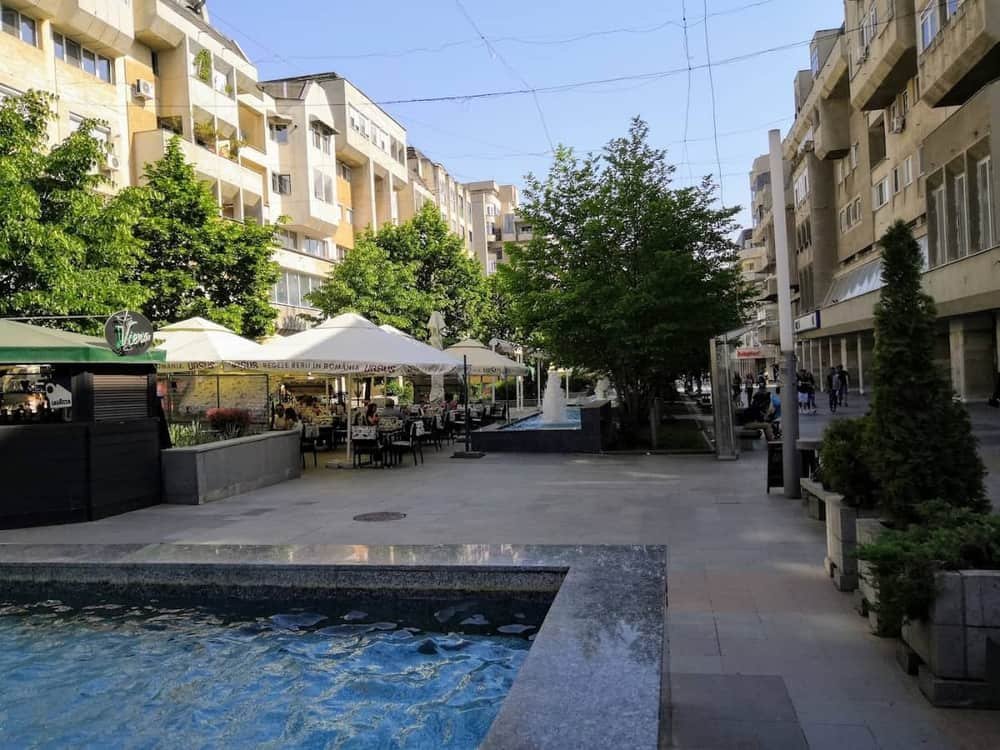
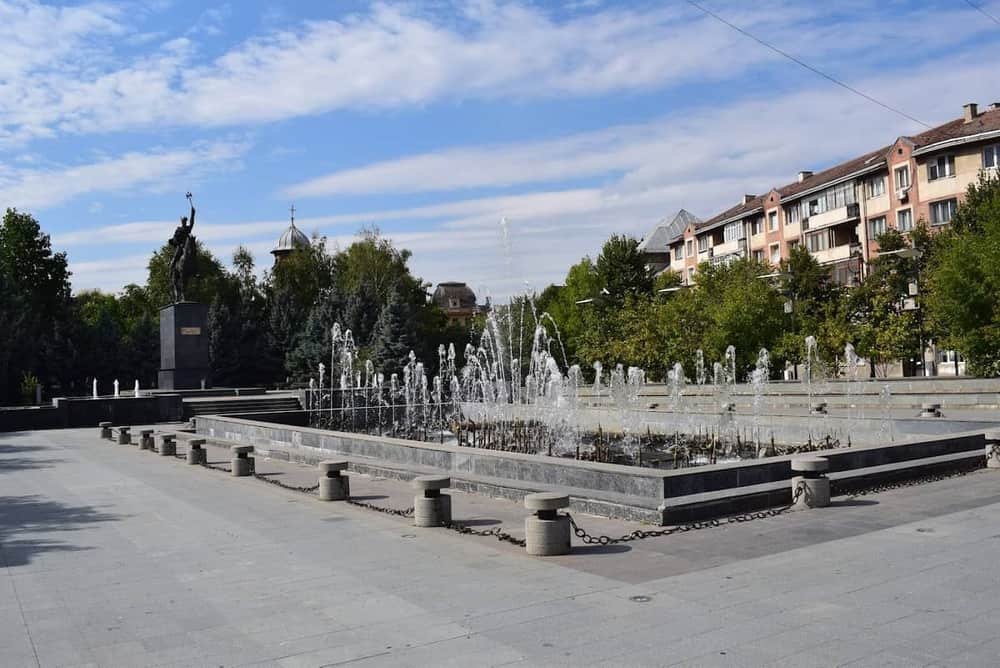
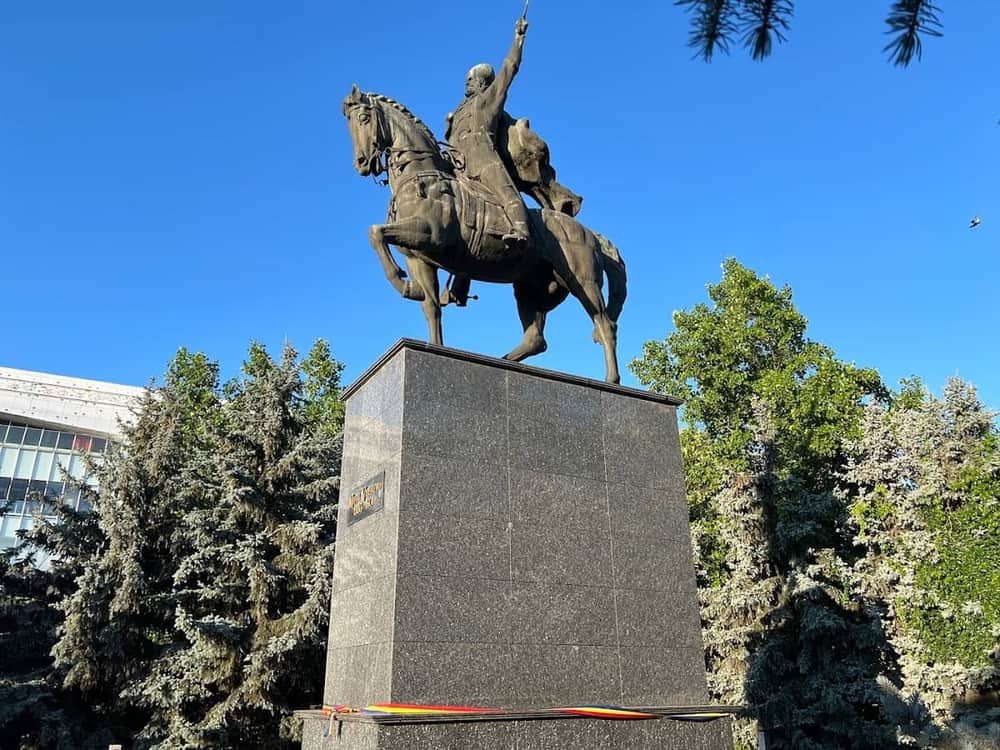
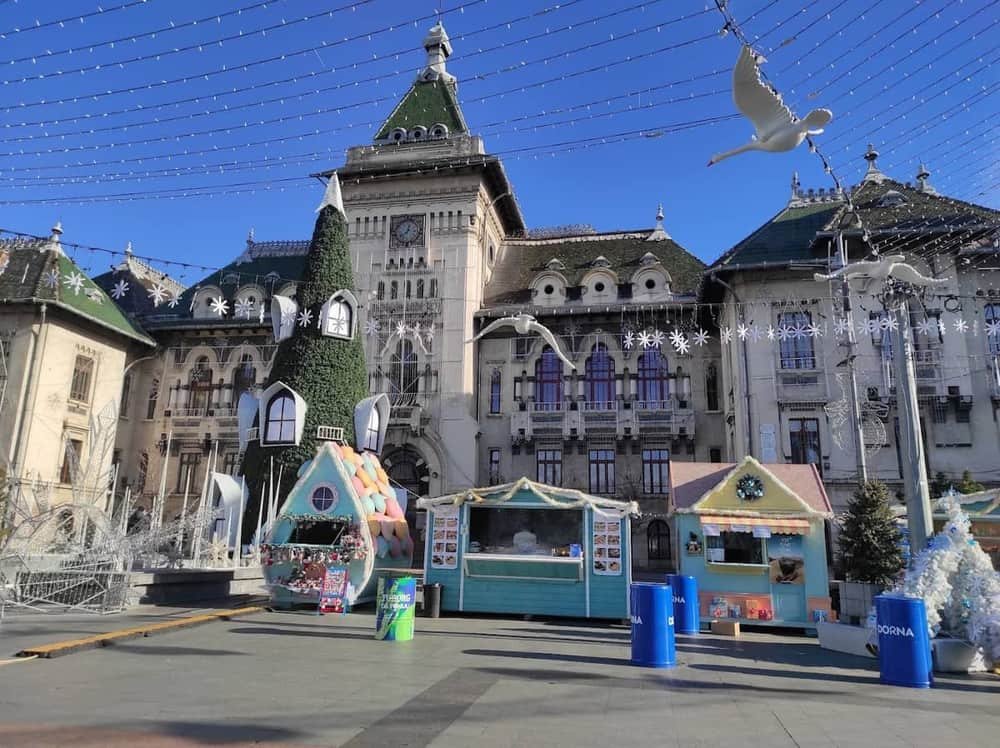
Arrive by eleven and start at Piața Mihai Viteazul, the main square at the top of Calea Unirii, with the equestrian statue of Michael the Brave at one end and the Administrative Palace closing the view. Calea Unirii is pedestrianised and is where Craiova's nineteenth-century grain money went — the densest run of belle-époque facades in southern Romania outside Bucharest.
Then the Art Museum, two minutes north in the Jean Mihail Palace of 1900–07. Go to the Brâncuși room first: six originals, among them *The Kiss* of 1907 and a student head modelled in 1898, made while he was learning to carve four streets away. This is the single most distinctive thing in the city and the reason a weekend here is not interchangeable with a weekend anywhere else. Ring ahead — the museum does not publish a dependable timetable.
Lunch on or just off Calea Unirii: Casa Ghincea on Madona Dudu is the reference point, Maestro and Ardelenesc Oșanu' are on Strada Olteț in the old town.
Saturday afternoon: the park
Nicolae Romanescu Park, ten minutes south on foot. Ninety-six hectares laid out between 1900 and 1903 by the French landscape architect Émile Redont, whose design took a gold medal at the 1900 Paris World Exposition before a tree went in. Free, at any hour, with lakes, a suspension bridge, a mock ruined castle and the zoo inside it.
If you are from Bucharest, the honest comparison is this: Romanescu is bigger than Herăstrău, older as a designed landscape, and has perhaps a tenth of the people in it on a Saturday afternoon. That is the whole pitch.
Saturday evening
Dinner in the centre, then Strada Traian Demetrescu — a lane two minutes off the square which is effectively Craiova's drinking street, with Curtea Berarilor, The 20's and Fado along it. Craft on Eugeniu Carada is the best-reviewed bar in the city.
Or something on a stage: the Marin Sorescu National Theatre, the Romanian Opera or the Oltenia Philharmonic all have seasons, and for a provincial city three serious performing institutions is unusual. Programmes go up a few weeks ahead rather than a season ahead, so check close to the date.
Or a match: Universitatea Craiova at the Ion Oblemenco, a 30,983-seat UEFA category 4 ground. A league fixture rarely sells out; a derby does.
Sunday: out of the city
This is the half of the weekend that makes it worth the drive, and the four options are not interchangeable. Pick one — all four are a full day and attempting two is how a weekend gets wasted in a car.
Târgu Jiu — 110 km north, measured at 1 h 50 min. Brâncuși's Heroes' Way: the Table of Silence by the Jiu, the Gate of the Kiss, and the Infinite Column — cast 1938, 29.33 m — on a single straight 1.3 km axis across the town. Free, outdoors at any hour, and a UNESCO World Heritage Site since 2024. Walked in Brâncuși's order at an unhurried pace it takes about twenty-five minutes, and the axis is the work rather than the Column alone. Combined with Saturday's museum visit, the two ends of his life bracket the weekend — see Brâncuși.
Horezu — 113 km north-east, about 1 h 57 min. Two UNESCO entries in one small town: Hurezi Monastery, the largest and most complete thing Constantin Brâncoveanu built, founded 1690 and inscribed in 1993; and Horezu ceramics, on the intangible heritage list since 2012, with the workshops in the village and along the road. Buy from a potter directly rather than at the roadside stalls.
Drobeta-Turnu Severin — 112 km west, 1 h 45 min. Trajan's Bridge, built by Apollodorus of Damascus in 103–105 AD and for a thousand years the longest arch bridge ever built: one pier stands on the Romanian bank, free and in the open, with its twin visible across the Danube in Serbia. The Iron Gates Region Museum and the medieval Fortress of Severin are the rest of it.
Segarcea — 29 km south, 34 minutes. The half-day option, which leaves Sunday afternoon free for the drive home or the parts of the city you missed. Crama Domeniul Coroanei Segarcea, a former royal Crown Domain and the best-known producer in Dolj; book the tasting ahead. And note that Romania enforces a zero-tolerance drink-drive limit, so if tasting is the point, the answer is a designated driver.
Back on the road by four and you are in Bucharest for dinner.
Where to stay nearby
Live prices and availability on a map centred on this exact spot — hotels, apartments and hostels, so you can judge the walk from here rather than guess from an address.
Bookings made through this map earn us a commission. Your price is unaffected.
The one-night version
Leave Bucharest at seven on Saturday, be in Craiova by ten. Do the city on Saturday as above, sleep, and drive home via Segarcea on Sunday morning — 29 km south, back on the A1 by one.
That is a genuinely complete weekend and it is the version to do if you have never been. The two-night version buys you Târgu Jiu or Horezu, which is what you come back for.
When to pick the weekend
The second half of November is the answer, and it is not close. Craiova's Christmas market opens on 13 November in 2026 and runs to 3 January 2027 — roughly a fortnight before Bucharest's own market opens. For those two weeks it is the only large Christmas market operating in Romania, which means it is fully lit and not yet crowded, and Craiova hotel rates do not step up until the opening day.
For somebody based in Bucharest this is an unusually good deal: a market weekend, two hours and a half away, three weeks before the one at home exists. When to visit sets out the rest of the year, and Craiova in winter explains the fog, which is the real winter weather here rather than snow.
Late May in an even year is the other one: the International Shakespeare Festival, eleven days and close to five hundred events, many free and outdoors. Next edition 2028.
April, May, September and October are the comfortable months for walking. July and August average highs of 30.0 °C and 30.1 °C and need an inverted day — see beating the heat.
Where to stay
For a weekend, the centre, without qualification: fifteen hotels, everything walkable, and the market thirty seconds from your coffee in season. Ramada Plaza, Prestige Boutique, Hotel Royal and Golden House are the better-reviewed ones.
If you drove and will be driving out on Sunday, Brazda lui Novac is the practical alternative — Hotel Europeca, Casa Micle, Hotel Rexton, all with parking, all ten to fifteen minutes out, all cheaper. Where to park covers the central option: two lei an hour on the street and in the underground car park at the National Theatre *(checked October 2026)*.
Why this weekend rather than the usual ones
Bucharest's standard weekends out are Sinaia, Brașov, the Prahova valley — all of them north, all of them on the same road, all of them busy with everybody else from Bucharest. Craiova is the other direction, two and a half hours, and it has the one thing none of those has: six Brâncuși originals in a provincial museum and the monumental ensemble that answers them two hours further north.
It is also, measured honestly, a smaller proposition. Craiova is a handsome nineteenth-century city centre and a great park, not a medieval old town under a mountain. What it is not is crowded, and what it has — Brâncuși, the UNESCO monastery, Trajan's bridge, the wine — is genuinely not available on the Prahova valley at any price.
Two days in Craiova is the fuller itinerary, and one day in Craiova is the timed city walk if your weekend is really a Saturday.