The short version
Craiova is one of the easier Romanian cities to visit without a car, and then one of the harder regions to explore without one. Those two sentences are the whole of this page, and keeping them separate is what stops a trip going wrong.
- In the city: you need nothing. The centre is flat, pedestrianised and crossable on foot in twenty minutes. Everything worth seeing except the park is inside that twenty minutes, and the park is a ten-minute walk from the square.
- Getting here without a car: straightforward. Train from Bucharest, or fly into Craiova airport, eight kilometres east.
- Getting out into Oltenia without a car: genuinely difficult, and we are not going to pretend otherwise. Of the six places this site covers around Craiova, one is realistically reachable by public transport and the rest are not.
Checked October 2026. Timetables and fares change; the structural facts below do not. Where a number matters, check it on the day — and the reasons that advice runs through this whole site are on the prices page.
Arriving
By train
The right choice if Craiova itself is the trip. Trains leave București Nord several times a day on the line through Videle and Roșiori; it is one of the better main lines in the country and the kind of route you can work or read on. You arrive at Piața Constantin Brâncuși — in the city, not at a ring road — about twenty-five minutes' walk east of the centre along a flat, unremarkable but perfectly safe route, or four minutes by taxi.
The station page has platforms, left luggage and the walk in. The full comparison of train, car and coach from the capital is in Bucharest to Craiova.
By coach
Cheapest and slowest. The coach station is next to the railway station in the same square, which makes the arrival identical.
By air
Craiova International (CRA) is eight kilometres east of the centre on Calea București. Wizz Air operates most of the routes, including London, Madrid, Barcelona and several Italian and German cities. If your trip is Craiova and Oltenia rather than Bucharest and Transylvania, flying into CRA instead of Otopeni saves roughly four hours each way and the cost of a hire car for the transfer — a great many people book Otopeni out of habit and then drive 230 km.
From the airport into town is a short taxi or ride-hailing trip. Calea București, the district along that road, has two well-rated guesthouses — Bruxelles Guesthouse and Pensiunea Magnolia, both holding a 4.8 — which is the easier plan for a six in the morning departure.
Places in this piece

The city, on foot
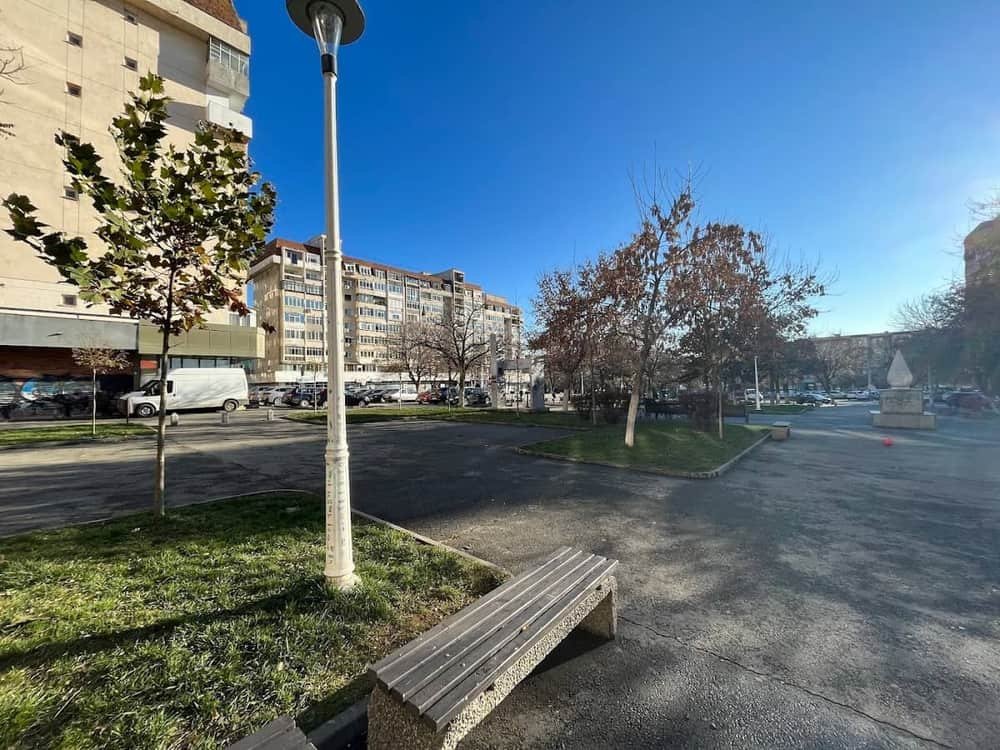
This is where Craiova earns its reputation, and the reason is structural rather than charming: the part you came to see has no cars in it.
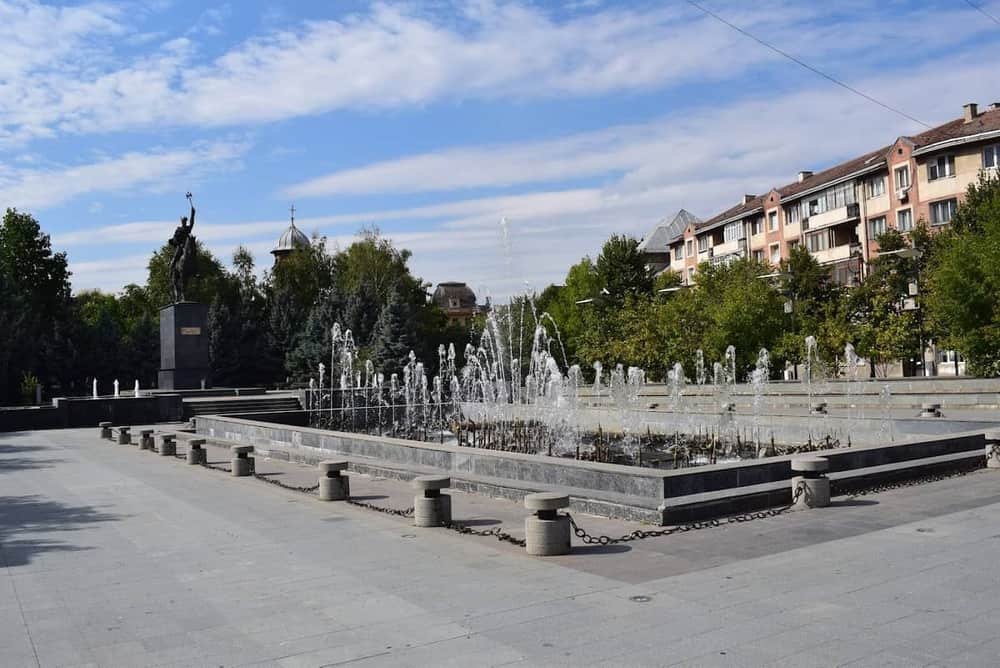
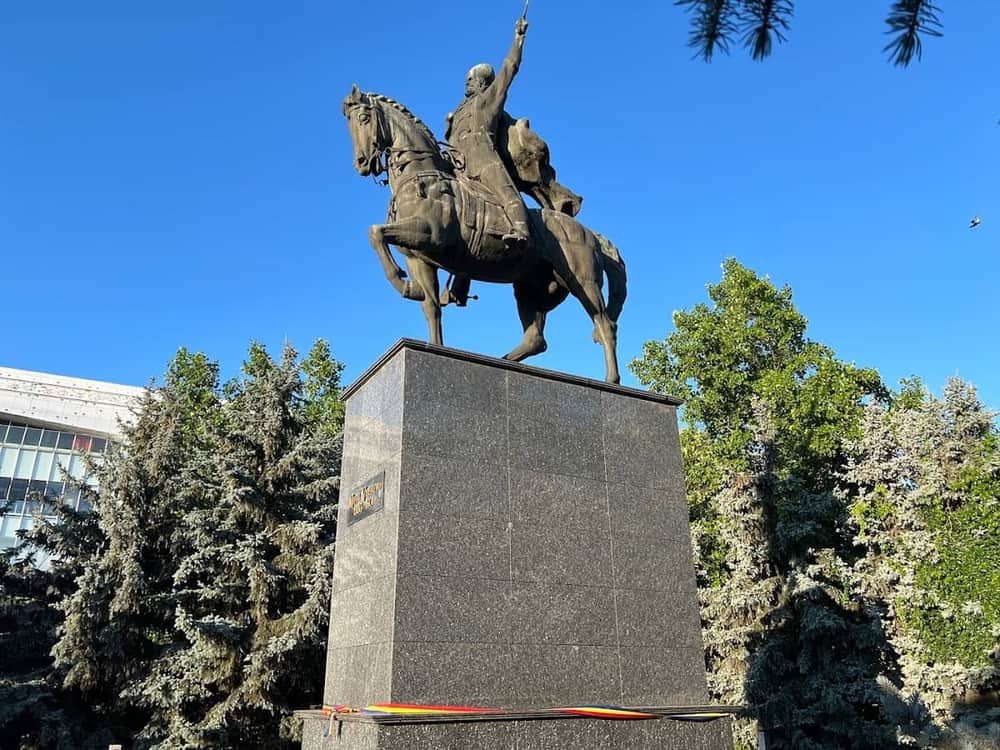
Calea Unirii is a pedestrianised spine running through the middle of the centre, with Piața Mihai Viteazul at the northern end — the main square, with the equestrian statue of Michael the Brave and, from mid-November to early January, the Christmas market.
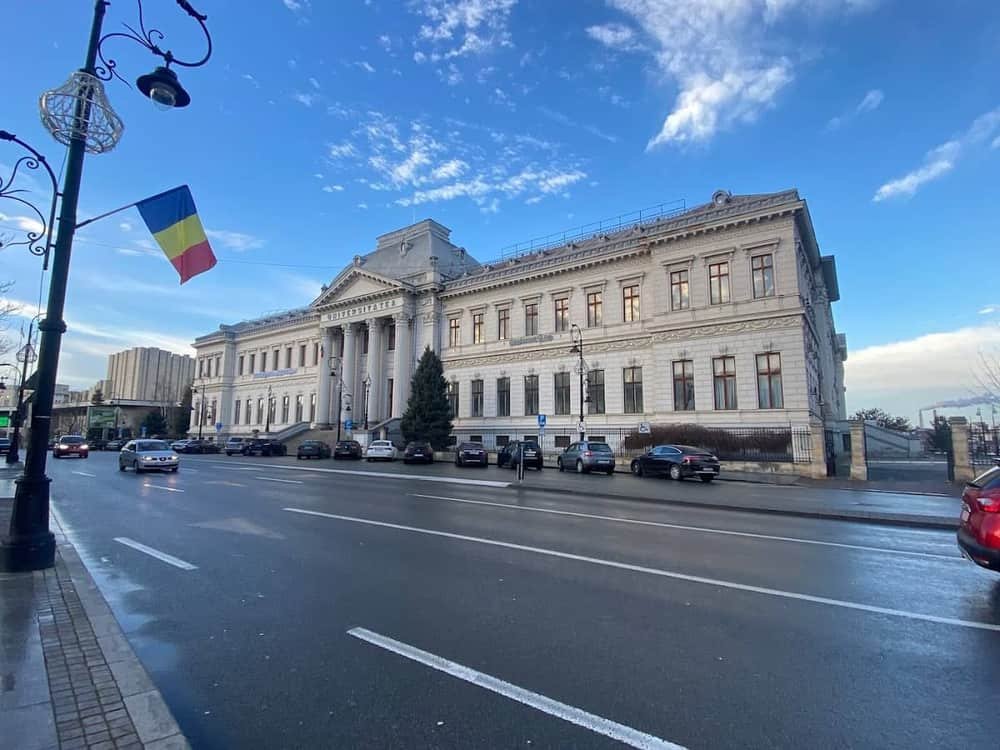
Within four or five minutes of each other: the Art Museum in the Jean Mihail Palace, holding six Brâncuși originals including *The Kiss* of 1907; the Oltenia Museum of History and Archaeology with its natural sciences wing; the Ethnographic Museum in Casa Băniei, the oldest building in the city; the Marin Sorescu National Theatre; the Romanian Opera; and the Administrative Palace.
Also inside the walk: the Alexandru Buia Botanical Garden, English Park, the old town and Parcul Tineretului.
Ten minutes south, and still a walk rather than a journey, is Nicolae Romanescu Park — ninety-six hectares laid out between 1900 and 1903 by the French landscape architect Émile Redont, free at any hour, with the zoo inside it. That is the other half of the city and it is reachable on foot from any central hotel.
The summer caveat matters here more than anywhere: July averages a high of 30.0 °C on 358 hours of sunshine and August 30.1 °C on 338. Walking Craiova between eleven and five in August is unpleasant. Walking it before eleven and after six is lovely. Beating the summer heat sets out how to invert the day.
Buses, when the walk is too far
The city has a bus network and it works. You will want it for three things and almost nothing else: getting to and from the station with luggage, reaching the outer districts if your accommodation is in one, and Romanescu on a hot day when ten minutes in the sun is ten minutes too many.
Getting around has the practical detail on tickets and validation. The one thing worth knowing in advance is the payment problem that catches visitors out across Romania: SMS payment requires a SIM that can send premium messages, which a data-only eSIM cannot do.
Where to stay nearby
Live prices and availability on a map centred on this exact spot — hotels, apartments and hostels, so you can judge the walk from here rather than guess from an address.
Bookings made through this map earn us a commission. Your price is unaffected.
Where to stay without a car
The centre. For a trip without a car this is not a preference, it is the answer. Fifteen hotels, all the sights, all the restaurants worth booking, and no transport needed at any point in the day. Ramada Plaza, Prestige Boutique, Hotel Royal and Golden House are the better-reviewed ones.
Station & Brâncuși. Cheaper by a margin that is real, and twenty-five minutes' walk from Calea Unirii. If you are arriving late and leaving early, or in Craiova for one night on the way somewhere, the trade is a good one. Bella House Apartaments is the best-reviewed thing there. If you are here to look at the city, it costs you an hour a day on transit and is the wrong choice.
Romanescu. No hotels at all, despite what some booking sites imply — the park is a ten-minute walk from the centre and that is where you should sleep.
Not the outer districts. Craiovița Nouă has the cheapest beds in the city and is twenty minutes out; Rovine, Valea Roșie and Brazda lui Novac are fifteen. They are all perfectly safe and none of them is a sensible base without a car. If an apartment listing says "Craiova, central area" and the map shows a housing estate, it is not central.
And now the honest part: Oltenia
Here is where a no-car trip hits its limit, and it is better to know before booking than afterwards.
Segarcea — the one that works
29 km south, measured at 34 minutes. This is the realistic no-car day trip, and it works because it is close enough that a taxi there and back is a defensible cost rather than an absurd one. Crama Domeniul Coroanei Segarcea was planted as one of the royal Crown Domains and is the best-known producer in Dolj; book the tasting ahead, because there is nothing else in Segarcea to fall back on.
The additional argument for a taxi here is not convenience: Romania enforces a zero-tolerance drink-drive limit, and the road back is a main road. If you are tasting wine, a driver is the correct answer whether or not you own a car. See the wine page.
Târgu Jiu — possible, and a long day
110 km north, measured at 1 h 50 min by road. The train takes most of a day with a change, which makes it a poor use of a short trip but not an impossible one if you have the time and want to see Brâncuși's ensemble badly enough — and it is worth wanting to see. The Infinite Column, the Gate of the Kiss and the Table of Silence sit on a single 1.3 km axis across the town, entirely free, outdoors at any hour, and a UNESCO World Heritage Site since 2024. The walk between them takes about twenty-five minutes.
Check current timetables on the day. The structural point stands regardless: this is a full day by rail for something that is two hours by road.
Horezu, Drobeta, Calafat, Rânca — not realistically
Horezu has no useful public transport at all; the UNESCO monastery and the potters are a car trip. Drobeta-Turnu Severin is on the rail network, so it is reachable, but the sites are spread along the riverbank and across the town, which makes it a frustrating day on foot after a long journey. Calafat is a border town most traffic drives through. Rânca, at 1,600 m, has no public transport and a steep final climb — it is a car trip or nothing.
What to do instead
Two options, and both are better than a bad bus day.
Hire a driver or take a taxi for the day. For Târgu Jiu or Horezu this is a real cost and it is also the only way to do either properly in one day. Ask your hotel; Craiova is a provincial city and this is a normal arrangement rather than a luxury service.
Take an organised tour. The tours and tickets panels on the day-trip pages list what is bookable for each one. Coverage in Oltenia is thinner than in Transylvania, which is a fact about the region rather than about this site.
So should you bring a car?
If your trip is Craiova — no. Bringing a car to a two-day city visit buys you a parking problem. The centre is pedestrianised, so wherever you leave it the last four to eight minutes are on foot, and you will use it twice. See where to park if you do.
If your trip is Oltenia — yes, and it is not close. Brâncuși at Târgu Jiu, the UNESCO monastery at Horezu, Trajan's bridge at Drobeta, the cave at Baia de Fier, the mountain air at Rânca: those are the reasons to come to this part of Romania, and a car is the thing that makes them a weekend rather than a week.
The split that works: city days without the car, one or two hire days for the trips out. Local hire from the airport is the usual arrangement, and it means you are not paying for a vehicle to sit in a car park while you walk around a pedestrian centre.
What a no-car trip actually looks like
Three days, no vehicle at any point, and a full itinerary:
- Day one — the city on foot, per one day in Craiova: the square, the Brâncuși room, the museum quarter, lunch on Calea Unirii, Romanescu in the afternoon, dinner in the centre.
- Day two — the parts of the city day one did not reach: the Botanical Garden, the old town properly, the parks, the cafés, and either a performance at the National Theatre or a match at the Ion Oblemenco — see football.
- Day three — Segarcea by taxi, back for lunch, afternoon free.
That is a genuinely good three days and it needs no car. What it does not include is the single best thing in the region, which is two hours north and needs one. Both halves of that sentence are true, and choosing between them is the actual decision — see two days in Craiova for the version with a car.