The honest answer first
Craiova has three things worth travelling for, a solid second tier, and a lot that is pleasant rather than essential. Knowing which is which is the whole value of this page, so we will say it plainly rather than listing twenty attractions as though they were equivalent.
The three:
- The Brâncuși sculptures at the Art Museum — including *The Kiss* of 1907.
- Romanescu Park — ninety-six hectares, a gold medallist at the 1900 Paris Exposition.
- The Belle Époque centre — Calea Unirii, Piața Mihai Viteazul and the Old Town lanes.
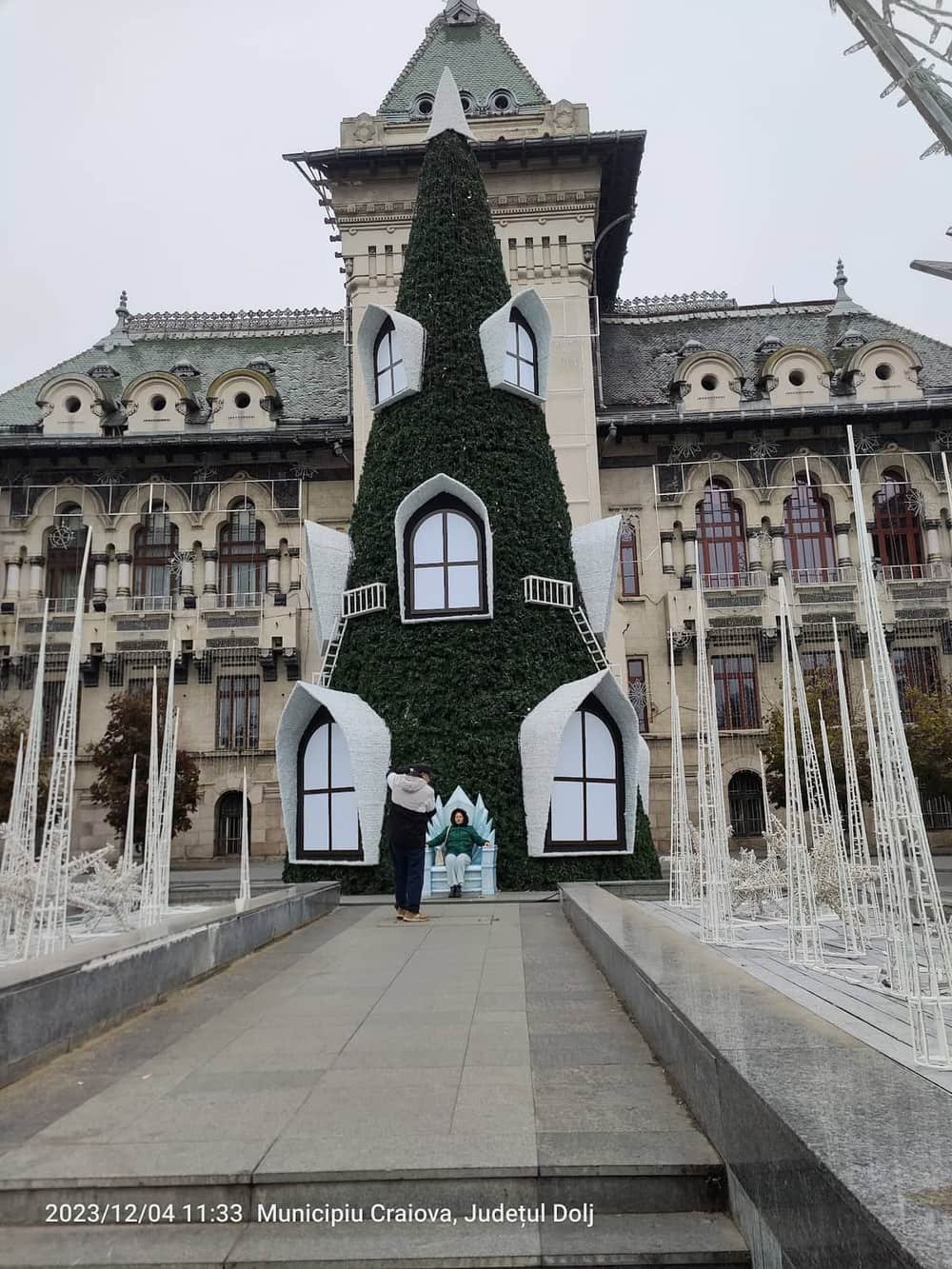
Add the Christmas market if you come between 13 November and 3 January, which is a fourth reason entirely.
Checked October 2026. Opening hours and ticket prices for the city's museums are not reliably published online and change seasonally. We do not quote figures we cannot source and date — ring ahead if your day depends on one.
1. The Art Museum, and why it is not just a provincial gallery
This is the thing that makes Craiova worth a detour rather than a stop.
Constantin Brâncuși was born at Hobița in Gorj in 1876 and came to Craiova as a teenager, enrolling at the School of Arts and Crafts in 1894. He left in 1898 with a prize, went to Bucharest, then walked most of the way to Paris in 1904. The city taught him to carve.
The museum, in the Jean Mihail Palace on Calea Unirii, holds the result. *The Kiss* (1907) is the first of the series he returned to for four decades and is routinely described as the first modern sculpture of the twentieth century — two figures reduced to one block. *Vitellius* (1898) is the student bust: the academic exercise, before anything was stripped away. *Orgoliu* (1905) sits between them. Sources count the full holding as six, about eight or nine works depending on what they include; we are not going to pick a number for you.
Seeing *Vitellius* and *The Kiss* in the same room is the point of coming. Then see what he did at the end, two hours north at Târgu Jiu — the full case for doing both in one day is in Brâncuși in one day.
One caution: *The Kiss* has been lent out for temporary exhibitions. If it is your reason for the trip, ring the museum.
Places in this piece

2. Romanescu Park
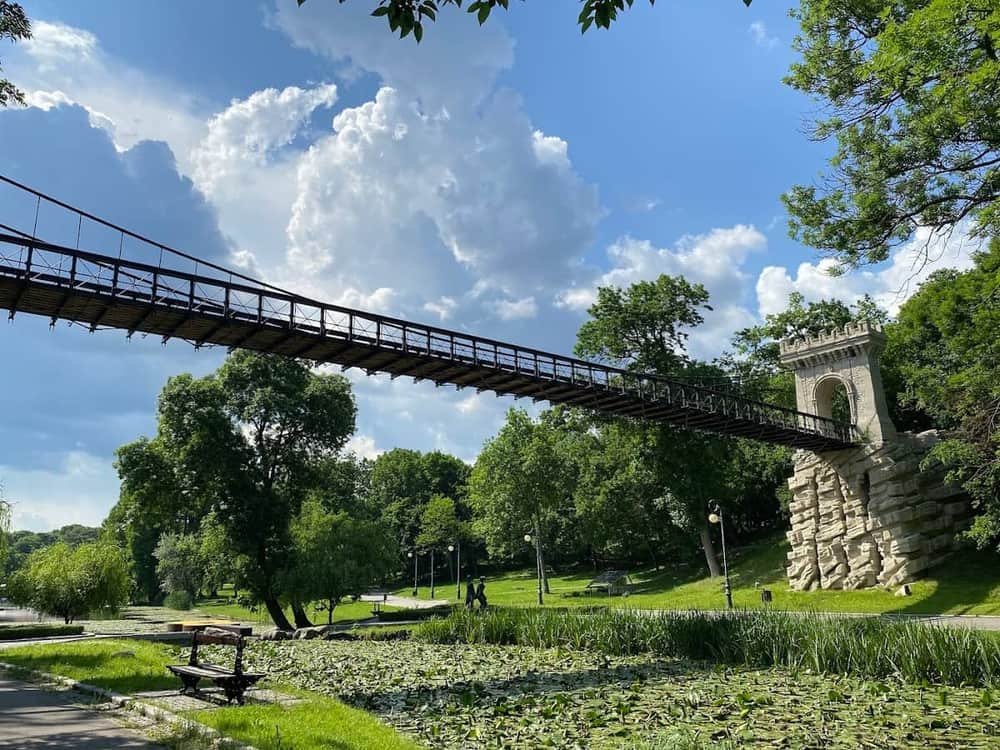
Laid out around 1900 to a design by the French landscape architect Émile Redont, commissioned while Nicolae Romanescu was mayor, and awarded a gold medal at the 1900 Paris Exposition Universelle.
What makes it unusual is that it works a natural valley instead of flattening it. Romanian city parks are overwhelmingly avenues and flowerbeds on level ground; Romanescu has slopes, a lake, a suspended bridge across a ravine and an artificial grotto. You look across it rather than standing in it.
The zoo is inside the park, which turns a walk into a half-day with children.
In July and August this stops being a nice extra. Craiova averages a 30 °C daily high in high summer and the centre has almost no shade — see the parks guide and the weather month by month.
Where to stay nearby
Live prices and availability on a map centred on this exact spot — hotels, apartments and hostels, so you can judge the walk from here rather than guess from an address.
Bookings made through this map earn us a commission. Your price is unaffected.
3. The centre on foot
An hour, no tickets, and the best thing to do on your first evening.
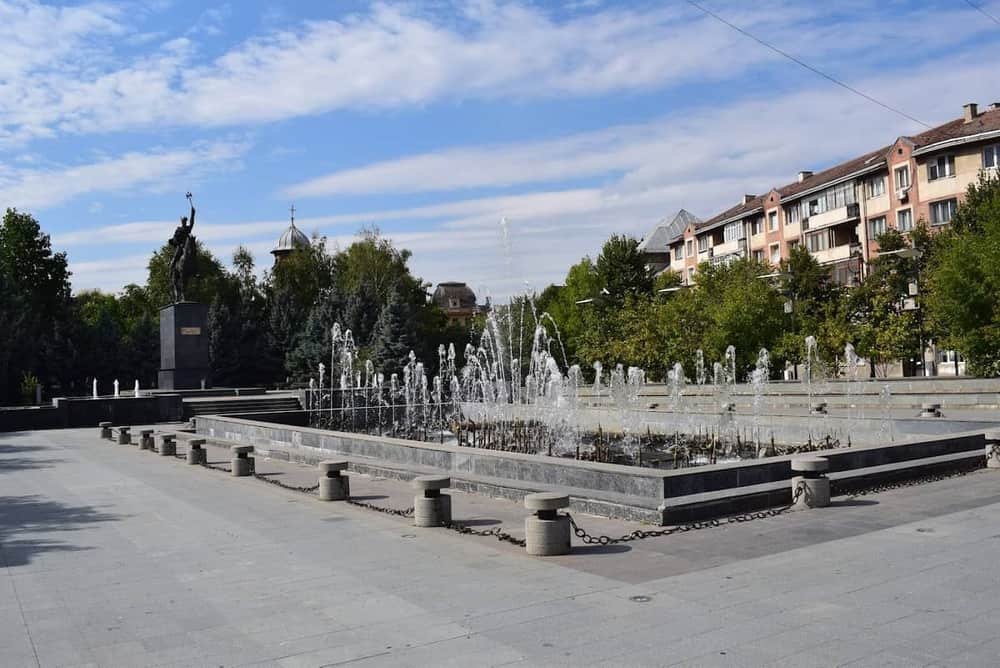
Start at Piața Mihai Viteazul with the equestrian statue at one end and the Administrative Palace floodlit behind the fountains. Walk the pedestrianised stretch of Calea Unirii, which is where the city's nineteenth-century money went and still shows it. Turn off into the Old Town lanes.
The second tier, which is genuinely good
Casa Băniei — the oldest building in the city, now the Oltenia Museum's ethnography section. If you want to understand the region's material culture, this is where it is kept.
The Oltenia Museum, history and archaeology, and its natural sciences wing, which is the most child-friendly museum in the city.
The Metropolitan Cathedral of St Demetrius and Madona Dudu.
The National Theatre, worth seeing for the building whether or not you go to a performance, and the Philharmonic.
The Botanical Garden, which belongs to the university, sits much closer to the centre than Romanescu and is consistently underrated.
And one that is not a sight at all
Ion Oblemenco, which opened in 2017 and holds about thirty-one thousand. On a matchday it is one of the best atmospheres in Romanian football, and the city's relationship with the 1982–83 UEFA Cup semi-final run still shapes how it thinks about itself. See matchday in Craiova.
How long you need
Two days covers the city: the centre and its museums on one, Romanescu on the other.
Three lets you go out — Târgu Jiu for the Brâncuși ensemble, Segarcea for the wine, or Horezu for the UNESCO monastery. All the distances are measured in day trips from Craiova.
Timed itineraries: one day in Craiova and two days in Craiova.
What it costs, and when to come
Craiova is one of the cheaper major Romanian cities — see prices and where to stay.
The best months are April–May and September–October. July and August are genuinely hard. November and December belong to the market. The full breakdown is in when to visit Craiova.