The short version
Romanian Christmas markets all sell roughly the same ten things, and Craiova is no exception. What differs is what is worth queueing for and what you should walk past — and one genuine local advantage, which is the wine.
This is a field guide to the stalls at the Craiova Christmas market, what each thing actually is, and the order to eat them in.
Checked October 2026. Prices are set by individual stallholders and are not published in advance by the city, so this page describes the food rather than quoting figures. For what an evening costs, see what the market costs.
Vin fiert — mulled wine
The thing everyone buys first, and the one Craiova does better than most.
Romanian mulled wine is red or white, heated with cinnamon, cloves, orange and sugar, and served in a paper or ceramic cup. It is not a cocktail and it is not meant to be subtle. What makes the difference is the base wine, and here Craiova has an advantage it does not advertise: Segarcea is twenty-nine kilometres south, southern Oltenia is warm enough to ripen proper red grapes, and the wine in the pot does not have to travel.
Ask for white (*vin fiert alb*) if red is too heavy — most stalls have both. The non-alcoholic alternatives are hot tea and *ciocolată caldă*, which in Romania means a thick drinking chocolate rather than cocoa.
Places in this piece
Kürtőskalács — chimney cake
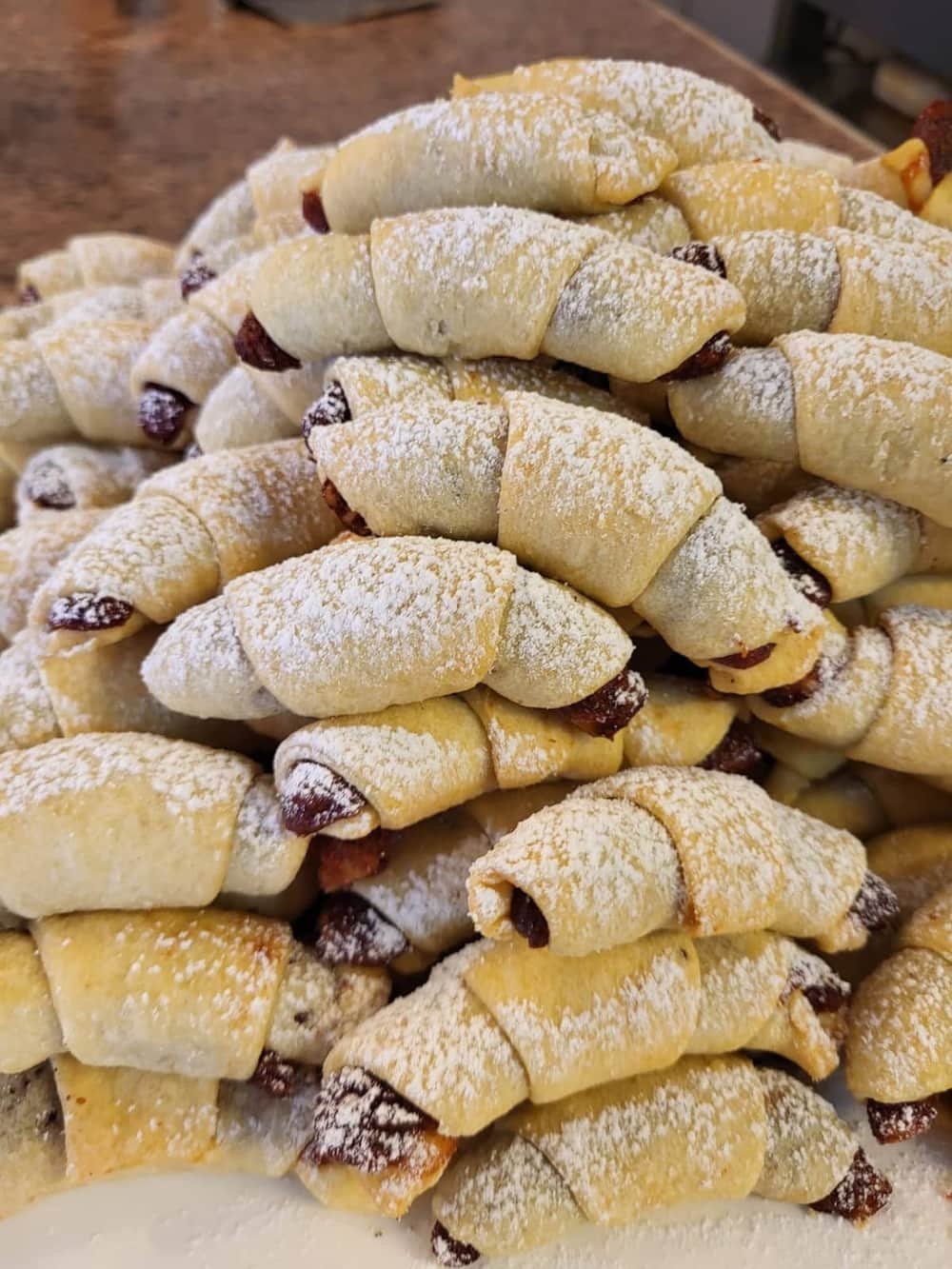
Sweet dough wound around a wooden spit, roasted over coals, rolled in sugar, cinnamon, walnut or cocoa. Szekler in origin and Transylvanian by reputation, it long ago colonised every market in the country, Craiova's included.
It is the longest queue at any Romanian market and it moves faster than it looks, because they bake continuously. Buy it the moment it comes off the spit — it is a different thing warm than it is ten minutes later.
Cârnați și pomana porcului
December is pig-slaughter season in Romania, and the markets cook accordingly.
*Cârnați* are grilled sausages, usually a coarse pork mix with garlic and paprika. *Pomana porcului* is the one to order if you want to understand Oltenian cooking in one plate: pork fried down in its own fat, served with polenta, pickles and sometimes a fried egg. It is heavy, it is the point, and it is close kin to the *tochitură* you will find in the city's restaurants.
More on the regional kitchen in what to eat in Oltenia.
Sarmale
Cabbage rolls stuffed with minced pork and rice, slow-cooked for hours, served with polenta and sour cream. The Christmas dish at every Romanian table, and the stall version is honest rather than refined.
If you are eating one hot plate at the market, this or the *pomana porcului* is it.
Where to stay nearby
Live prices and availability on a map centred on this exact spot — hotels, apartments and hostels, so you can judge the walk from here rather than guess from an address.
Bookings made through this map earn us a commission. Your price is unaffected.
Cozonac
The festive sweet bread, swirled with walnut, cocoa or Turkish delight, baked in a loaf tin. Every Romanian household makes it at Christmas and argues about whose is better.
Buy a slice to taste. If you want a whole one to take home, the people who live here buy theirs from a bakery rather than a market stall — Cuptorul Cozonacilor is the obvious one.
Langoși
Deep-fried flat dough, plain or topped with cheese, sour cream and garlic. Heavier than it looks and genuinely filling. Share one between two unless you have skipped lunch.
Gogoși and the sweet stalls
Doughnuts, sugared or filled, plus the usual run of candied nuts, Turkish delight and seasonal confectionery. These are the stalls children stop at, which is worth knowing before you set a budget — see the market with children.
The order to eat in
A sensible evening runs: one mulled wine on arrival while you walk the installation; one substantial plate — sarmale or pomana porcului — sitting down if you can find a ledge; a kürtős on the way out; a second mulled wine while you finish it.
What not to do is eat your main meal at the market. The stalls are good at hot, fast and festive; they are not competing with a table two streets away. The better plan is market food as an accompaniment to the lights, then a proper dinner nearby — see where to eat in Craiova, or a warm café if you only want to sit down for half an hour.
When the stalls are busiest
Weekend evenings after six, and the two weekends before Christmas worst of all. Mid-November — the market opens on the 13th, a fortnight ahead of Sibiu and Brașov — and weekday afternoons are when you can actually see what is on a stall before you order it.
Covrigi, and the thing nobody warns you about
Outside the market proper, on the approach streets, you will pass *covrigi* stands — Romanian pretzels, sold hot, plain or with poppy seed, sesame or coarse salt. They are not a market speciality, they are an everyday Romanian street food, and they are the cheapest thing you will eat all evening.
The thing nobody warns you about is the portion sizes. Romanian festive food is built for a household that has been working outdoors, and a plate of *pomana porcului* is not a tasting portion. Two adults sharing three stall dishes between them will eat better, and more variety, than two adults ordering one each.
If you have a dietary restriction
Be realistic: a Romanian Christmas market in pig-slaughter season is not an easy room for vegetarians. That said, *langoși* with cheese, *gogoși*, *cozonac*, *kürtős*, candied nuts and the tea and chocolate stalls are all meat-free, and several stalls now sell *sarmale de post* — the Lenten version, filled with rice, mushrooms and vegetables instead of pork — because the Orthodox fast before Christmas runs through most of the market's season.
Gluten-free is harder and effectively means the grilled meat and the drinks. For a proper meal with real options, the city's restaurants and cafés are the better bet, and several have standing vegetarian menus.