
The short version
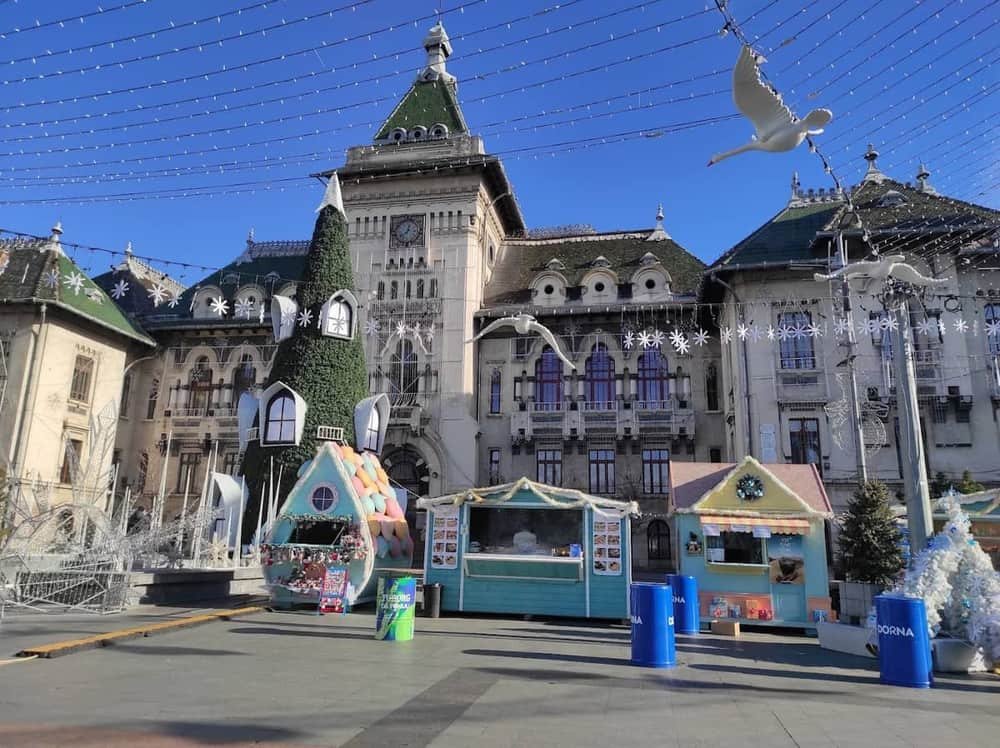
Craiova's history is legible on the ground in a way most Romanian cities' is not, because the city had one enormous moment of wealth — the nineteenth-century grain trade — and spent it all on buildings that are still standing.
- Roman: a settlement called Pelendava stood here, and the name survives as a street.
- 1475: the first document naming Craiova.
- The Bănia: Craiova was the seat of the Ban of Oltenia, the highest office in Wallachia after the ruler. Mihai Viteazul held it before he became prince.
- 1718–1739: Oltenia under Habsburg administration, after the Treaty of Passarowitz.
- 1821: Tudor Vladimirescu's uprising began in Oltenia.
- 1880s–1914: the grain money, and everything on Calea Unirii that you came to look at.
- 1949 onwards: Electroputere, locomotives, transformers, and later cars.
Checked October 2026. Dates here are the standard ones in Romanian historiography. Where a figure is conventional rather than settled — the 1475 first mention being the obvious case — this page says so.
Before the city
A Roman settlement called Pelendava occupied this part of the Jiu valley, and it is named on the Roman road itineraries. There is a Strada Pelendava in Craiova today, which is the most direct link a Romanian city centre offers between its street map and its antiquity.
What there is not is a Roman monument to go and look at. For that you drive 112 km west to Drobeta-Turnu Severin, where one pier of Trajan's bridge of 103–105 AD still stands on the bank of the Danube.
Places in this piece


1475, and the problem with founding dates
Craiova first appears by name in a document of 1475. That is the date the city uses and the date you will see on municipal material.
It is worth being clear about what such a date means: it is the earliest surviving written mention, not a foundation. Settlement here is continuous from well before, and the 1475 charter records a place that evidently already existed and mattered. Romanian cities' "founding dates" are almost all of this kind, and treating them as birthdays is a category error.
The Bănia: why Craiova was not just another market town
This is the part of the city's history that explains its self-image, and it is the least known outside Oltenia.
Wallachia was governed from Târgoviște and later Bucharest, but Oltenia — the region west of the Olt — was administered through a single great office: the Ban. The Ban of Oltenia was the highest dignity in the principality after the ruling prince himself, with his own court, his own jurisdiction and his own military obligation, and his seat was Craiova.
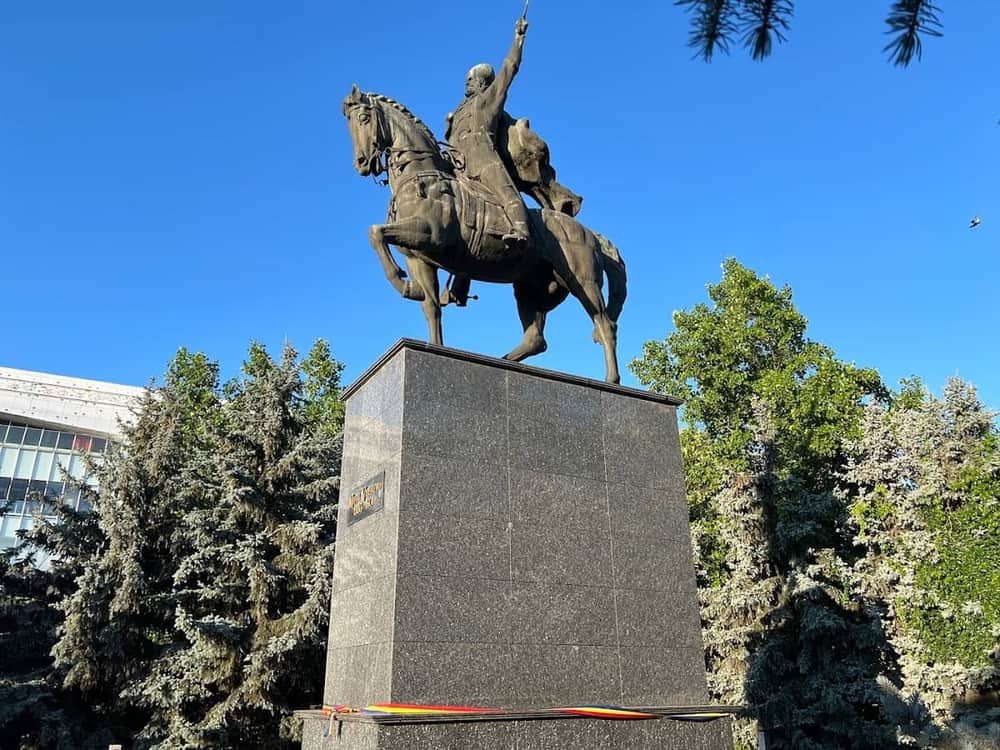
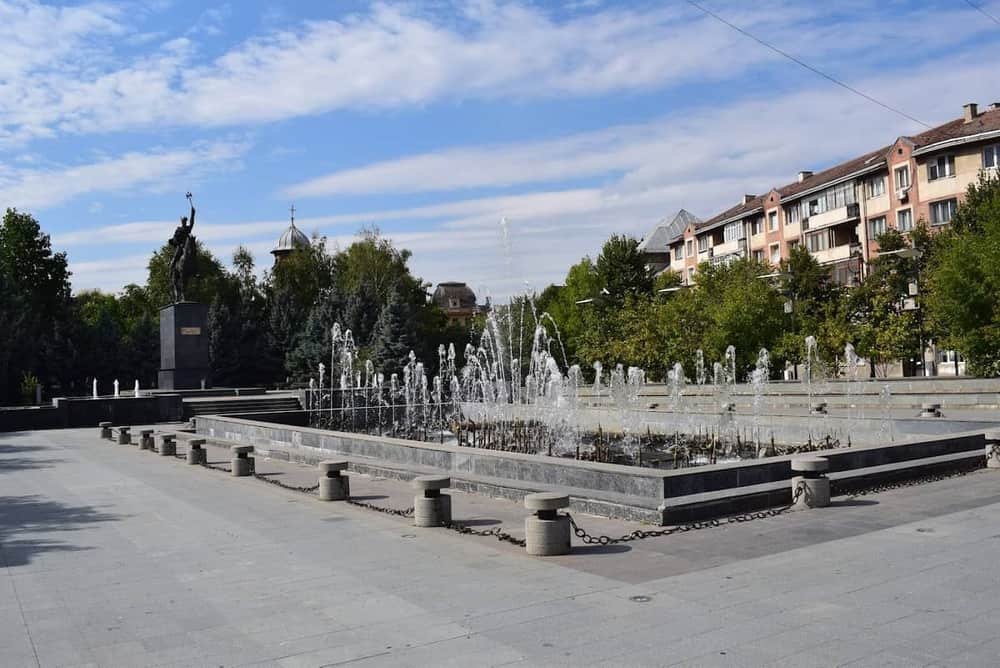
The office was held for generations by the Craiovești, the boyar family the city is named for, and it functioned as something close to a vice-royalty. Among the men who held it was Mihai Viteazul — Michael the Brave — who was Ban of Craiova before he became Prince of Wallachia in 1593. The equestrian statue of him at the head of Piața Mihai Viteazul is there for that reason and not as generic national decoration.
The Ban's residence is the oldest building in the city — Casa Băniei, which now holds the Ethnographic Museum of Oltenia. The Bănia and the money goes into the office, and into the question of whether the Romanian word for money comes from the title.
1718–1739: the Austrian interval
After the Treaty of Passarowitz in 1718, Oltenia passed under Habsburg administration for two decades, returning to Wallachia with the Treaty of Belgrade in 1739.
Twenty-one years is not long, but it is the reason Oltenia's eighteenth-century record-keeping, cartography and fortification differ from the rest of Wallachia's. If you have wondered why this region has a slightly different documentary texture from Muntenia, that is the answer.
1821: the uprising started here
Tudor Vladimirescu raised his revolt in 1821 in Oltenia, in Gorj — the county that also holds Târgu Jiu and Tismana. It is the event conventionally treated as the beginning of modern Romanian political history, and it began in this region rather than in a capital.
That matters for the same reason the Bănia matters: Oltenia's relationship to Romanian national history is one of initiating things that get completed elsewhere.
Where to stay nearby
Live prices and availability on a map centred on this exact spot — hotels, apartments and hostels, so you can judge the walk from here rather than guess from an address.
Bookings made through this map earn us a commission. Your price is unaffected.
The grain money, which is what you actually came to see
Everything that makes central Craiova worth a visit was built in roughly thirty years either side of 1900, and it was paid for by wheat.
The Dolj plain is some of the most productive arable land in south-eastern Europe. In the decades after the 1870s, with the Danube open to grain export and the railways arriving, that land produced a concentration of money in Craiova that the city had never had and has not had since. It went into:
Calea Unirii — a continuous run of belle-époque facades, the densest in southern Romania outside Bucharest, now pedestrianised and the spine of the city.
The Jean Mihail Palace, 1900–07 — marble, Venetian glass and a staircase that was clearly the point of the ground floor. It opened as a public art collection in 1908 and now holds six Brâncuși originals. The Art Museum covers it properly.
Nicolae Romanescu Park, 1900–03 — ninety-six hectares designed by the French landscape architect Émile Redont, whose plan took a gold medal at the 1900 Paris World Exposition before a tree was planted. The park guide has the detail.
The Administrative Palace, the National Theatre's institution, the Metropolitan Cathedral, the University.
A useful way to look at central Craiova: it is a city that had one very good generation, and that generation built for a future that did not arrive. The 1948 nationalisations ended the money, and nothing on this scale has been built since.
Brâncuși, who was here for it
Constantin Brâncuși enrolled at Craiova's School of Arts and Crafts in 1894 and finished in 1898, which places him in the city at exactly the moment the grain money was building it. He went on to Bucharest and then to Paris.
The Art Museum holds the student head of 1898 and *The Kiss* of 1907 in the same room, four streets from where he learned to carve. The monumental end of that career is 110 km north at Târgu Jiu. Brâncuși in Craiova covers his years here.
1949 onwards: the industrial city
After nationalisation, Craiova was rebuilt as a manufacturing centre, and the housing districts that ring the centre — Craiovița Nouă, Brazda lui Novac, Rovine and the rest — are that period's product.
Electroputere, founded in 1949, is the name to know: locomotives and electrical transformers, exported across the Eastern bloc and beyond, and for decades the thing Craiova was known for inside Romania. The Oltcit car plant followed in the 1970s as a joint venture with Citroën, passing later to Daewoo and then to Ford, which still builds cars here.
This is the half of Craiova's history that visitors skip and that locals live in. The neighbourhoods page is honest about which of those districts a visitor has any reason to go to — the answer is almost none of them — but they are where the city is.
What to do with all this in one day
The history is walkable. One day in Craiova is the timed route; the historical version is:
The Bănia and the museums — Casa Băniei and the Oltenia Museum of History and Archaeology, for everything before 1800.
Calea Unirii and the Art Museum — for the grain generation and Brâncuși.
Romanescu Park — the same money, spent on landscape.
Any outer district, on the bus — for the other forty years, if you want the whole story rather than the handsome part of it.
Two days in Craiova adds the regional layer: the Bănia's territory is Oltenia, and the monasteries at Hurezi and Tismana are the surviving architecture of the centuries this city has nothing left from.









