The short version
For several centuries Oltenia was not governed from the capital. It was governed through a single office — the Ban of Oltenia — whose holder was the highest-ranking man in Wallachia after the ruling prince himself, and whose seat was Craiova.
- The Ban had his own court, his own jurisdiction and his own military obligation. The office functioned as something close to a vice-royalty over everything west of the Olt.
- The Craiovești — the boyar family the city is named for — held it for generations.
- Mihai Viteazul was Ban of Craiova before he became Prince of Wallachia in 1593.
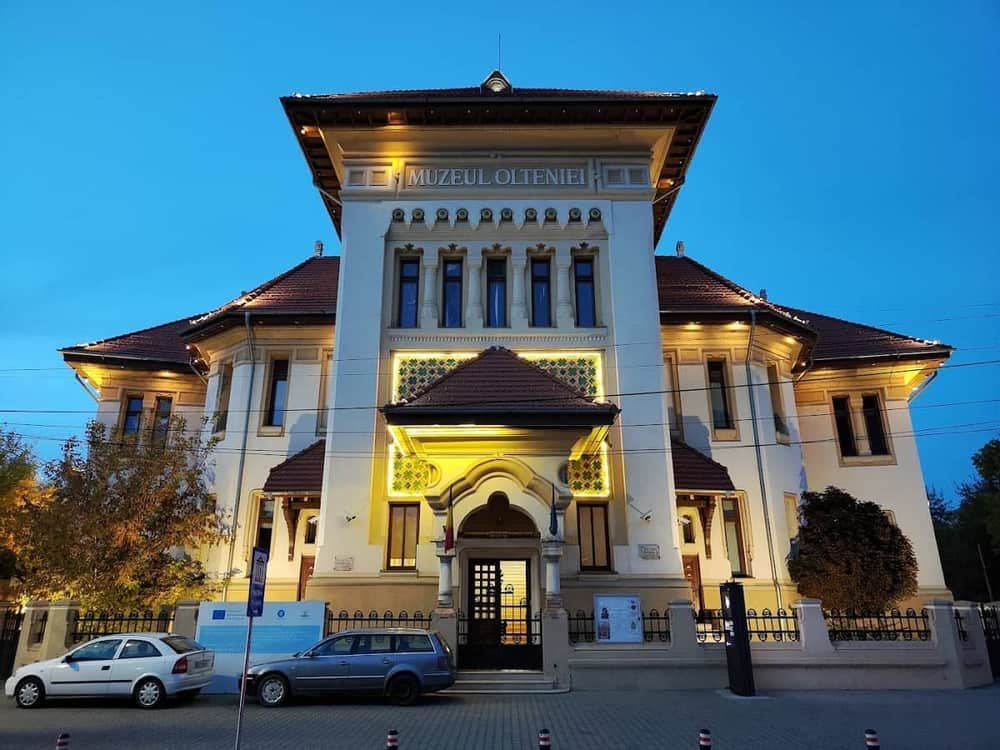
- Casa Băniei — the Ban's residence, and the oldest building in the city — now holds the Ethnographic Museum of Oltenia.
- **And yes: the Romanian word for money, *bani*, is connected to the title.** The connection is real, and it is not the one most people assume.
Checked October 2026. The institutional history here is standard Romanian historiography. The etymology section flags where scholarship is settled and where popular belief has run ahead of it.
What the office actually was
Wallachia's capital moved over the centuries — Curtea de Argeș, Târgoviște, Bucharest — and from any of them, governing the far side of the Olt was a problem of distance. The solution was not a provincial governor appointed and recalled; it was a standing great office with its own apparatus.
The Ban held, in his own name:
A court. Not a representative of the prince's court but a separate one, at Craiova, with its own officials.
Jurisdiction. Judicial authority over Oltenia, exercised locally rather than referred to the capital.
A military obligation. The Ban raised and led Oltenian forces, which in a principality under constant Ottoman pressure made the office strategically central rather than ceremonial.
Precedence. The Ban ranked first among the boyars of Wallachia — above the great offices of the central court. In the hierarchy of the principality there was the prince, and then there was the Ban of Oltenia.
That is an unusual arrangement by the standards of the region, and it is why Oltenia has a regional identity of a kind that, say, the Bărăgan does not. The administrative structure gave it one.
Places in this piece
The Craiovești
The family after whom Craiova is named held the Bănia across generations from the late fifteenth century, and the relationship between family and office is the interesting part: the Craiovești were not appointed to an existing dignity so much as they and the dignity grew into each other.
At their height they were powerful enough to make and unmake princes, and the history of Wallachian politics in the sixteenth century is substantially a history of the relationship between the throne and this family. Several Craiovești became princes themselves.
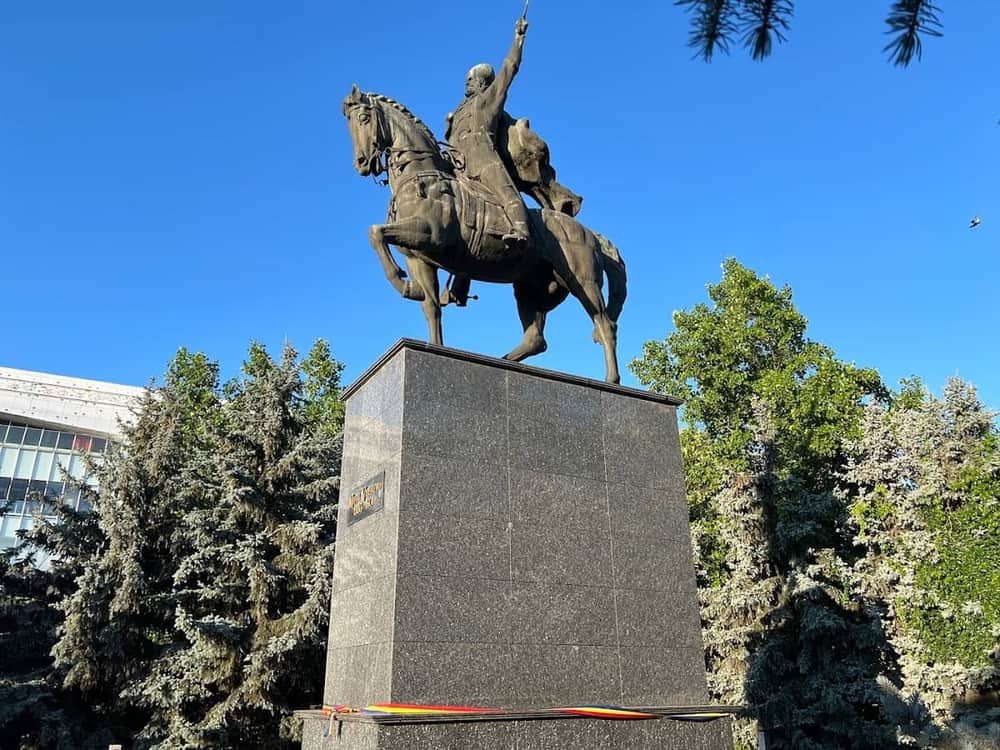
Mihai Viteazul — Michael the Brave — held the office before his reign. He was Ban of Craiova and became Prince of Wallachia in 1593, going on to the brief union of the three principalities that made him the central figure of Romanian national historiography.
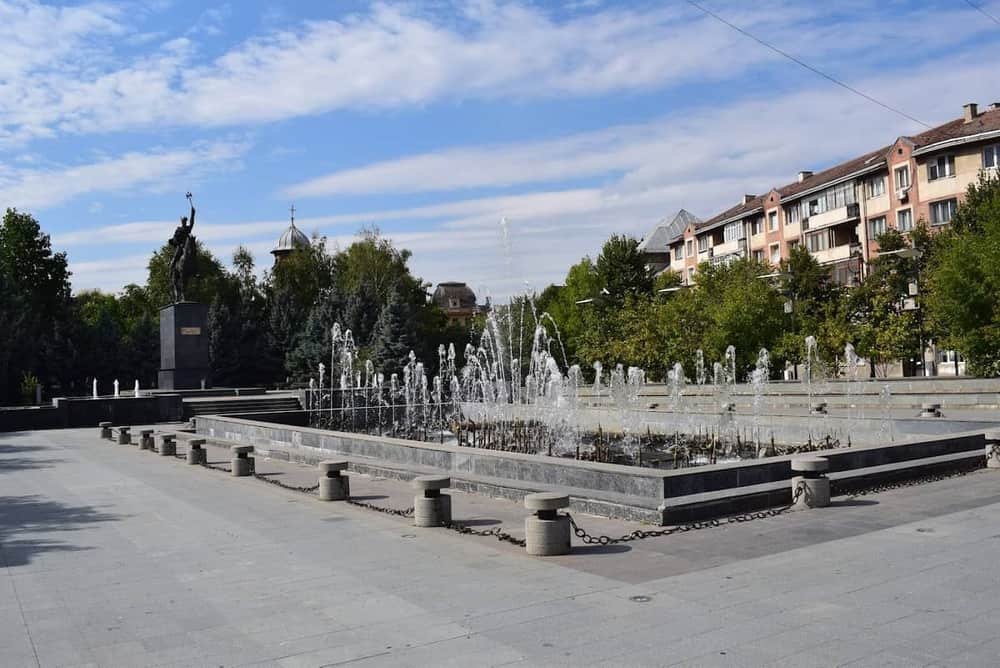
This is why his equestrian statue stands at the head of Piața Mihai Viteazul and not in some generic civic position. He is not there as a national symbol imported into a provincial square. He is there because he worked here.
Casa Băniei
The Ban's residence in Craiova is the oldest building in the city — which, in a city whose visible fabric is almost entirely of the decades around 1900, makes it the one structure that predates the grain money by centuries.
It now houses the Ethnographic Museum of Oltenia, which is a good use of it: the building is the administrative memory of the region and the collection is its material one. Casa Băniei and the Oltenia Museum covers the visit, and the Oltenia Museum of History and Archaeology a few minutes away covers the documentary side.
A note on the hours, which applies to every museum in this city: they are not reliably published, and this site does not print figures it cannot source. Telephone before a special trip. The prices page explains the policy.
Where to stay nearby
Live prices and availability on a map centred on this exact spot — hotels, apartments and hostels, so you can judge the walk from here rather than guess from an address.
Bookings made through this map earn us a commission. Your price is unaffected.
Now the money
Here is the thing people half-know and get slightly wrong.
The Romanian word for money is bani — singular ban, which is also the hundredth part of a leu. And the title is ban. The two words are connected.
What they are *not* is connected in the direction most people assume. The usual popular version is that Romanian took its word for money from the Bans of Oltenia, which would make Craiova the etymological source of the national currency's small change. That is a good story and it is not what happened.
The accepted derivation runs through the Slavonian bans — the rulers of medieval Slavonia and Croatia, who minted coins. Their coinage was known by their title, and the word travelled with the coin into the surrounding languages, Romanian among them. So *ban* meaning money comes from *ban* meaning a ruler, but from a different set of rulers, further west, whose money circulated.
The Ban of Oltenia and the coin in your pocket therefore share an ancestor rather than a parent. The title is the same title; the money came by a different route.
That is a more interesting fact than the popular version, and it is worth getting right, because the popular version is told to visitors in Craiova with some confidence.
What is left of it
Very little, physically, and that is worth saying plainly rather than implying otherwise.
The Bănia was abolished in the eighteenth century as Wallachian administration was reorganised, and Oltenia became a set of counties like any other. The institutions went; the identity stayed.
What survives to look at:
Casa Băniei — the building.
The statue — the memory, in the most prominent position the city has.
The regional monasteries, which are the surviving architecture of the centuries the Bănia covers: Hurezi, founded 1690 and UNESCO-listed in 1993; Tismana, begun in the 1370s; and, closer in, Mănăstirea Coșuna on the city's edge and Jitianu eight kilometres south. Churches and monasteries in Oltenia is the roundup.
The name. Oltenians still describe themselves as Oltenians in a way that implies a unit rather than a direction, and that is the Bănia's residue.
What does not survive: the court, the records in any accessible form, and any building in Craiova between Casa Băniei and the 1880s. The city's visible history has a four-century hole in it, and the monasteries out in the region are how you fill it. Two days in Craiova is built around exactly that division of labour.
Why this page exists
Because "Craiova was an important regional centre" is the kind of sentence that tells a visitor nothing, and the specific version is better: for several centuries, the second most powerful man in Wallachia lived here, held court here, judged here and raised an army here, and the office he held was defined by a river.
That is why the square has the statue it has, why the oldest building in the city is a residence rather than a church, and why Oltenia behaves like a place rather than a compass bearing.
A short history of Craiova puts it in sequence with everything before and after.