The short version
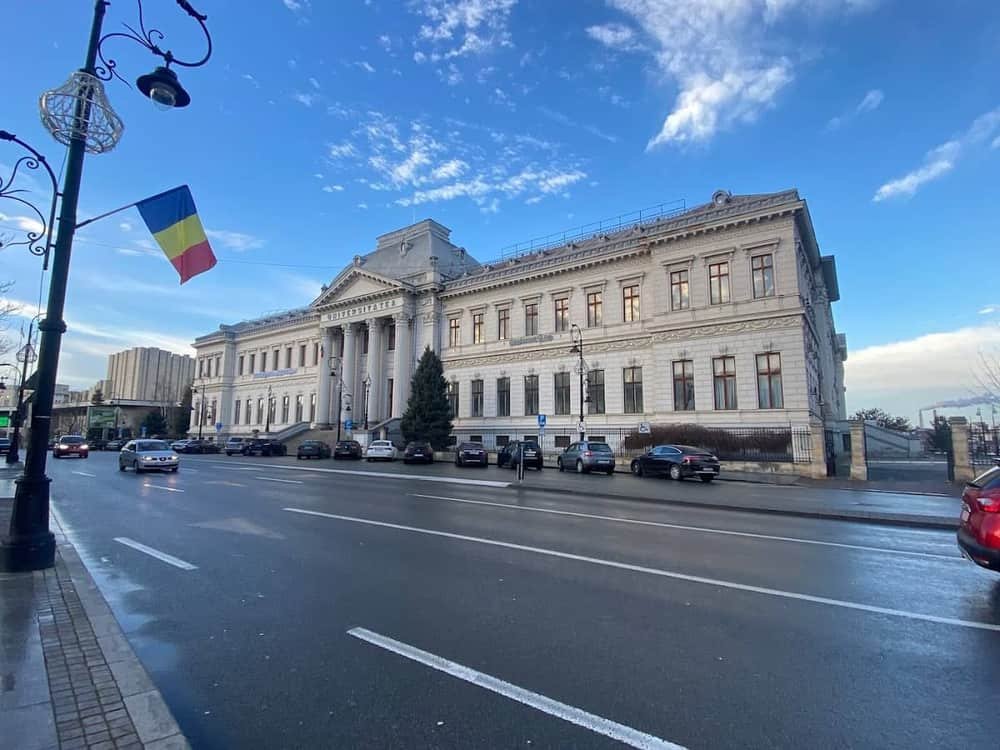
Everything handsome in central Craiova was paid for by wheat leaving the country through the Danube ports, in roughly the fifty years before 1914.
That is the whole economic story in one sentence, and it explains the two things visitors find hardest to reconcile: why a city in a flat agricultural plain has palaces, and why those palaces stop abruptly in 1914 and never resume.

How the money worked
Oltenia is good wheat country. Flat, fertile, warm — see the geography. For most of its history that produced subsistence and tax, not wealth, because there was nowhere profitable to send a surplus.
What changed in the nineteenth century was access to the world market. Once Danube navigation opened to international commerce and European demand for grain rose, Wallachian wheat became an export commodity with a price set far away. Land that had been merely productive became land that generated cash.
Craiova was positioned to capture it. It was the administrative seat — see the Ban and the money of Oltenia — so the families who owned the land, financed the harvest and organised the trade already had a reason to keep houses there.
The route
| Stage | Where |
|---|---|
| Growing | the Dolj and Olt plain |
| Collection and finance | Craiova |
| Shipping | the Danube ports south of the city |
| Market | western and central Europe |
The Danube is about an hour and a bit south of Craiova — see the Danube near Craiova. That proximity is why the city and not somewhere else became the regional centre of gravity: close enough to the river to control the trade, far enough inland to be a comfortable place to live.
Why it stopped in 1914
Because the system that produced it ended.
The First World War, then land reform, then the Second World War, then nationalisation — four shocks in forty years, each of which removed part of the mechanism. The estates were broken up, the families who had built the palaces lost the land, the export trade was redirected, and the money that had flowed through Craiova simply stopped arriving.
That is why the Belle Époque centre is so coherent. It is essentially 1880–1914 — one generation, one economic system, one architectural fashion, and then nothing. Cities that kept getting rich kept rebuilding; Craiova did not, which is a misfortune that produced a well-preserved centre.
Where to stay nearby
Live prices and availability on a map centred on this exact spot — hotels, apartments and hostels, so you can judge the walk from here rather than guess from an address.
Bookings made through this map earn us a commission. Your price is unaffected.
What replaced it
Industry, from 1949 onwards — Electroputere, then the aircraft works and the car plant. A completely different economic base, a completely different kind of wealth, and a completely different part of town. The works and their housing districts went north and west; the grain city stayed where it was and was largely left alone.
Craiova is therefore two cities with no architectural conversation between them, and the reason is a change of commodity.
What a visitor should take from this
- Read the centre as a boom town. The competitive extravagance of the façades makes sense once you know the owners were in the same trade and watching each other build.
- Go to the Danube at least once. An hour and a bit south is where the money left from, and the landscape is the opposite of the city in every respect.
- Segarcea is the surviving version of the system. A royal estate turned working winery — agricultural wealth that stayed agricultural instead of being converted into a palace.
The uncomfortable part
The wealth was agricultural, which means it was produced by a rural population that saw very little of it. The gap between the façades on Calea Unirii and the conditions in the villages that generated the surplus was enormous, and the interwar land reforms happened for a reason.
This site is not in the business of flattering the past. The palaces are genuinely fine buildings and they are worth your afternoon; they were also paid for by an arrangement that very few people today would defend, and both things are true at once.
Further reading on this site
The Ban and the money of Oltenia for the older administrative layer. The palaces for what the money bought. The history of Craiova for the long frame, and the Danube for where it all went.
*This page describes a well-documented economic pattern in general terms rather than quoting trade figures, which vary widely by source and year. Reviewed October 2026.*