
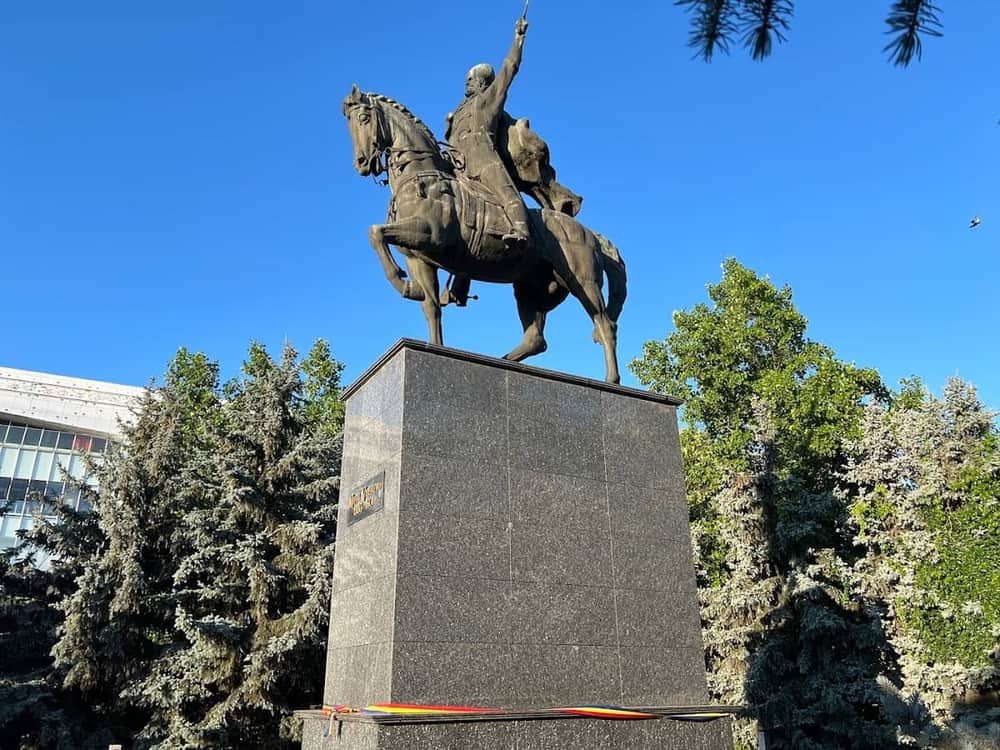
Start with the one in the square
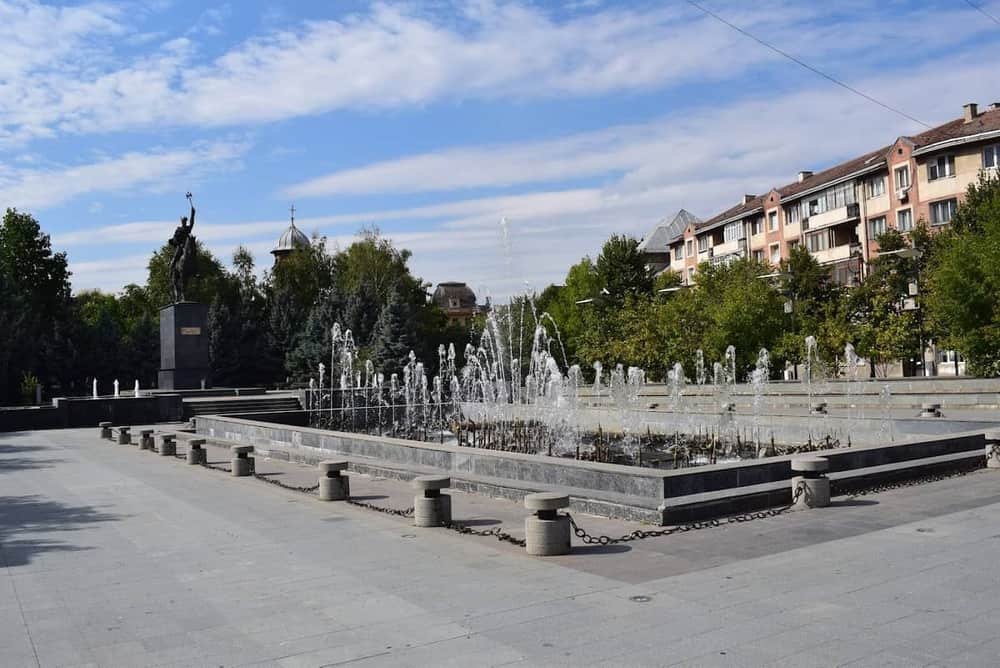
The equestrian statue of Michael the Brave stands in Piața Mihai Viteazul, which is the centre of the city in every sense — the square the Christmas market fills in winter and Craiova Days fills in June.
Michael the Brave matters here beyond the usual national-hero reasons: he was Ban of Oltenia before he was prince, which is to say he governed this region from this city. The statue is not generic patriotic furniture dropped into a provincial square; it is local.
That connection runs through the city's self-image. Bănia and the money of Oltenia explains the institution he held, and a short history of Craiova puts it in order.
The honest part about Craiova itself
The city is not rich in monuments, and pretending otherwise would waste your afternoon.
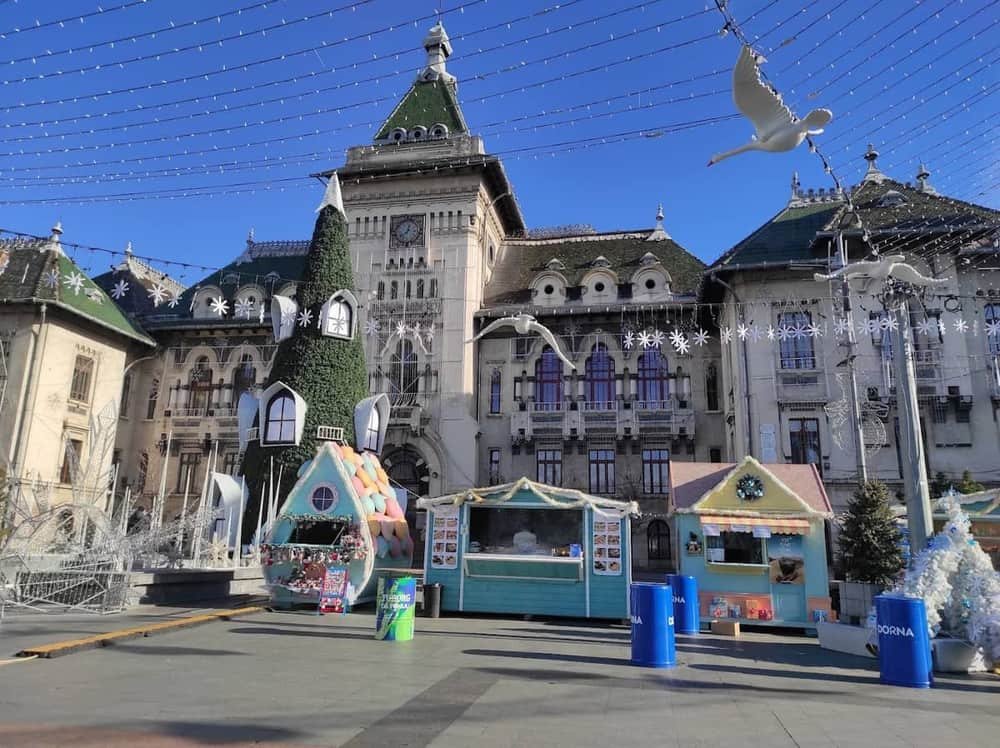
What Craiova has instead is architecture — a coherent Belle Époque street built in one generation, which is rarer than a good statue and much harder to acquire. The Administrative Palace is the civic set piece, and the façades along Calea Unirii are the real exhibit. Belle Époque Craiova is the walk.
So treat the statue as the start of an architectural hour rather than the first item on a monuments list. There is no monuments list worth an hour here.
Places in this piece
The monumental ensemble, which is an hour north
This is where it becomes world-class, and it is not in Craiova.
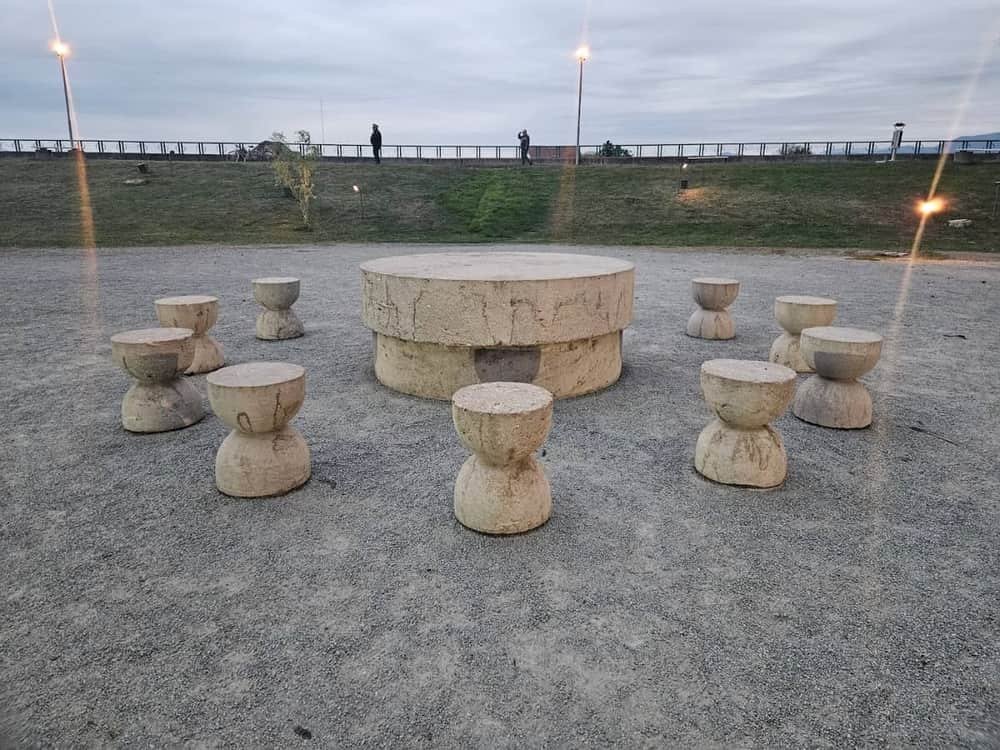
Târgu Jiu, 110 km, holds Brâncuși's ensemble — on the UNESCO list since 2024. It is not a statue but a 1.5 km axis through the middle of a town, and the pieces are meant to be read in order along it:
- The Table of Silence — twelve stools around a stone table, at the river end
- The Gate of the Kiss — the carved portal on the avenue
- The Endless Column — at the far end, in its own park
The whole point is the line between them. Driving from one park to the other defeats the work; walking the axis is the work. That is the single most useful thing to know before going, and most visitors learn it afterwards.
The Endless Column has the detail and Brâncuși in Craiova links it to the six originals in the Art Museum — which is the pairing that makes a trip here genuinely worth making.
Târgu Jiu also has the statue of Tudor Vladimirescu, which belongs to a different register entirely and is worth five minutes while you are there.
Where to stay nearby
Live prices and availability on a map centred on this exact spot — hotels, apartments and hostels, so you can judge the walk from here rather than guess from an address.
Bookings made through this map earn us a commission. Your price is unaffected.
Why Brâncuși is at Târgu Jiu and not somewhere famous
It is worth knowing, because it explains the whole region.
The ensemble was commissioned as a war memorial — to the men of Gorj who died defending the Jiu crossing in the First World War. That is why it stands where it stands, why it is laid out along a line through the town rather than gathered in a square, and why the three pieces are what they are rather than a figure on a plinth.
It also explains why it took until 2024 to be UNESCO-listed despite being, by most measures, the most important modernist sculptural ensemble in Europe: it sits in a provincial Romanian town, it was built for a local purpose, and for decades the people writing about modern sculpture were looking elsewhere.
That is Oltenia's pattern in miniature, and it is the reason this site keeps pointing at things nobody photographs.
West, at Drobeta
Drobeta-Turnu Severin, 113 km, is the Roman end of the region and has the monuments Craiova does not.
Trajan's bridge was built here in the second century and the piers are still standing in the water — which is a more affecting thing to look at than most sculpture. The model in the museum reconstructs it, and Trajan's bridge at Drobeta has the history.
Also there: Monumentul Eroilor, the water castle, and the Kinetic Fountain — which is in Drobeta, not in Craiova, a thing half the internet gets wrong and the single most common confusion about this region.
How to actually use a day
In the city: the statue, then the architecture, then the Art Museum. Ninety minutes, all within a few hundred metres, and the museum is the part that lasts.
Out of it: Târgu Jiu as a full day, walking the axis rather than driving it. Three days in Oltenia if you have longer.
All distances measured from Piața Mihai Viteazul and dated on the Oltenia page, and none of these sites publishes hours we would print with a date — museums in Craiova says the same thing. The outdoor ones, at least, are always open and free.










