
The short version
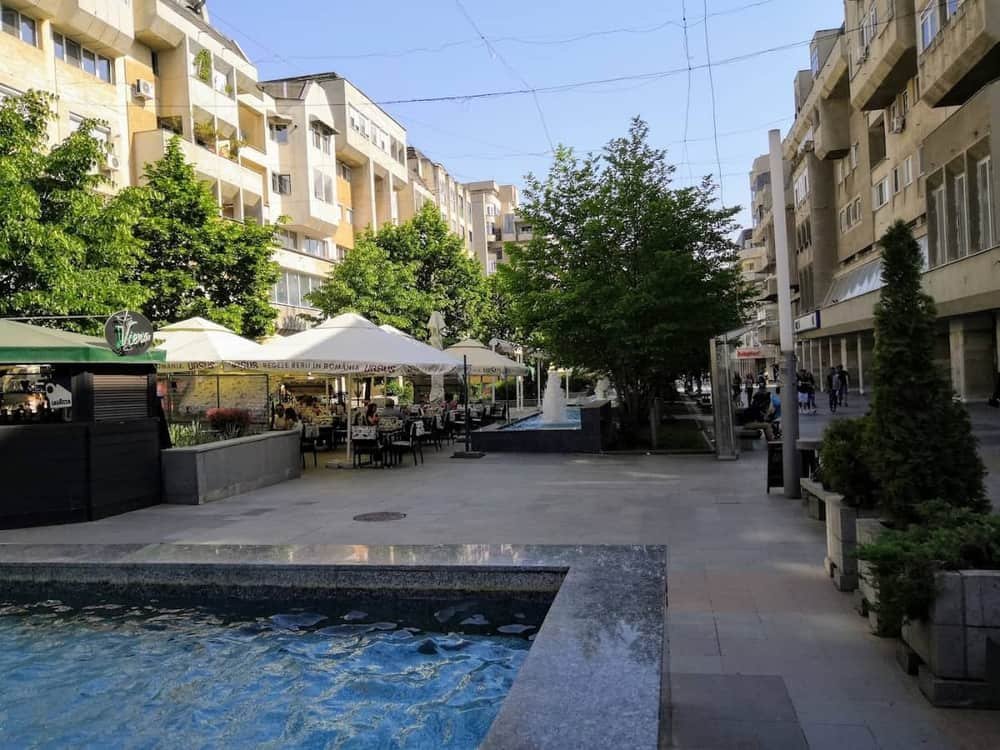
Calea Unirii is the reason central Craiova is worth a visit. It is a pedestrianised street lined with a continuous run of belle-époque facades — the densest in southern Romania outside Bucharest — and it was all built in roughly thirty years either side of 1900, with money from wheat.
This is a walk of about forty-five minutes if you stop to look up, and it is the single best thing you can do in the city for free.
- Start: Piața Mihai Viteazul, at the northern end.
- Finish: the southern end, from where Romanescu Park is ten minutes further on.
- Best light: the hour after sunrise, or the hour before sunset.
- Free, and nothing on the route closes. Which makes it the right plan for a Monday, when the museums do.
Checked October 2026. Nothing on this page has an opening time or a ticket price, which is why none of it can go out of date.
Why it looks like this
The Dolj plain is some of the most productive arable land in south-eastern Europe. In the decades after the 1870s, with the Danube open to grain export and the railways arriving, that land produced a concentration of money in Craiova that the city had never had before and has not had since.
It was spent on buildings, and this street is where most of it went. What you are looking at is one generation's confidence, in stone, built for a future that did not arrive: the 1948 nationalisations ended the money and nothing on this scale has been built in Craiova since. A short history of Craiova puts it in sequence.
The practical consequence for a visitor is unusual and good: a provincial city whose centre is architecturally coherent, because it was all built at once by people with the same taste and the same budget.
Places in this piece

The walk, north to south
Piața Mihai Viteazul
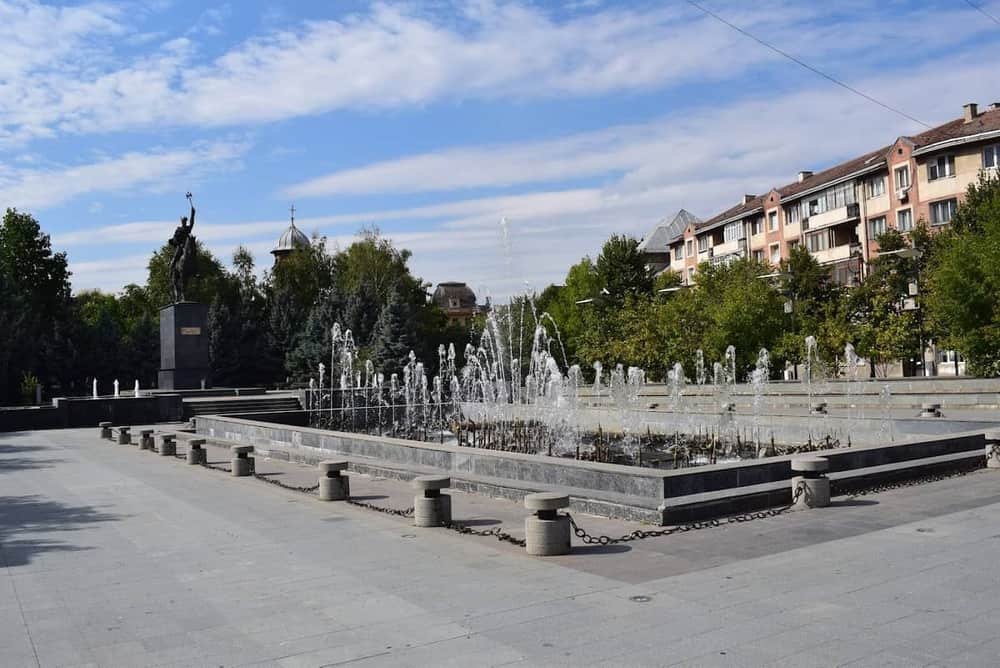
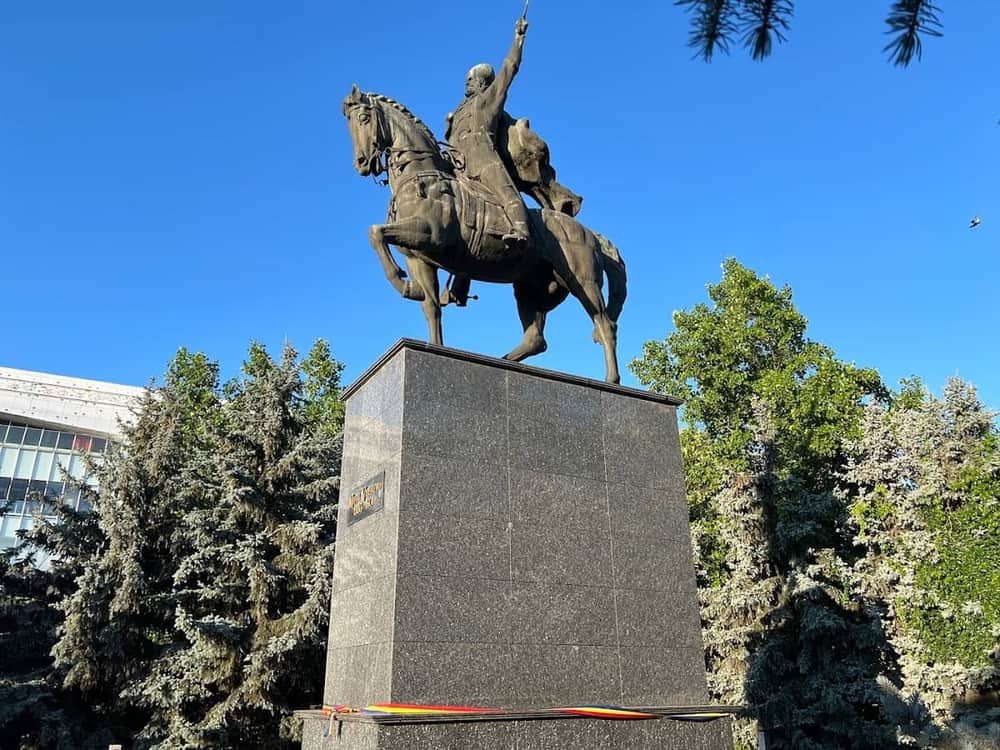
Start here. The square has the equestrian statue of Michael the Brave at its head, and he is not generic national decoration — he was Ban of Craiova before he became Prince of Wallachia in 1593, which is to say he worked here. The Bănia explains the office.
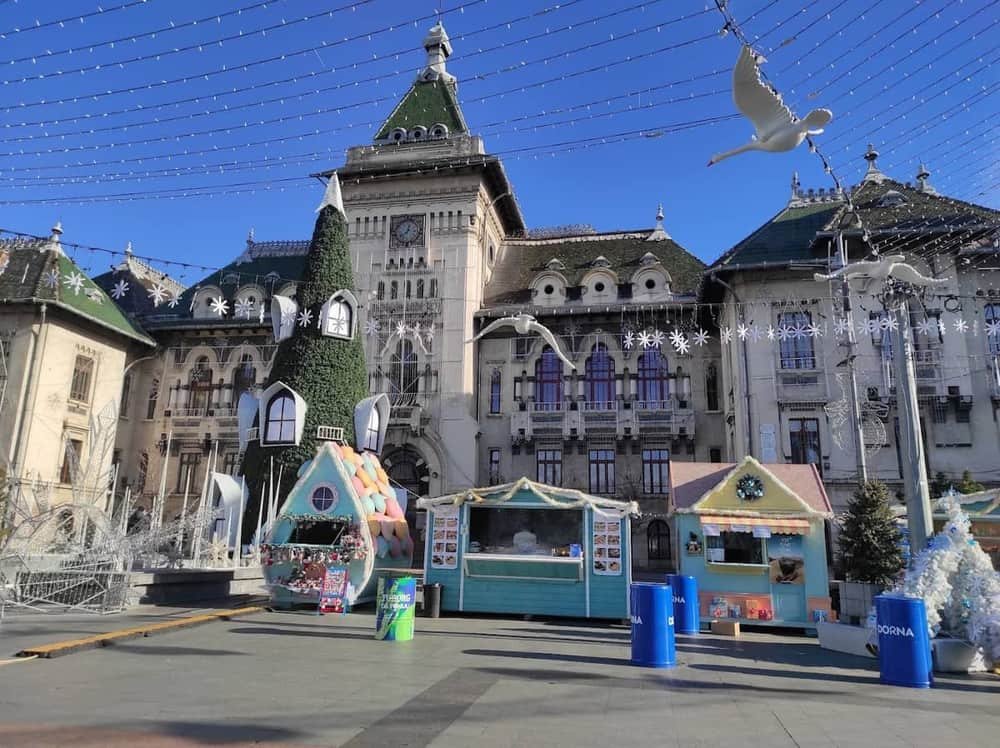
From mid-November to 3 January this square holds the Christmas market, which opens about a fortnight before Sibiu, Bucharest and Brașov.
The Administrative Palace
The Administrative Palace closes the view at one end of the square, and it is the most photographed building in the city. Look at the roofline rather than the entrance.
The museum block
Two minutes north: the Art Museum in the Jean Mihail Palace of 1900–07, which is the single best building on the route — marble, Venetian glass, and a staircase that was clearly the point of the ground floor. Six Brâncuși originals inside, including *The Kiss* of 1907.
You do not have to go in to appreciate the building, and on a Monday you cannot.
Calea Unirii itself
Now walk south and look up. This is the whole instruction. Ground-floor frontages in any European city centre have been replaced and replaced again; the first and second floors are where the 1900 city survives, and on Calea Unirii it survives almost unbroken.
What to notice: the ironwork on the balconies, the stucco around the window heads, the way the cornice lines run from building to building at the same height because they were designed as a street rather than as separate commissions, and the occasional date carved into a parapet.
Strada Olteț and the old town
Turn off into the old town at Strada Olteț. This is where lunch is — Maestro and Ardelenesc Oșanu' are both on it — and where the scale drops from boulevard to lane.
Strada Traian Demetrescu, two minutes off, is effectively the city's drinking street and is worth walking in daylight to see what you are coming back to. Craiova at night has the evening version.
The institutions
Within a few minutes of the walk: the Marin Sorescu National Theatre, which hosts the biennial International Shakespeare Festival; the Romanian Opera; the Oltenia Philharmonic; and the University. Three serious performing institutions in a provincial city is unusual and is a large part of why Craiova has the cultural weight it does.
Green, without leaving
English Park and the Alexandru Buia Botanical Garden — the latter belongs to the university and is the best-kept green space in the city after Romanescu — are both inside the walk rather than outside it. Parcul Tineretului and Parcul Trandafirilor are the smaller ones.
The churches
The Metropolitan Cathedral of Saint Demetrius is the main one. Biserica Mântuleasa, Saint Elijah and the Church of Our Lady are the others on or near the route — all free, all open at reasonable hours, and all a reminder that Craiova's pre-1800 fabric is thin. Churches and monasteries in Oltenia explains where the old architecture actually is.
Finish
The southern end of Calea Unirii, from which Romanescu Park is ten minutes further on — ninety-six hectares, free, laid out 1900–03 by a Frenchman whose plan won gold in Paris. Same money, spent on landscape.
Where to stay nearby
Live prices and availability on a map centred on this exact spot — hotels, apartments and hostels, so you can judge the walk from here rather than guess from an address.
Bookings made through this map earn us a commission. Your price is unaffected.
When to walk it
The hour after sunrise. The light is low on the facades, the terraces are still stacking chairs, and almost nobody sees it. In July and August this is not an aesthetic preference but the only comfortable time — the city averages a high of 30.0 °C in July and 30.1 °C in August. Beating the summer heat.
The hour before sunset, for the same reason in reverse, and then eat outside: terraces run roughly March to October and do not fill until after seven in high summer.
December, after dark. The market is in the square and the street is lit. An hour and a half outdoors is the realistic limit on a Craiova December evening — the problem is damp rather than frost, and the Jiu valley holds fog for days. Craiova in winter.
Monday. Specifically recommended, because the museums are shut and this walk is not.
What this walk is not
It is not a medieval old town. Craiova has no city walls, no fortified church, no hill with a citadel on it — the comparison with Brașov or Sibiu is one Craiova loses, and pretending otherwise would waste your morning.
What it is instead is a coherent nineteenth-century commercial street, pedestrianised, with a very good museum on it and a very large park at the end of it. That is a smaller proposition than a Saxon citadel and it is an honest one, and it is 230 km closer to Bucharest.
One day in Craiova builds the rest of the day around this walk, and free things to do in Craiova lists what else costs nothing.








