
Why this museum matters
Six Brâncuși originals, in one room, in a provincial city. That is the whole case and it does not need embellishing.
It is the largest group of his work in any Romanian museum outside Bucharest, and the two pieces that anchor it are *The Kiss* of 1907 — two figures cut from one block, the first of a series he returned to for four decades, and routinely called the first modern sculpture of the twentieth century — and a student head modelled in 1898, made while he was learning to carve at the School of Arts and Crafts four streets away.
Those two objects, in the same room, are the beginning and the first proof of the most consequential career in modern sculpture, and they are in the city where it started. What he made at the end of it is 110 km north at Târgu Jiu — see Brâncuși for the case for doing both.
Checked October 2026. The museum does not publish a dependable timetable or ticket price online, and this page does not invent one. Telephone before travelling, and particularly before travelling specifically for *The Kiss* — it has been lent out for temporary exhibitions before. The reasons this warning runs through the whole site are on the prices page.
The building is half the visit
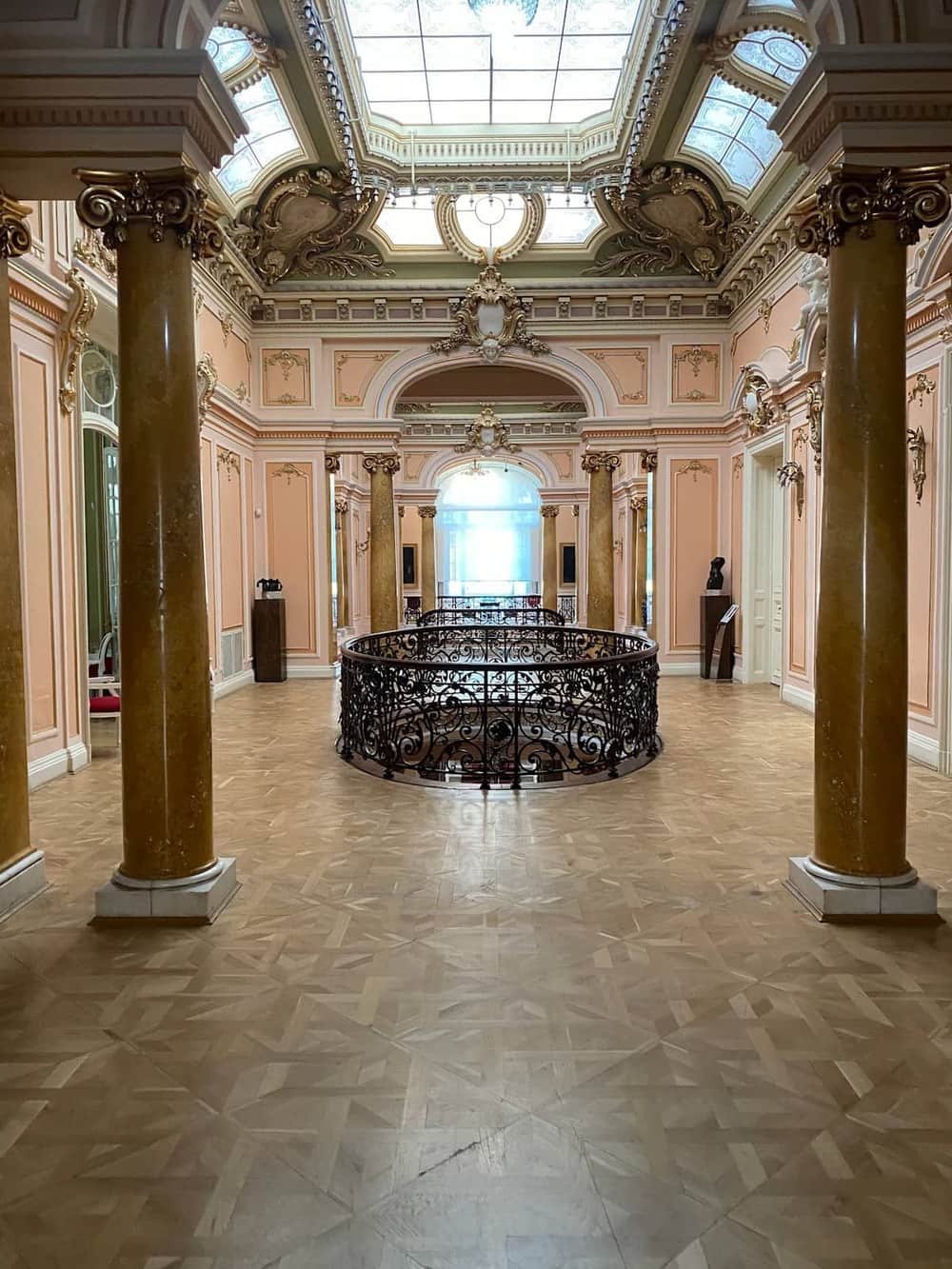
The museum occupies the Jean Mihail Palace, built between 1900 and 1907, and the building is not a container for the collection — it is one of the best things in Craiova in its own right.
It went up at the top of the city's wealth, when Oltenian grain money was at its height and Calea Unirii was being lined with the belle-époque facades that still define the centre. The Mihail family built on a scale that assumed the money would continue. Marble, a staircase that was clearly the point of the ground floor, Venetian glass, plasterwork — the kind of interior that in most European cities would be a house-museum with its own ticket.
It opened as a public collection in 1908 as the Aman Pinacotheca, and was renamed the Art Museum in 1954.
Places in this piece

What to see, in order
Go to the Brâncuși room first, while you are fresh. This is not a suggestion about pacing; the collection runs past eight thousand works and will absorb as much attention as you give it, and the six pieces are what you came for.
The student bust of 1898 is the one to look at longest, because of what it is not. It is competent, academic, carefully observed, and nothing has been removed yet — a young man demonstrating that he can do the thing that was being taught. Beside it, *The Kiss* of 1907 has had everything removed: the two figures are barely separated from the block, the features are incisions, and the embrace is read rather than depicted.
Nine years separate them. That gap, visible in one room, is the whole argument of modern sculpture, and seeing it here rather than in a reproduction is the reason the museum is worth a detour from anywhere in Romania.
Then the rest. Romanian nineteenth- and twentieth-century painting, the Theodor Aman holdings the collection is originally built on, and European works. It is a good provincial collection, honestly described — not a national gallery, and considerably better than the city's reputation would suggest.
Then the building. Walk the staircase twice. It is worth it.
Practicalities, as far as they can be stated
Where it is. Calea Unirii, two minutes' walk north of Piața Mihai Viteazul and inside the pedestrianised centre. Four minutes from the market in season.
How long. An hour for the Brâncuși room and the building. Two to three if you want the painting. Longer than that is a choice rather than a requirement.
Hours and tickets. Not reliably published. Most Romanian museums close on Monday and many close on Tuesday as well; this one's published information is inconsistent enough that the only honest advice is a telephone call on the morning you intend to go. If you are building a day around it — see one day in Craiova — make that call the day before.
Parking. The centre is pedestrianised, so the last four to eight minutes are on foot whatever you do. The underground car park at the National Theatre is two lei an hour *(checked October 2026)* and five minutes away. See where to park.
Where to stay nearby
Live prices and availability on a map centred on this exact spot — hotels, apartments and hostels, so you can judge the walk from here rather than guess from an address.
Bookings made through this map earn us a commission. Your price is unaffected.
When to come
February, perversely, is one of the best times. It is the thinnest month of the Craiova year — no market, no festival, poor light, fog in the Jiu valley — and this museum is warm, indoors, and the single best hour the centre can give you in bad weather. A February weekend here costs very little and the Brâncuși room is empty. See Craiova in winter.
July and August, for the same reason inverted: the city averages highs of 30.0 °C and 30.1 °C and the museum is cool. Put it in the eleven-to-five block when walking outside is unpleasant — beating the summer heat has the full shape of a hot day.
Mid-November to early January is the city's season, and the museum is four minutes from the Christmas market. An hour and a half outdoors is the realistic limit on a December evening; this is where you go next.
What else is within five minutes
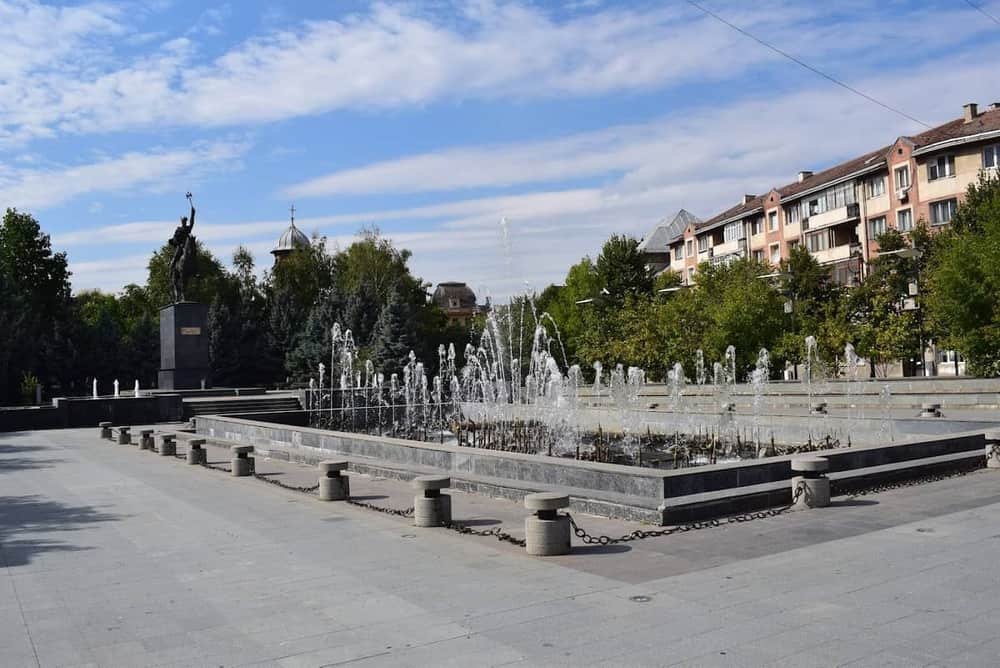
The museum is one corner of a genuinely dense museum quarter, which is unusual for a city this size:
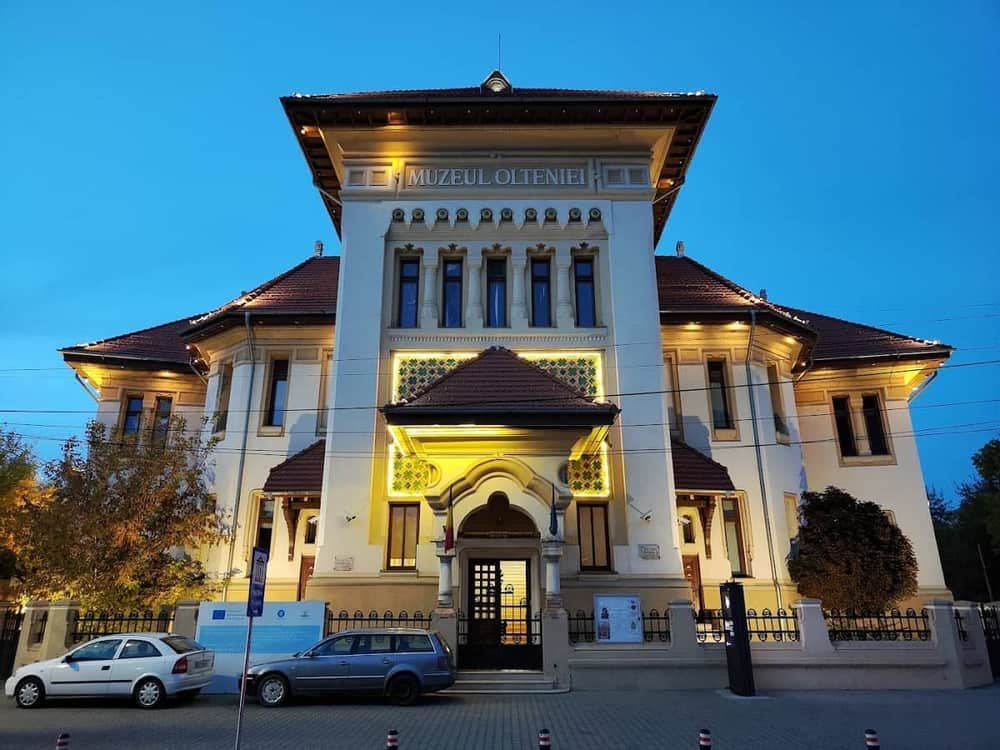
- The Oltenia Museum of History and Archaeology and its natural sciences wing — the natural sciences one is the museum that works with children.
- The Ethnographic Museum in Casa Băniei, the oldest building in Craiova.
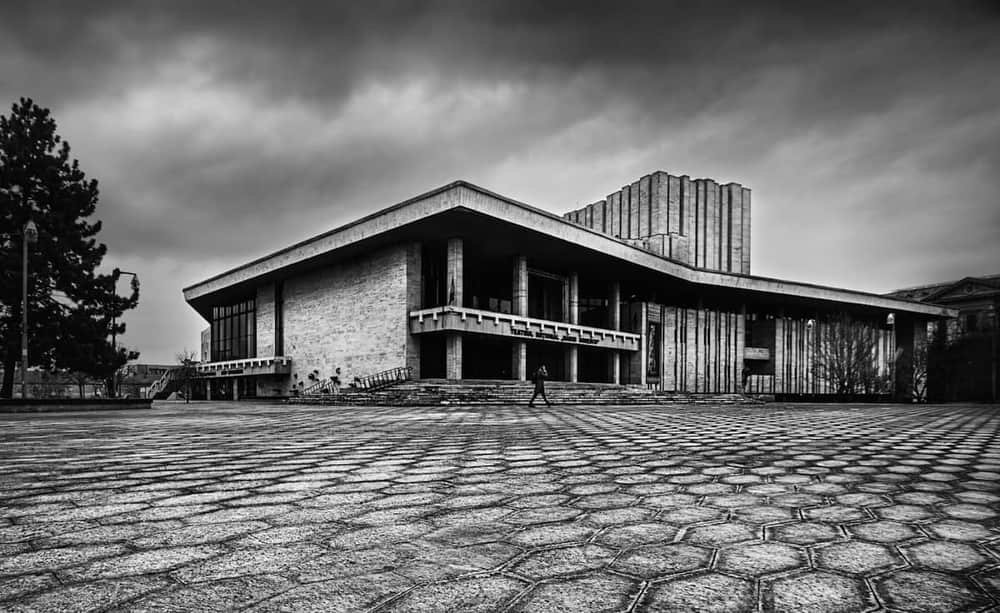
- The Marin Sorescu National Theatre, which hosts the biennial Shakespeare festival.
- The Romanian Opera and the Oltenia Philharmonic.
- The Administrative Palace and the old town.
Coffee afterwards: Patiseria Eugenia on Strada Mihai Viteazul, thirty seconds from the square and a patisserie as much as a café, or Coffee Story and Bad Habits for coffee taken seriously. Lunch at Casa Ghincea on Madona Dudu or Maestro on Strada Olteț.
A note on duplicate listings
If you search for this museum you will find it under more than one name — the Jean Mihail Palace, the Craiova Art Museum, and occasionally as separate entries for the building and the collection. They are the same place. The palace is the building; the museum is what is in it; and the review counts attached to the various listings differ wildly because people tag whichever name they searched for.
The same applies to the natural sciences wing, which appears both as part of the Oltenia Museum and as a free-standing entry. One institution, two buildings, three or four names, depending on the aggregator.
And then go north
The six pieces in this room are the start of the story. The end of it is the Monumental Ensemble of Târgu Jiu — the Table of Silence, the Gate of the Kiss and the Infinite Column on a single straight 1.3 km axis across the town, made in 1937–38 as a First World War memorial, free, outdoors at any hour, and a UNESCO World Heritage Site since 2024.
It is 110 km north and a measured 1 h 50 min away. Doing the museum on one day and the ensemble on the next is the two-day trip this whole site is built around — see two days in Craiova and Brâncuși.










