
The short version
Craiova's churches are its oldest surviving layer. The Belle Époque centre was built between 1880 and 1914; several of the churches predate it by centuries, and two of the monasteries are outside the centre in places nobody thinks to look.
They are also free, open most of the day, and the only buildings in the city where you can see a pre-nineteenth-century interior without an appointment.
One standing rule: these are working churches, not monuments. Services happen, people are praying, and the correct behaviour is to be quiet, dress reasonably, and not photograph during a liturgy.
In the centre
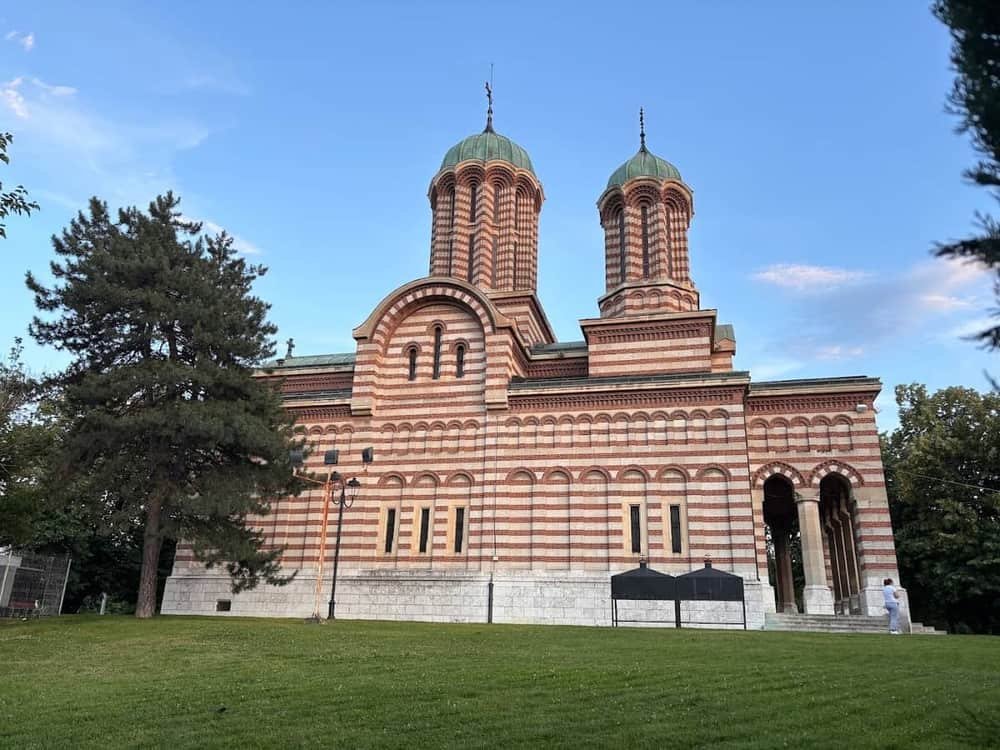
The Metropolitan Cathedral "Saint Demetrius" is the principal church of the city and the one to see if you see one. It is central, it is the seat of the metropolitan, and at Easter the midnight service here is the central event of the Romanian year rather than a show for visitors — Craiova at Easter.
The Metropolitan Palace stands beside it and belongs to the same ensemble.
Biserica Mântuleasa, Biserica Sfântul Ilie and Biserica Sfântul Gheorghe Nou are the central parish churches — small, old, and the kind of thing you walk past on Calea Unirii without registering.
Biserica Maica Domnului is the fourth, also central.
None of them takes more than ten minutes. Together they are a quiet hour that costs nothing and is completely unlike the rest of the city's architecture.
Places in this piece
The two monasteries, which are the real find
These are inside the city limits and almost no visitor goes to either.
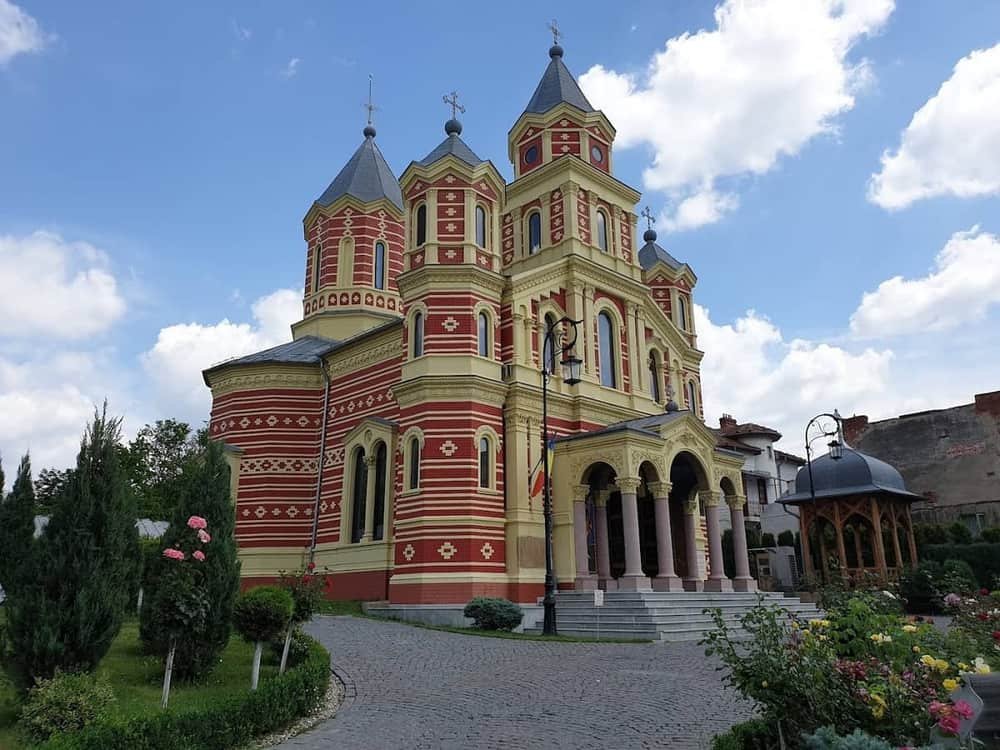
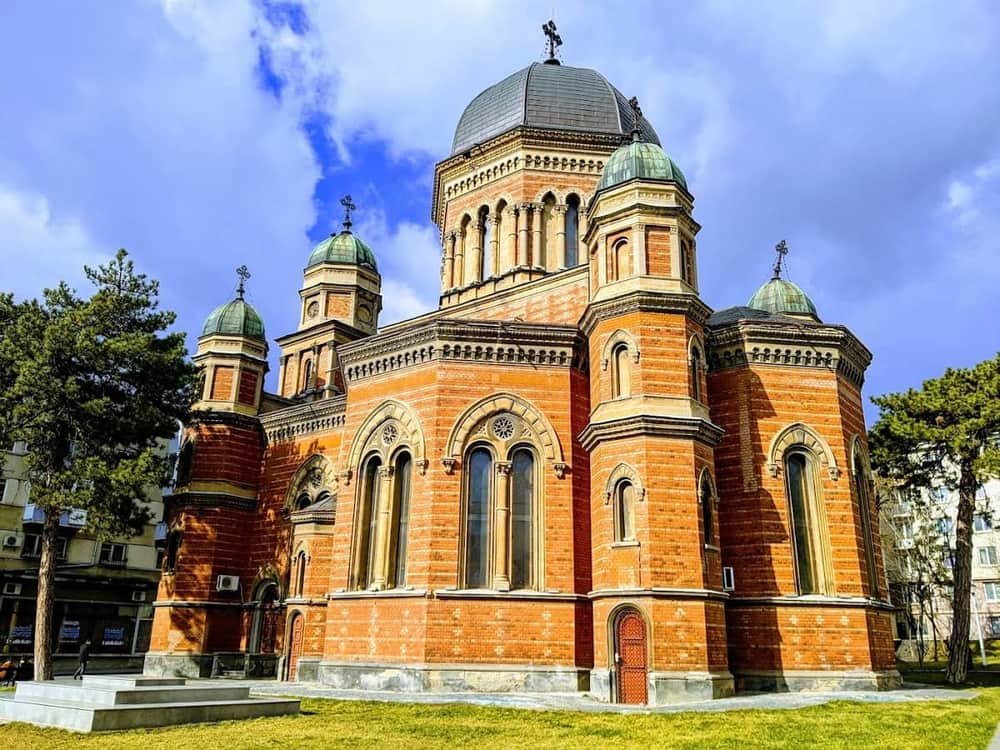
Mănăstirea Coșuna is in the 1 Mai area — the oldest monastic foundation in Craiova and the sort of place that is startling precisely because of where it sits.
Mănăstirea Jitianu is out at Balta Verde, south of the city. It is also one of the stops on the Oltenia page, which treats it as a destination rather than a suburb.
Both are working monasteries. Go quietly, and go in the morning.
Out in the neighbourhoods
Biserica Sfântul Nicolae in Brazda lui Novac is the one worth knowing if you are staying out of the centre — see the neighbourhood pages for what else is nearby.
Where to stay nearby
Live prices and availability on a map centred on this exact spot — hotels, apartments and hostels, so you can judge the walk from here rather than guess from an address.
Bookings made through this map earn us a commission. Your price is unaffected.
The regional context, which is where it gets serious
Craiova's churches are good. Oltenia's monasteries are internationally important, and that is a different category.
Hurezi Monastery, 113 km — on the UNESCO list since 1993, and the most significant Brâncovenesc ensemble anywhere. The Hurezi guide.
Tismana, 131 km — the oldest monastic foundation in Wallachia. The Tismana guide.
Churches and monasteries in Oltenia covers both properly, and both distances are measured from Piața Mihai Viteazul and dated on the Oltenia page.
Neither has useful public transport. That is true of almost everything in Oltenia and it is why a car is a requirement rather than a preference.
What you are actually looking at
Romanian Orthodox churches are read differently from Western ones, and three things help.
The plan is small on purpose. These are not cathedrals in the Gothic sense and they were never meant to hold a seated congregation. People stand, and move, and the building is sized for that.
The painting is the content. Where a Western church puts sculpture and stained glass, an Orthodox one puts fresco — wall to wall, floor to ceiling, in a fixed programme. The scheme is not decoration; it is the argument of the building.
The porch matters. Many Wallachian churches of the Brâncovenesc period have an open porch with carved stone columns, and it is usually the most worked part of the exterior. Hurezi is where to see that done at the highest level.
Against that, Craiova's own churches are modest. Their interest is age and continuity rather than scale — which is exactly why they survive as the oldest layer of a city that rebuilt everything else in the 1890s.
When to go
Sunday morning is when they are alive and when you are most likely to be in the way. Pick one or the other: go to be present, or go on a weekday to look at the building.
Easter is the peak, and worth seeing once. Craiova at Easter explains what else closes that week.
Christmas fills the centre with the market rather than the churches, but the services run and the contrast between the square and the cathedral fifty metres away is the most Craiova thing there is.
Public holidays has the calendar; religious dates move with the Orthodox reckoning, which is not the Western one.
Hours and entry
Free, and generally open through the day — but like everything else in this region, none of them publishes a timetable we would print with a date. If you are making a special trip to Coșuna or Jitianu rather than passing by, ring.
That is the same honest caveat that applies to the museums and to everything on the Oltenia page: across this region almost nothing maintains reliable published hours, and a confident wrong number is worse than an admitted gap.










