
The short version
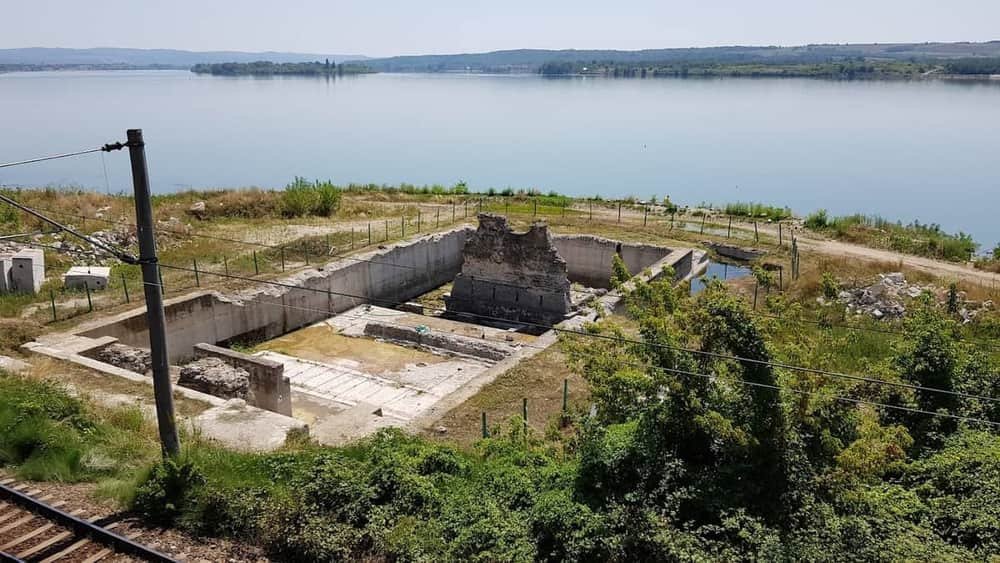
Apollodorus of Damascus built Trajan's Bridge across the Danube at what is now Drobeta-Turnu Severin in 103–105 AD, to carry a Roman army into Dacia. For roughly a thousand years afterwards it was the longest arch bridge ever built, and one of its piers still stands on the Romanian bank, free and in the open, with its twin visible across the water in Serbia.
- 112 km west of Craiova, measured at 1 h 45 min. Free to walk up to.
- It is depicted on Trajan's Column in Rome, which is how we know what the superstructure looked like.
- The Iron Gates Region Museum is next to it and explains what you are looking at.
- The medieval Fortress of Severin is the town's other major site — 4.6 from nearly five thousand reviews.
- This is the one Oltenian trip with enough town attached to justify two days.
Checked October 2026. The drive time is measured on the road. The construction dates and the attribution to Apollodorus are stable; the circumstances of the bridge's destruction are genuinely disputed in the ancient sources and are presented as such below.
What was actually built
Stone piers carrying a timber superstructure. That combination is the thing to understand, because it explains both the engineering achievement and why so little survives.
The piers were masonry, founded in the riverbed — twenty of them, by the usual count — and the roadway above was carried on wooden arches. Building masonry foundations in the bed of the Danube in two campaigning seasons, without modern pumping, is the part that impressed Roman writers and still impresses engineers; the timber above was comparatively conventional.
The overall length was something over a kilometre. Estimates differ in the detail because the surveys differ, and anyone quoting you a figure to the metre is quoting one survey rather than a consensus.
Apollodorus of Damascus is the architect, and he is the same man credited with Trajan's Forum and, by most accounts, Trajan's Column itself — which matters, because the Column carries a relief of this bridge. It is the primary evidence for the superstructure, and it is the reason reconstructions of the bridge exist at all.
Places in this piece
Why it was taken down, and who did it
Here the honest answer is that we do not know, and the sources disagree.
The bridge was built to move an army into Dacia. Within a century or so the superstructure was gone. The two candidates in the ancient accounts are Hadrian, Trajan's successor, who is said to have had the timber removed to stop the bridge being used against the Empire from the far bank; and Aurelian, later, in the context of the Roman withdrawal from Dacia in the 270s.
Both explanations make strategic sense and both appear in the literature. What is not in dispute is that the stone piers stayed, standing in the river, for the next seventeen hundred years.
What survives, and the slow loss of it
This is the part that is worth knowing before you arrive, because it manages expectations in the right direction.
One pier stands on each bank, and those are what you can walk up to. The Romanian one is at Drobeta-Turnu Severin, in the open, with free access; the Serbian one is visible across the water at Kostol.
The piers in the river itself have been going, steadily, for a century. Some were removed in the early twentieth century because they obstructed navigation on a working commercial river. Others have been lost to the current and to the raising of the water level after the Iron Gates dams were built upstream of here in the twentieth century. Counts of what remains underwater differ by survey and by decade, and the trend is downward.
So: do not come expecting a bridge. Come expecting two piers, two kilometres apart, on two sides of an international border, and the mental work of putting a kilometre of Roman timber between them. That is a better experience than it sounds, and the museum next door is what makes it possible.
Where to stay nearby
Live prices and availability on a map centred on this exact spot — hotels, apartments and hostels, so you can judge the walk from here rather than guess from an address.
Bookings made through this map earn us a commission. Your price is unaffected.
The rest of Drobeta, which is the surprise
This is the Oltenian day trip with the most actual town attached to it — seventeen listed attractions, against two or three for most of the others — and the town is better than its industrial reputation.
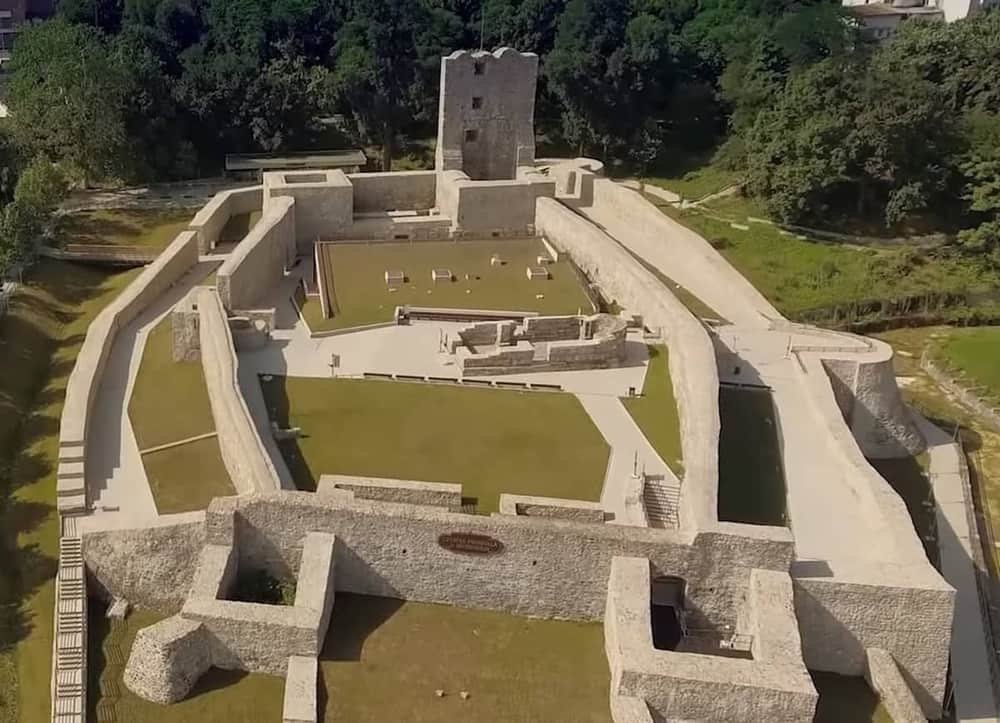
Fortress of Severin — the medieval castle, 4.6 from nearly five thousand reviews, which makes it the most-reviewed single sight in the town.
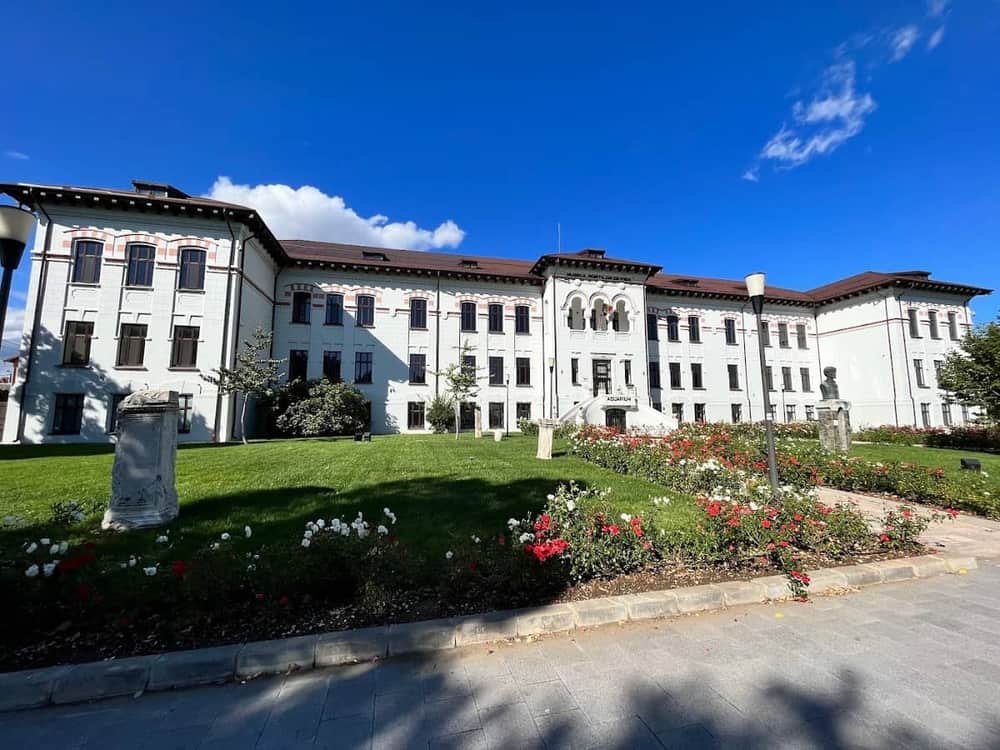
Iron Gates Region Museum — 4.7 from two thousand. The archaeology of the bridge and the region, and the thing that turns the piers from stones into a story.
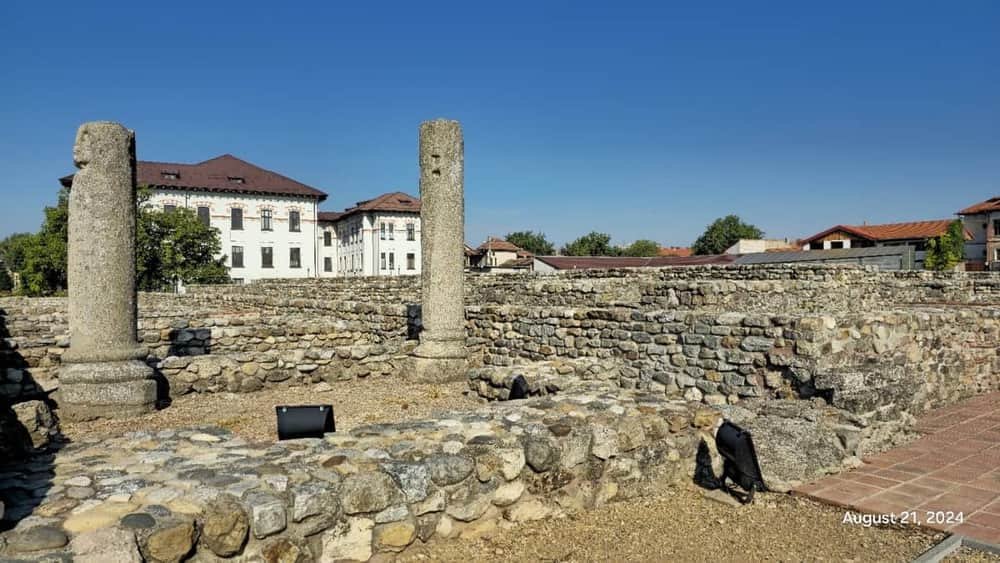
The Castrum of Drobeta — the Roman fort that guarded the bridgehead.
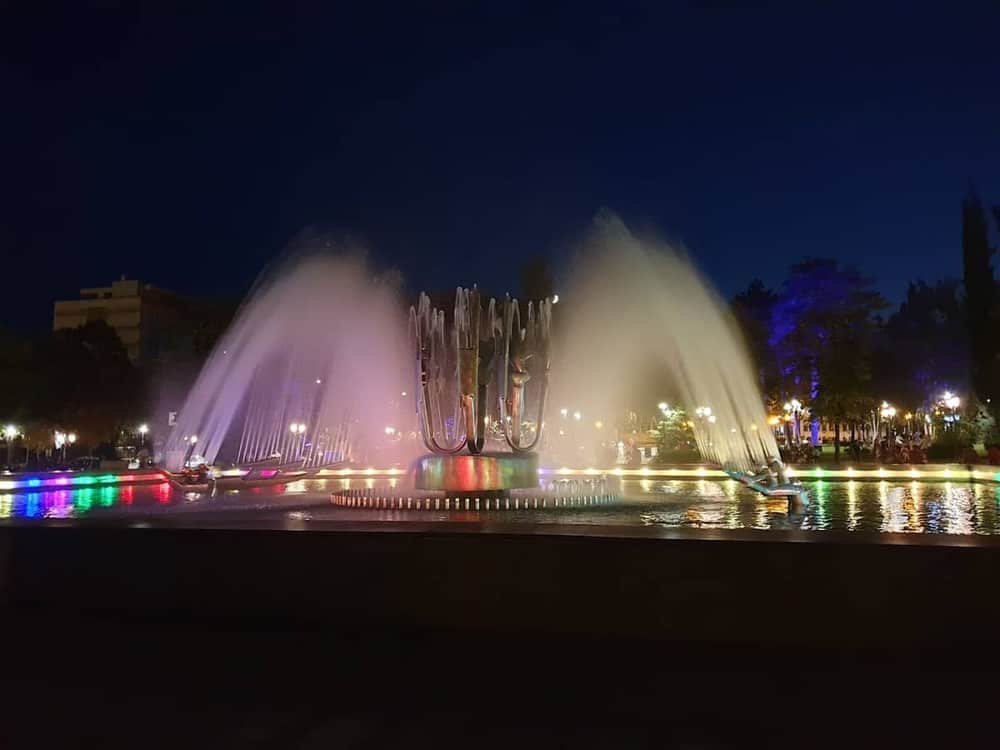
Fântâna Cinetică — the kinetic fountain on Bulevardul Carol, 4.7 from over two thousand reviews. One correction, because it appears constantly in the wrong place: this fountain is in Drobeta, not in Craiova. Half the internet has it filed under the wrong city.
Water Castle of 1913, Promenada Crișan along the river, Pădurea Crihala above the town, and Parcul Rozelor.
Eating and staying: eight restaurants and eight places to sleep. CRAFT Pizza holds a 4.6 from nearly seven thousand reviews, which for a town this size is remarkable; Agape by Kripton and NEST at 4.8 are the other two to know. See the Drobeta area page.
The day, and the case for two
As one day: leave Craiova early, 112 km and 1 h 45 min west, do the bridge and the museum in the morning, the fortress and the river promenade after lunch, and drive back. That works and it is a good day.
As two: stay the night, and spend the second day on the Danube gorge west of the town — the Iron Gates proper, which begin about forty minutes beyond Drobeta and are the most spectacular stretch of river in Romania. That is not an extension of the first day; it is its own one, and it is the reason this is the Oltenian destination that rewards an overnight.
What not to combine it with. Everything else. Târgu Jiu is north, Horezu is north-east, Calafat is south. Drobeta is west, and the region does not let you do two directions in a day — two days in Craiova sets out the geometry.
Getting there
112 km west of Craiova, measured at 1 h 45 min on good road — the best road surface of any of the long trips from the city.
Drobeta is on the rail network, which makes it the only one of the long Oltenian destinations that is theoretically reachable without a car. In practice the sights are spread along the riverbank and across the town, which makes it a frustrating day on foot after the journey. Craiova without a car is honest about this.
When to go
Spring and autumn. April, May, September, October — the river promenade and the gorge beyond are at their best, and the drive is pleasant.
Summer works but plan around it. This far south and west, on the river, July and August are hot — Craiova's own normals are a 30.0 °C July high and 30.1 °C in August, and Drobeta is not cooler. The bridge pier and the castrum are outdoors with no shade. Morning, or late afternoon. Beating the summer heat has the strategy, and the museum is the indoor option in the middle of the day.
Winter is the fog risk rather than the cold one, as everywhere in this region — see Craiova in winter.
The one-line version
Two Roman piers on two banks of the Danube in two countries, a kilometre of vanished timber between them, and the museum next door that makes it legible. An hour and forty-five minutes west of Craiova, and the one trip from the city that earns a second day.










