The short version
Three days is when a Craiova trip stops being a city break and becomes a regional one. The structure that works is one city day and two driving days in different directions, because Oltenia does not let you do two directions in one day.
- Day 1 — Craiova on foot. The centre, the Brâncuși room, the park. No car.
- Day 2 — north-west. Târgu Jiu for the Brâncuși ensemble, 110 km and a measured 1 h 50 min, plus Tismana 20 km beyond it.
- Day 3 — north-east. Horezu for the UNESCO monastery and the potters, 113 km, plus Peștera Muierilor on the same road.
- The alternatives for day 3: Drobeta west for the Roman bridge, or Rânca north for 1,600 m and fifteen degrees of relief in August.
- You need a car for days 2 and 3. Not negotiable.
Checked October 2026. All drive times are measured on the roads rather than taken from a straight line. Monastery and museum hours in this region are not reliably published — the reasons are on the prices page, and each destination page says what to telephone about.
Day 1 — the city, on foot
No car, no transport, about eleven kilometres of flat walking across the day. The timed version is one day in Craiova; the shape is:
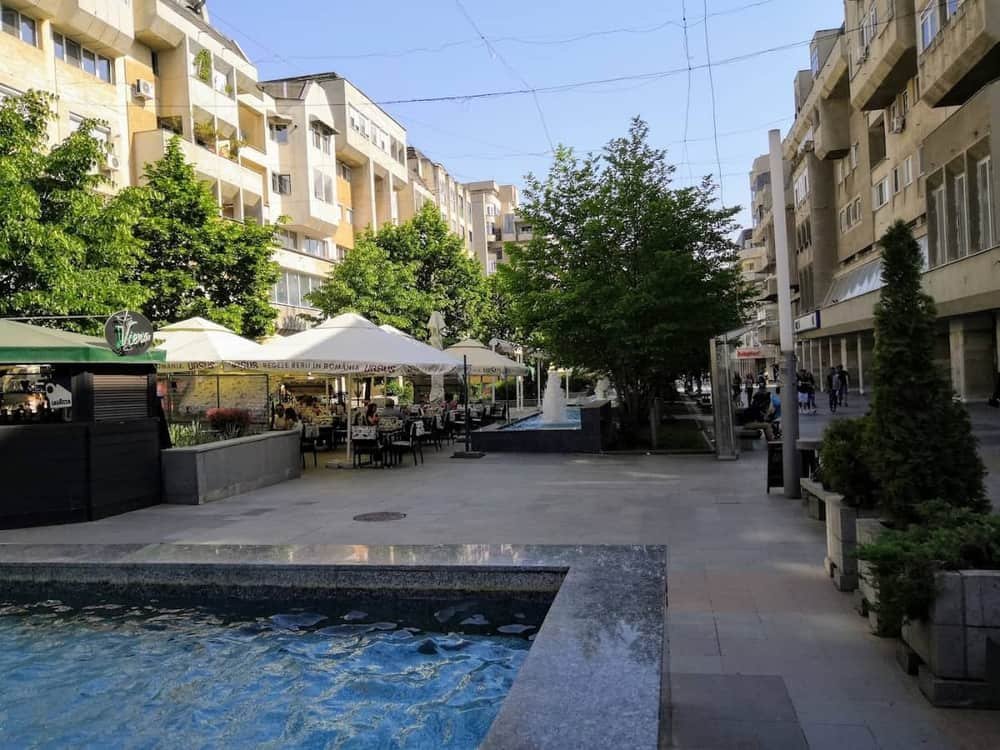
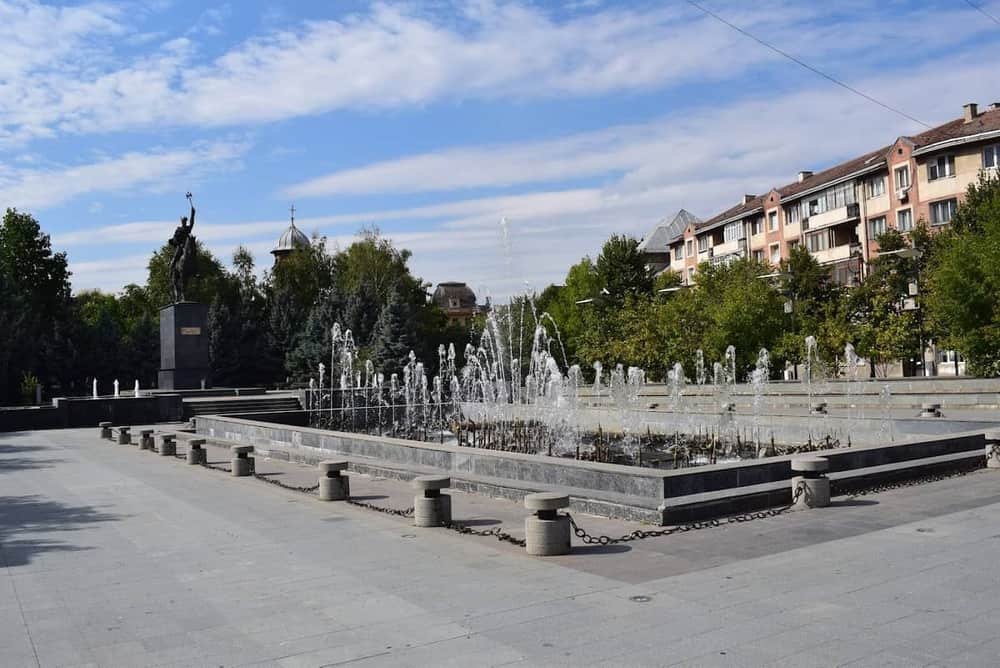
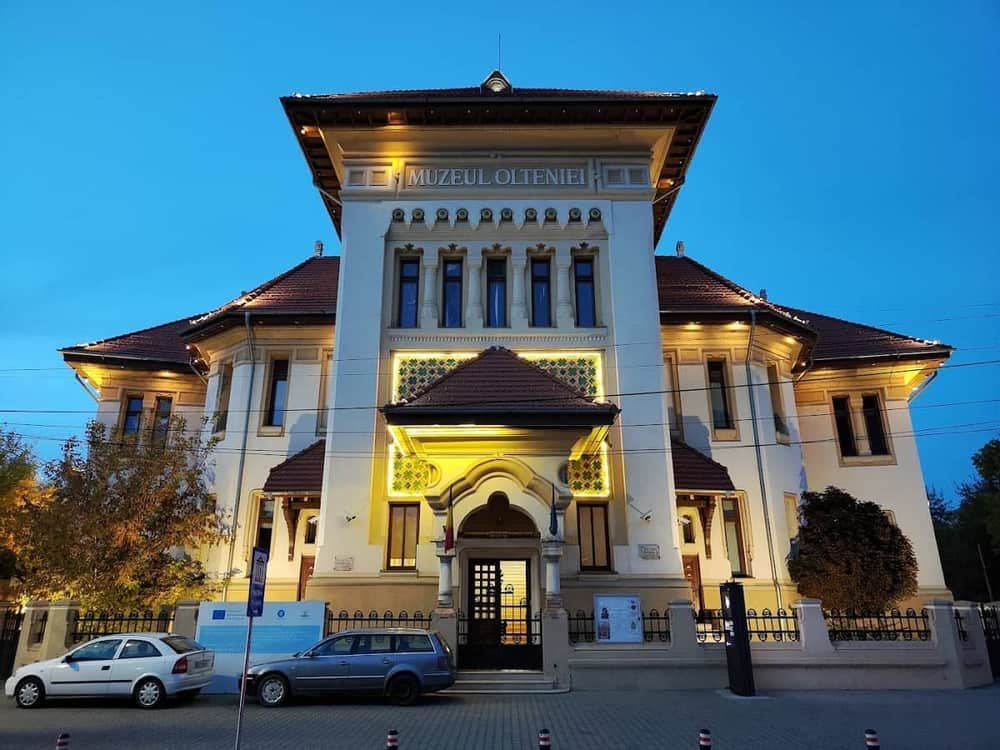
Morning — Piața Mihai Viteazul at half past nine while the terraces are empty, then the Art Museum in the Jean Mihail Palace of 1900–07. Go to the Brâncuși room first: six originals, including the student head of 1898 and *The Kiss* of 1907, nine years and the whole argument of modern sculpture apart. Then Casa Băniei and the Oltenia Museum.
Lunch on or just off Calea Unirii — Casa Ghincea on Madona Dudu, or Maestro on Strada Olteț.
Afternoon — Romanescu Park, ten minutes south: ninety-six hectares laid out 1900–03 by a Frenchman whose plan won gold in Paris, free at any hour.
Evening — a terrace from seven, then Strada Traian Demetrescu. Craiova at night.
Telephone the Art Museum the day before. It does not publish a dependable timetable and *The Kiss* has been lent out before.
Places in this piece
Day 2 — north-west: Brâncuși and the oldest monastery
This is the better of the two driving days and it should come first, because it is the one that justifies the trip.
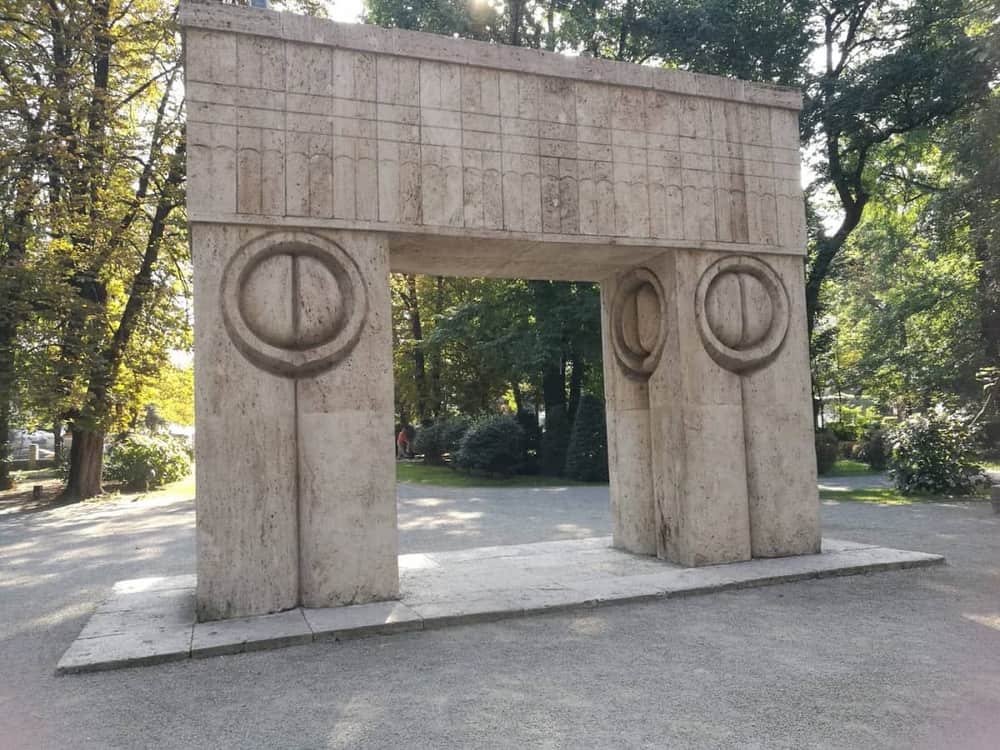
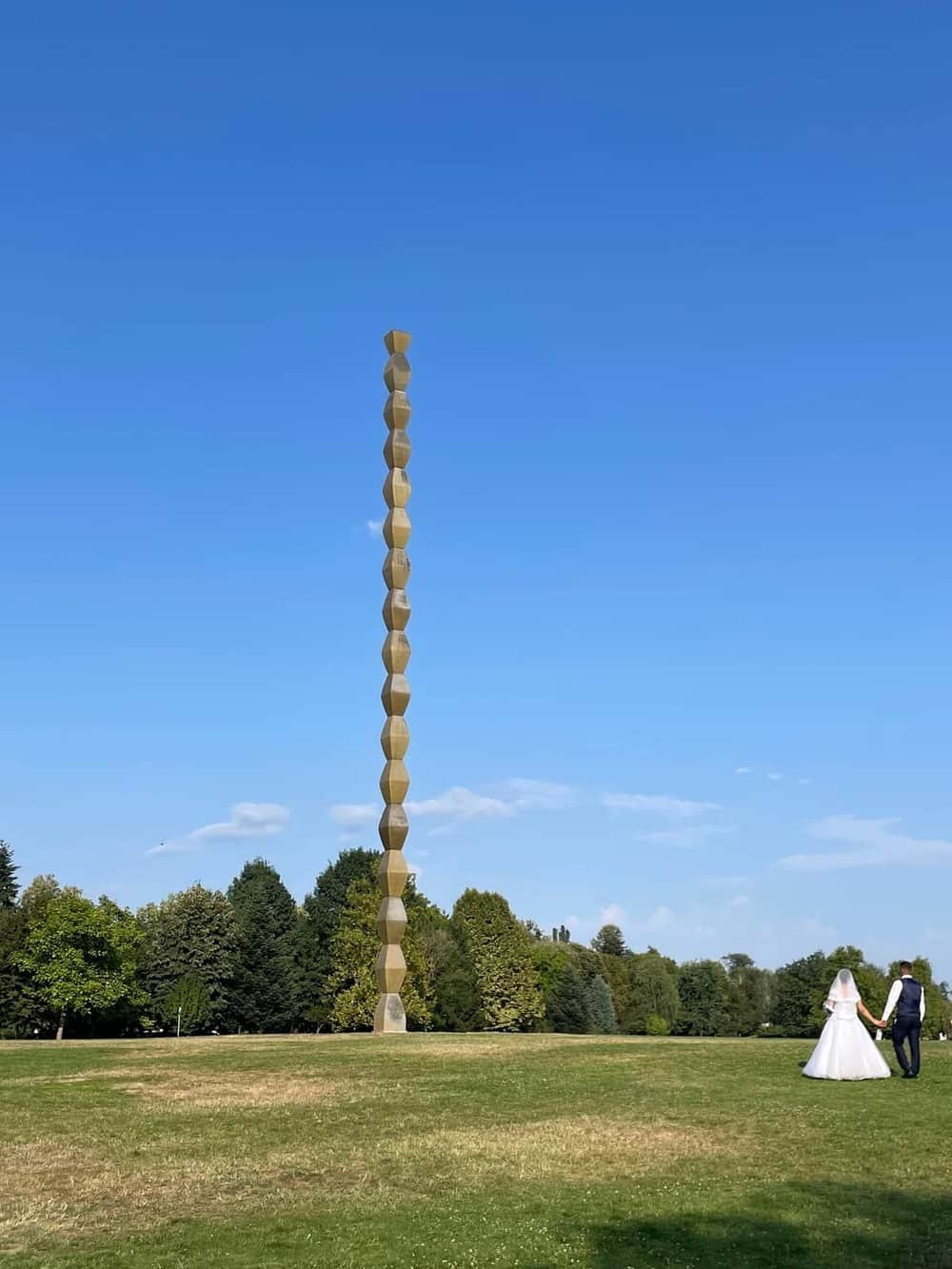
Morning — Târgu Jiu, 110 km, a measured 1 h 50 min. Park at the Table of Silence end, by the Jiu, and walk east: Table, then the Gate of the Kiss, then 1.3 km on through the central park and across the main street to the Infinite Column — cast 1938, 29.33 m, cut off mid-module at the top so the eye continues past the object.
About twenty-five minutes at an unhurried pace, entirely free, outdoors at any hour, and a UNESCO World Heritage Site since 2024. Nearly everybody parks at the Column instead, which is the wrong way round: the axis is the work.
Read against yesterday's museum, the two ends of Brâncuși's career bracket your trip — 1898 and 1907 in Craiova, 1938 here. Brâncuși makes the case.
Lunch in Târgu Jiu — sixteen listed restaurants, more than any other town in the region. Terasa ANNA, Ambasador, Casa Vera.
Afternoon — Tismana, 20 km on. Begun by Saint Nicodim in the 1370s, the oldest surviving monastic foundation in Wallachia, on a rock above a gorge with a waterfall behind the church — and the place Romania's national gold reserve was hidden in 1944. Free; working monastery, so dress modestly. The last stretch of road is narrow.
Back to Craiova for dinner, or stay: Târgu Jiu has nine places to sleep.
Day 3 — north-east: two UNESCO entries and a genome
Morning — Hurezi Monastery, 113 km, about 1 h 57 min. Founded 1690, finished around 1697, and the building that gave the Brâncovenesc style its name — carved stone, open colonnaded porches, a painted narthex carrying the founder's family. UNESCO-listed in 1993 under reference 597. Courtyard free; working monastic community.
Go in the morning: a working Romanian monastery is reliably open then, and the published hours are not reliable at all.
Then the Horezu potters, in the village and along the road. The craftsmanship went onto UNESCO's intangible heritage list in 2012 — the men throw, the women decorate, the lines are trailed with a cow horn and a quill. Buy at the house with the kiln in the yard, not at a roadside stall, and take cash. That makes Horezu a town of six thousand with two UNESCO entries, one a building and one a skill.
Afternoon — Peștera Muierilor at Baia de Fier, 119 km from Craiova and on the same road. The skull found here belonged to a woman who died about 35,000 years ago, and in May 2021 her entire genome was published in *Current Biology* — showing that the out-of-Africa migration was not the great bottleneck in human genetic history. Very few complete genomes that old exist.
Two warnings: visits are guided only, so you go when a guide goes; and the published information is genuinely unreliable — the timetable circulates as a photograph of a printed sheet and the booking sites quote four different closing times. Telephone on the morning. It is 10 °C inside all year, so take a layer even in August.
Where to stay nearby
Live prices and availability on a map centred on this exact spot — hotels, apartments and hostels, so you can judge the walk from here rather than guess from an address.
Bookings made through this map earn us a commission. Your price is unaffected.
Swapping day 3
Two substitutions are both defensible, depending on the season and on what you like.
Drobeta-Turnu Severin — 112 km west, 1 h 45 min. Trajan's Bridge, built by Apollodorus of Damascus in 103–105 AD and for a thousand years the longest arch bridge ever built: one pier on the Romanian bank, free and in the open, with its twin visible in Serbia. Plus the medieval Fortress of Severin, the Iron Gates Region Museum, and seventeen listed attractions — the most of any town in the region. This is the one destination that genuinely rewards a fourth day, because the Danube gorge begins forty minutes beyond it.
Rânca — 134 km, a measured 2 h 15 min, at 1,600 m. The right swap in July and August, when Craiova averages a high of 30.0 °C and 30.1 °C and Rânca runs ten to fifteen degrees cooler. Also the southern foot of the Transalpina, the highest road in Romania — open over the Urdele pass in summer, shut by administrative order for roughly half the year.
Or a half-day, if the weather turns
Segarcea — 29 km south, a measured 34 minutes. The only genuine half-day from Craiova: the former royal Crown Domain and the best-known wine producer in Dolj. Book the tasting ahead, because there is nothing else in the town to fall back on, and remember that Romania enforces a zero-tolerance drink-drive limit — designated driver, or a taxi, which at 29 km is a defensible cost.
Pair it with a free afternoon back in the city, or with the Danube further south.
The rules this itinerary is built on
One direction per day. Târgu Jiu is north-west and Horezu is north-east, roughly two hours apart on opposite sides of Craiova. People try to combine them and spend six hours in a car.
The city day needs no car; the other two cannot be done without one. Hire locally from the airport for the days you need it rather than paying for a vehicle to sit in a car park. Craiova without a car is honest about what is reachable otherwise: Segarcea, and essentially nothing else.
Telephone about hours. Across Oltenia almost nothing is citably published — the cave publishes a photograph, Hurezi's page has carried a placeholder e-mail for years, and Craiova's museums publish nothing dependable. Distances here are measured and dated; hours are a phone call.
Sleep in the centre for the city day, and either stay there for all three or move to Brazda lui Novac if parking daily matters more than walking. Where to park has the two-lei-an-hour detail.
When to run it
September and October are the best months for this specific itinerary, and the reason is the driving: September averages 24.3 °C on 242 hours of sunshine with rain on only seven days, October 17.4 °C on 189 hours, also seven rain days. Half the rain frequency of May at nearly the same warmth. Craiova in autumn.
April and May are the other answer, and the Tismana gorge has more water in it then. Craiova in spring.
Mid-November to early January is the city's own season, for the Christmas market that opens on 13 November — about a fortnight before Sibiu, Bucharest and Brașov. In that window, weight the trip towards the city and keep one driving day. When to visit weighs the whole year.
Two days instead? Two days in Craiova is the shorter version: the city, and exactly one trip out.