Every Craiovean who has ever hosted a foreign visitor gets the same questions. Not similar questions — the same ones, in roughly the same order, from people who have never met each other.
Here they are, with the answers we actually give rather than the ones in a brochure.
"Is it safe?"
Yes, boringly so. Craiova is a mid-sized Romanian city with ordinary urban petty crime and nothing that should change your behaviour. Walk where you like, including at night in the centre — see Craiova at night.
The genuine risks here are the ones nobody asks about: the sun in July, and crossing roads where drivers do not expect pedestrians. The summer heat page is more useful to you than any safety advice.
Places in this piece

"Does anyone speak English?"
More than you would expect for the city's tourist numbers, because of the university. Students, younger staff and most of the hospitality sector manage fine.
Older people, markets, and anything administrative — less so. Learn *mulțumesc* and *bună ziua* and you are over the line. Craiova for expats has the practical version.
"Why do you talk like that?"
This one comes from Romanians, not foreigners, and it is about the Oltenian simple past — *făcui*, *venii*, *mâncai*. We use a verb tense that the rest of the country only sees in novels.
It is the single most distinctive thing about this region and we are entirely used to being teased about it. Amza Pellea is why the teasing exists and why it is affectionate.
"What is there to do for two days?"
The honest answer, in order: the art museum for the six original Brâncuși, the Belle Époque centre, and most of an afternoon in Parcul Romanescu.
That is a real two days. One day and two days are sequenced on the site.
"Six Brâncuși? Actually here?"
Yes. In the art museum, in a Belle Époque palace, usually with almost nobody else in the room.
This is the question where visitors' faces change, and it is the single most under-known fact about the city — part of why nobody knows about Craiova.
"Is it expensive?"
No, and noticeably less so than Bucharest, Cluj or Brașov. What a holiday here costs and what it costs to live here have the detail.
The useful nuance: midweek hotel prices behave oddly because a lot of the bed stock is built around business travel to the car plant, not tourism.
Where to stay nearby
Live prices and availability on a map centred on this exact spot — hotels, apartments and hostels, so you can judge the walk from here rather than guess from an address.
Bookings made through this map earn us a commission. Your price is unaffected.
"Where is the old town?"
There is one — Craiova's old town — but it is a drinking and eating quarter rather than a preserved medieval core. Visitors expecting a Sibiu-style ensemble recalibrate in about ten minutes.
The architectural walk is Calea Unirii and the palaces, which are a different thing and better than people expect.
"Can I get to Brâncuși and back in a day?"
Yes, comfortably, with a car. Târgu Jiu is about ninety minutes and the ensemble is compact.
Without a car it is a long day with awkward connections. See car hire and Oltenia in three days.
"Why is the Christmas market such a big deal?"
Because it opens in mid-November, before Sibiu, Bucharest and Brașov — here is why — and because it is genuinely good rather than merely early.
For about six weeks a year this is a city people travel to on purpose. Where to stay for it.
"What do I eat?"
Oltenian food, not international food. What Oltenians eat is the orientation and where to eat is the list.
If you order one thing, make it something with garlic in it and do not negotiate.
"Why is everything so far apart?"
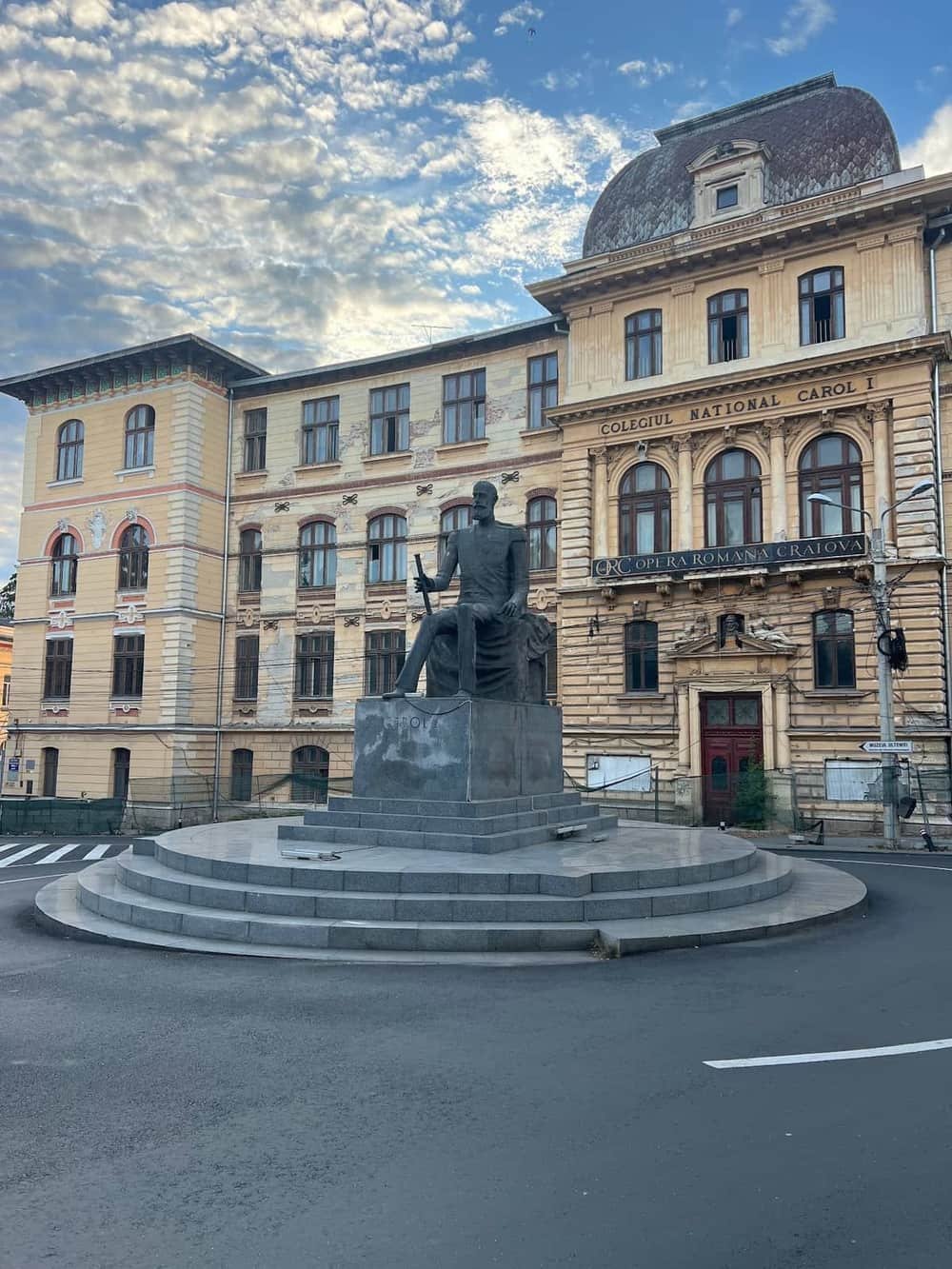
Because the city was built twice, forty years apart, by two systems that were not talking to each other. The Belle Époque centre is compact and walkable; the housing districts that surround it were laid out for the factories with wide roads and space between the blocks.
So the bit you came for is small and the bit around it is large. Stay central and the distances stop being a question — where to stay is mostly a decision about that one thing.
"Can I drink the tap water?"
Yes. Nobody here buys bottled water for safety reasons, only out of habit and for taste.
More usefully: in July carry some. The heat is the thing that actually catches visitors out, and the public fountains in the parks are not drinking fountains.
"Would you live anywhere else?"
The question people ask last, usually over the second drink.
Most of us have the same answer: we have lived somewhere else, several of us in Bucharest, and we came back. Not out of patriotism — because a city where you can cross the whole centre on foot, park without a strategy and still see a Brâncuși on a Tuesday is a reasonable arrangement. Why we stay is the longer version of that answer.