
The short version
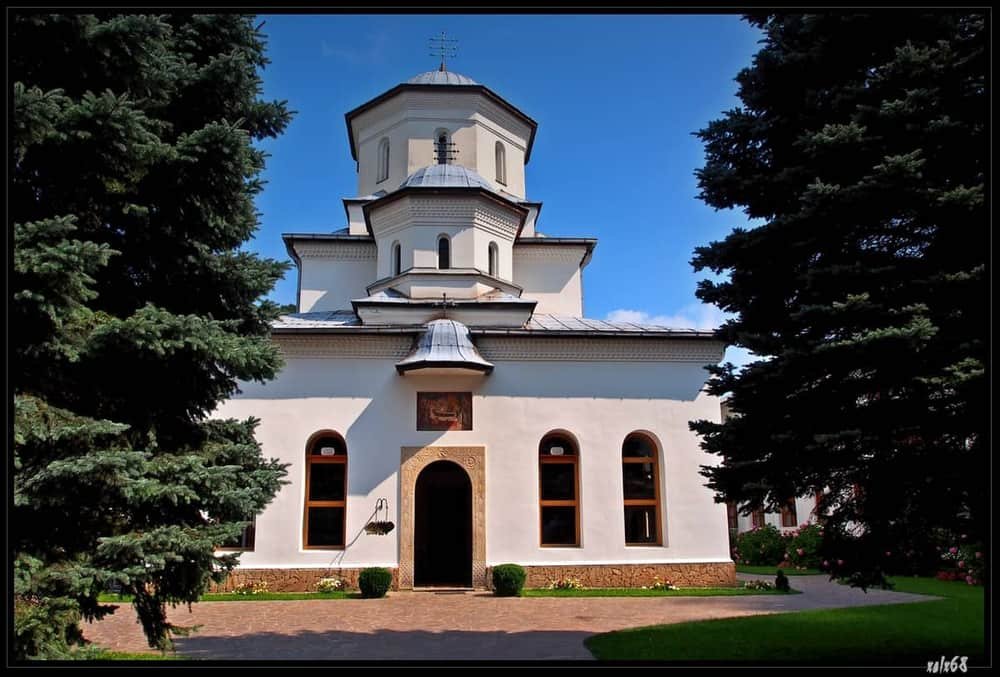
Tismana is the oldest surviving monastic foundation in Wallachia, begun by Saint Nicodim in the 1370s on a rock above the Tismana gorge, with a waterfall behind the church. During the Second World War the country's national treasury and the Romanian Academy's archives were hidden inside it.
- 131 km north-west of Craiova, measured at about 2 h 3 min, and 20 km beyond Târgu Jiu.
- Free to enter. Working monastery: dress modestly, services take precedence.
- The last stretch of road is narrow. Not difficult, but not a motorway either.
- Pair it with the Brâncuși ensemble at Târgu Jiu, which is on the way. That makes a genuinely full day.
Checked October 2026. Drive times are measured on the roads. The founding dates and the wartime history are stable facts; opening hours are not reliably published, and this page does not invent them — see the prices page.
What it is, and why "oldest" is the right word
Romania has a great many old monasteries, and the claims get loose. Tismana's is specific: it is the oldest monastic foundation in Wallachia that still stands and still functions, which is a narrower and more defensible statement than "the oldest monastery in Romania".
It was begun by Nicodim of Tismana, a monk who came from the Balkans and who is the figure credited with organising Wallachian monasticism as an institution rather than a scatter of hermitages. He founded Vodița first and Tismana after it, in the 1370s. Nicodim was canonised and his relics are here, which is why the monastery is a pilgrimage destination as well as a historical one.
The site is the thing you will remember. The church sits on a rock shelf above the Tismana gorge, with a waterfall falling behind and beside it — not a landscaped water feature but the reason the location was chosen, in the way that medieval foundations were sited on defensible rock with water.
Places in this piece
The treasury
This is the story worth knowing before you arrive, because nothing on site tells it at length.
In 1944, with the front approaching, Romania's national treasury — the gold reserve — and the archives of the Romanian Academy were moved to Tismana and concealed there. A monastery on a rock in a Gorj gorge, with one narrow road in, was chosen for the reasons you would expect: it was defensible, it was obscure, and it was not a military target.
It worked. The gold came through the war and was recovered.
It is a good story on its own terms, and it is also a useful corrective to a certain way of visiting Romanian monasteries as purely devotional objects. This one was, for a period, a strategic facility.
Visiting
Free, and a working monastery. Covered shoulders and knees; this is enforced rather than suggested. The liturgical schedule comes first — if you arrive during a service you wait quietly or look at the exterior and the gorge.
Allow an hour, more if you walk down towards the water.
On the hours: not reliably published, which is the normal condition across Oltenia rather than a failing of this place in particular. A working Romanian monastery is open in the morning as a matter of practice, and that is the most useful thing anyone can tell you. If the trip depends on getting inside, telephone.
The road. The approach from Târgu Jiu is fine; the last stretch up to the monastery is narrow. In winter, ask before setting off — see Craiova in winter, where the issue is fog in the valleys rather than snow.
Where to stay nearby
Live prices and availability on a map centred on this exact spot — hotels, apartments and hostels, so you can judge the walk from here rather than guess from an address.
Bookings made through this map earn us a commission. Your price is unaffected.
The day this belongs in
Tismana's best use is as the second half of a Târgu Jiu day, and the arithmetic works:
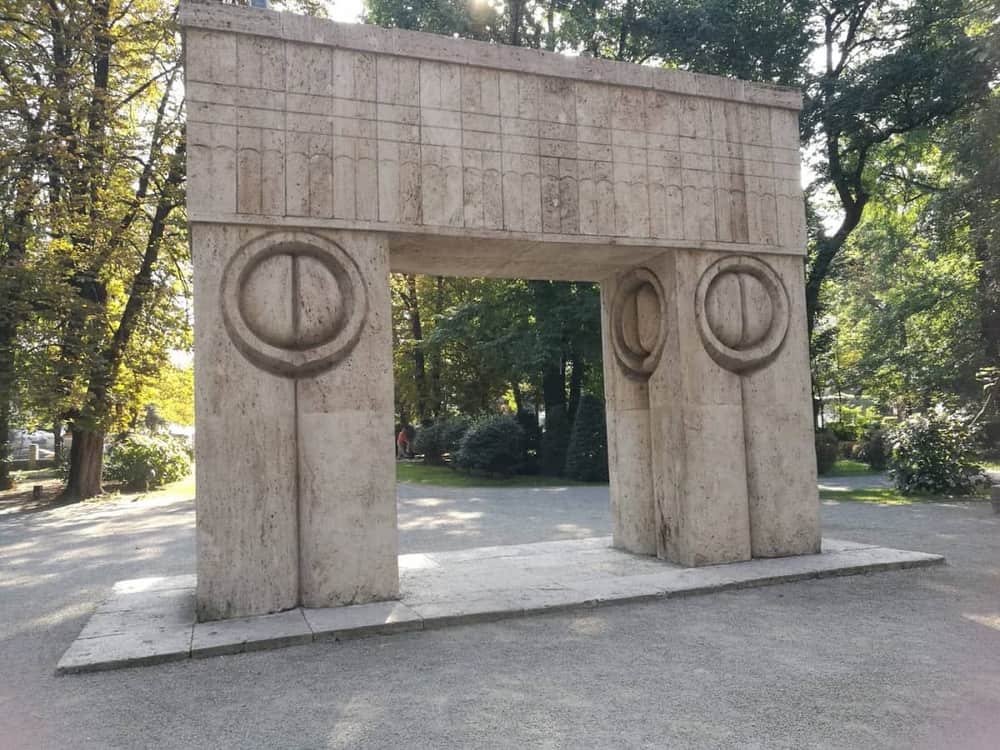
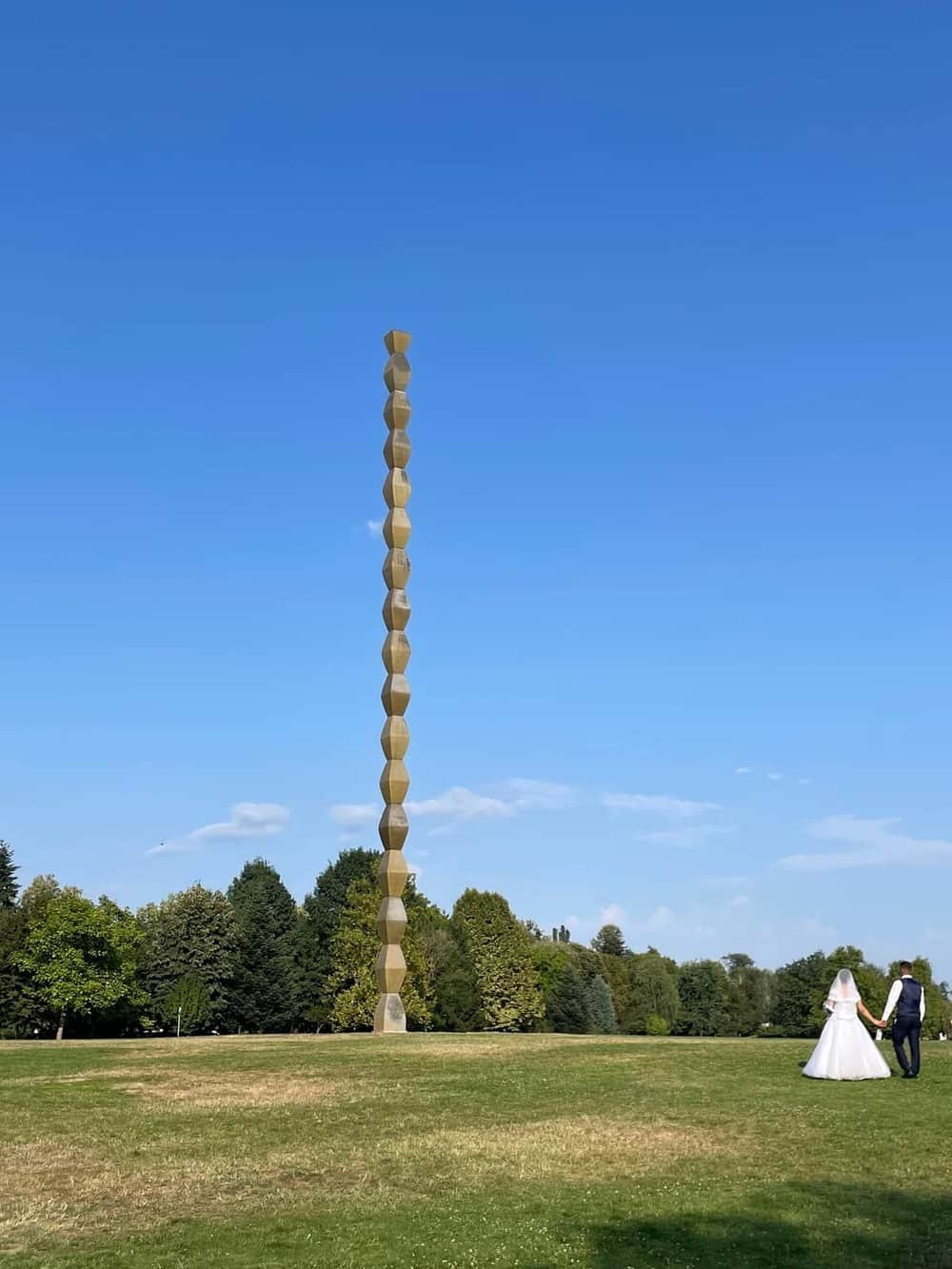
Morning — the Brâncuși ensemble at Târgu Jiu. 110 km from Craiova, a measured 1 h 50 min. The Table of Silence, the Gate of the Kiss and the Infinite Column sit on one straight 1.3 km axis across the town; walked in that order it takes about twenty-five minutes, it is free, it is outdoors and it has been a UNESCO World Heritage Site since 2024.
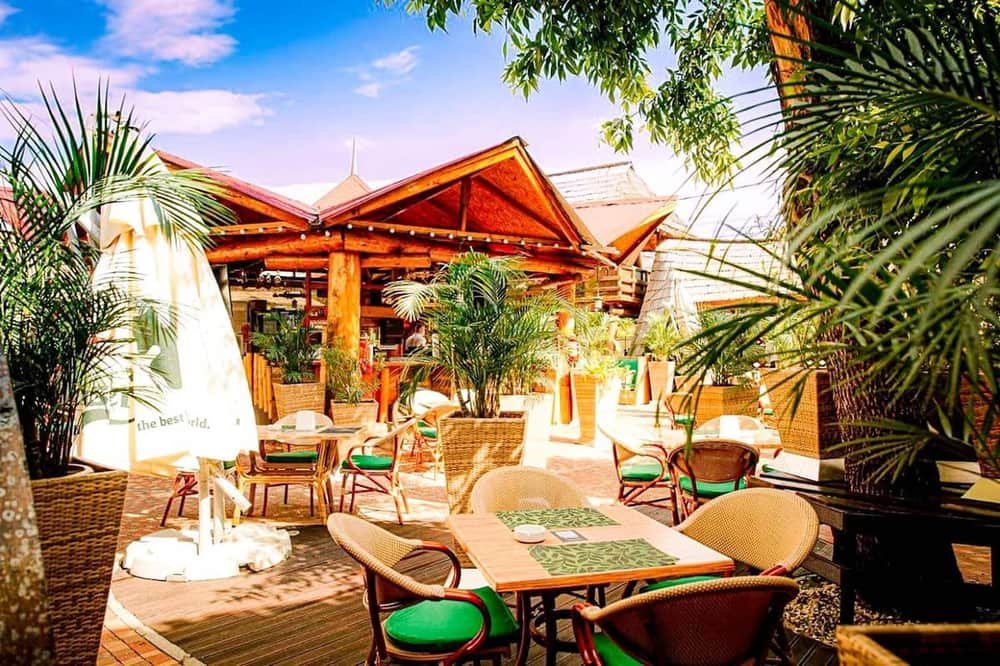
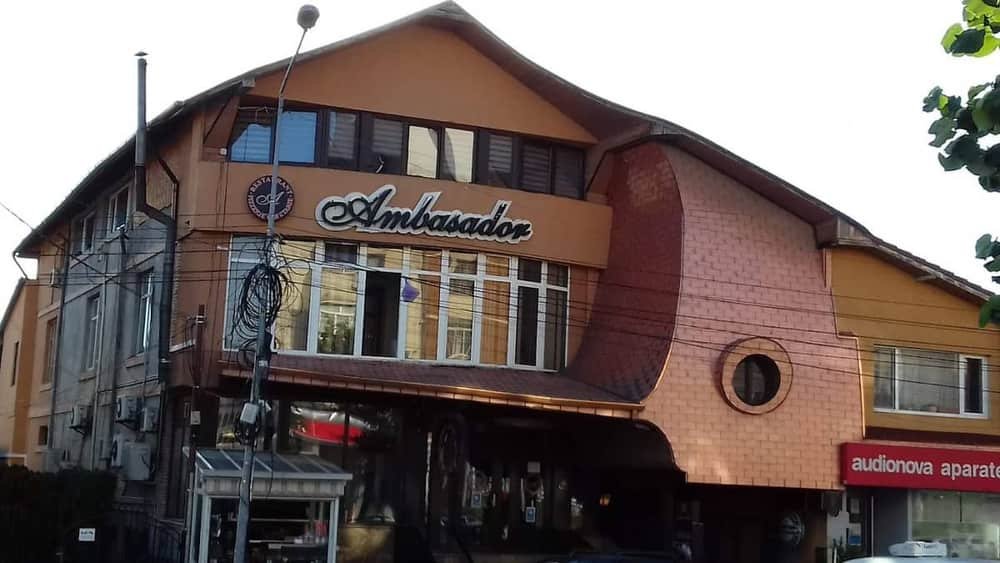
Lunch in Târgu Jiu. Sixteen listed restaurants — more than any other town in this section — with Terasa ANNA, Ambasador and Casa Vera the three with both ratings and volume.
Afternoon — Tismana, 20 km on.
Evening — back to Craiova, or stay: Târgu Jiu has nine places to sleep, including Pensiunea Antique at 4.4 from nearly a thousand reviews.
That is one of the two best days available from Craiova, and two days in Craiova sets out how it compares with the other one.
What not to combine it with. Horezu and Peștera Muierilor are two hours away on the opposite side of Craiova. Monastery-hunting across both sides in a day means six hours in a car and no time at either.
Tismana against Hurezi
Both are monasteries, both are in Oltenia, both are worth the drive, and they are not alternatives — they are different things and they are in opposite directions.
Hurezi, 113 km north-east, is about architecture. Founded 1690, finished around 1697, UNESCO-listed in 1993 under reference 597, and the building that gave the Brâncovenesc style its name: carved stone, open porches, a painted narthex, a planned complex. You go to look at how it was made.
Tismana, 131 km north-west, is about age and setting. Three hundred years older, on a rock above a gorge with a waterfall behind it, with a wartime secret in its cellars. You go for where it is and how long it has been there.
If you only have one day for monasteries, pick by which of those sentences you prefer. If you have two days, do both — on different days, and in different directions.
Practical
131 km, about 2 h 3 min, car only. No useful public transport; Craiova without a car is honest about which Oltenian destinations are reachable otherwise.
Best seasons: spring and autumn. The gorge and the waterfall are better in April and May, when there is water in them, than in a dry August. And this region averages a high of 30.0 °C in July — a Gorj gorge is cooler than the Craiova plain, which is an argument for it in high summer, but the drive is not. Beating the summer heat has the strategy.
With children: moderate. The waterfall and the rock setting carry it; the monastery itself will hold a ten-year-old for about fifteen minutes. Craiova with children sets out which Oltenian trips work.
Eating. There is little at Tismana itself. Eat in Târgu Jiu on the way, or in a guesthouse — and if you are staying in the hills, ask what the kitchen is cooking rather than reading a menu, because this is where the genuinely Oltenian food is. What to eat in Oltenia explains why city restaurants only carry half of it.
The one-line version
A monastery of the 1370s on a rock above a gorge, with a waterfall behind the church and the national gold reserve once hidden in it. Two hours and three minutes from Craiova, twenty minutes past Brâncuși.










