The short version
Craiova is a Danube city that does not feel like one. The river is sixty-eight to ninety kilometres south, across flat country, and almost nobody staying in the city bothers with it — which is both the drawback and the point.
- Bechet — 68 km, measured at about 1 h 5 min. The closest point on the river.
- Calafat — 89 km, measured at 1 h 18 min. The port, and the bridge to Vidin in Bulgaria.
- Drobeta-Turnu Severin — 112 km west, 1 h 45 min. The Roman bridge, and the gateway to the Iron Gates.
- What the river is for here: space, quiet, fish, and a border crossing. Not beaches.
- The one dish: saramură de pește — grilled fish held in a hot brine with garlic and hot pepper.
Checked October 2026. Drive times are measured on the roads. Ferry and border arrangements change and are not printed here; check on the day.
What this stretch of the Danube is like
Wide, slow and almost empty. This is the lower Danube, after it has left the gorges and before it turns north towards the delta, running along the Bulgarian border through some of the flattest country in Europe.
There is no promenade culture, no resort infrastructure, and very little in the way of things to do. What there is instead is a very large river in a very quiet landscape, and the particular pleasure of standing on a bank looking at another country.
Say plainly what it is not: this is not a beach destination. The Romanian Black Sea coast is 400 km east and that is where swimming happens. The Danube here is for looking at, eating beside and crossing.
Places in this piece

Bechet — the closest
68 km south of Craiova, about 1 h 5 min. The nearest point at which you can stand on the Danube from the city, and a working river port rather than a sight.
There is a ferry crossing to Oryahovo in Bulgaria, which is the reason most traffic comes. Arrangements, timetables and fares for Danube ferries change with the season and the water level, and we do not print them — ask locally or check on the day.
As a destination in itself Bechet is thin, and treating it otherwise would waste your afternoon. As the shortest possible route from Craiova to the sight of the Danube, it is exactly right. See the Bechet page.
Calafat — the port and the bridge
89 km south, measured at 1 h 18 min. The substantial option, and the Romanian end of the road bridge to Vidin in Bulgaria.
Most traffic through Calafat does not stop, which is why the town is quieter than its position suggests. If you do stop:
Parcul Municipal runs along the river and holds a 4.4 from nearly two hundred reviews — a proper riverside park rather than a strip of grass.
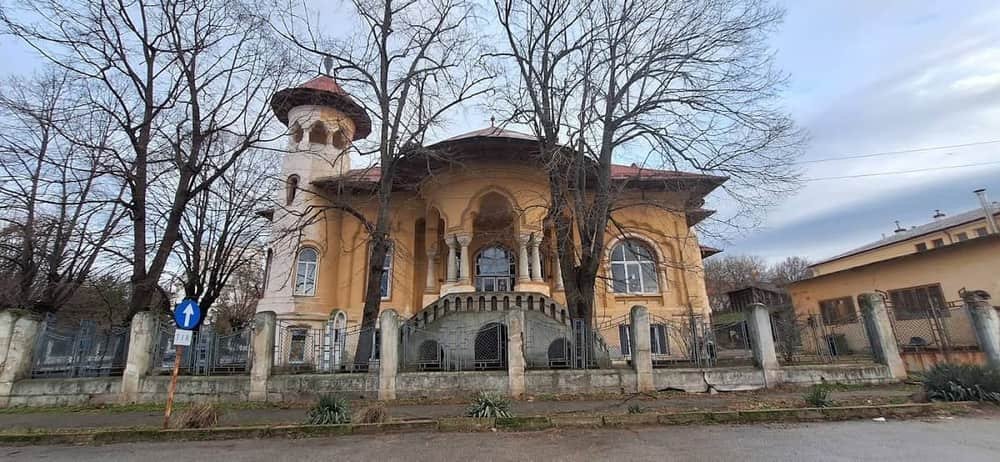
Palatul Eracle Marincu is the belle-époque house the town's grain money built, in the same decades and for the same reason as the facades on Craiova's Calea Unirii. Seeing the provincial version of that wealth, in a town of twenty thousand, is more interesting than it sounds.
Debarcader is the restaurant by the water; Restaurant O.K. holds 844 reviews and Grand a 4.6.
And Bulgaria. Vidin is twenty minutes over the bridge, uses a different currency, and makes an odd and rather good second half of a day. Take a passport or an EU ID card. The Calafat page has the honest assessment, which is that this is a half-day at most unless the crossing appeals.
Drobeta — where the Danube gets interesting
112 km west, measured at 1 h 45 min, and a different proposition from the two above: this is where the river has history on it.
Trajan's Bridge was built here by Apollodorus of Damascus in 103–105 AD and for a thousand years afterwards was the longest arch bridge ever built. One pier stands on the Romanian bank, free and in the open, with its twin visible across the water in Serbia. The Iron Gates Region Museum next door explains it.
And beyond the town, about forty minutes further west, the Danube gorge begins — the Iron Gates proper, which is the most spectacular stretch of river in Romania and nothing like the flat water at Bechet and Calafat. That is a second day rather than an extension of the first, and Drobeta is the one Oltenian destination on this site that genuinely rewards an overnight.
Where to stay nearby
Live prices and availability on a map centred on this exact spot — hotels, apartments and hostels, so you can judge the walk from here rather than guess from an address.
Bookings made through this map earn us a commission. Your price is unaffected.
The fish
This is the real argument for pointing a day south.
Saramură de pește is the one dish unarguably tied to Oltenia: fish — carp, most often — grilled hard and then held in a hot brine with garlic and hot pepper, eaten with polenta. The link is not folklore; towns along the Olt and the Danube hold public events built around making the largest *saramură* they can, which is the sort of thing a region does only about a dish it considers its own.
Oltenia reaching the Danube is also why carp, catfish and crucian appear on menus here in a way they do not in Transylvania. In the city, Taverna Racilor is the obvious address — though it is on Calea București, inside the Electroputere Parc centre, about 3 km east of the centre rather than anywhere near the park, which plenty of listings get wrong.
On the river itself, eat at Debarcader in Calafat. What to eat in Oltenia has the whole regional picture, including the dish whose name is a trap.
And the monastery almost nobody visits
Mănăstirea Jitianu, at Braniște in Balta Verde, is eight kilometres south of Craiova — eighteen minutes by car — on the road that eventually becomes the road to Bechet.
It holds a 4.6 from well over two hundred reviews and sees a fraction of the traffic that reaches the famous Oltenian monasteries. It is the shortest of all the day trips on this site and the one most people have never heard of. If you are driving south at all, it is on the way. Churches and monasteries in Oltenia puts it in context.
When to go
Spring and autumn. April, May, September and October. The river is at its best and the drive through the Dolj plain is tolerable.
Not high summer. This is the single clearest seasonal warning on the page. South of Craiova is the flattest, most exposed direction you can drive, and the plain is hotter than the city — which already averages a high of 30.0 °C in July and 30.1 °C in August. There is very little shade on the bank at Bechet or Calafat. If you must go in August, go at eight in the morning. Beating the summer heat explains why the proper summer escape is north and 1,600 m up, at Rânca, not south.
Winter is flat and grey, and the Jiu and Danube valleys both hold fog for days at a stretch. See Craiova in winter.
How it fits a trip
It does not fit a two-day trip. On a short visit, the day out of Craiova should go north to Brâncuși or north-east to Horezu — see two days in Craiova for why.
It fits a third or fourth day, and it fits a trip that is about the region rather than the city. Three days in Oltenia uses it properly.
Drobeta is the exception, and belongs on any list of the best days out of Craiova on its own merits — Roman bridge, medieval fortress, a town with seventeen listed attractions, and the gorge beyond.
You need a car. None of Bechet, Calafat or the Jitianu monastery is served usefully by public transport; Drobeta is on the rail network but its sights are spread along the bank. Craiova without a car is honest about it.