
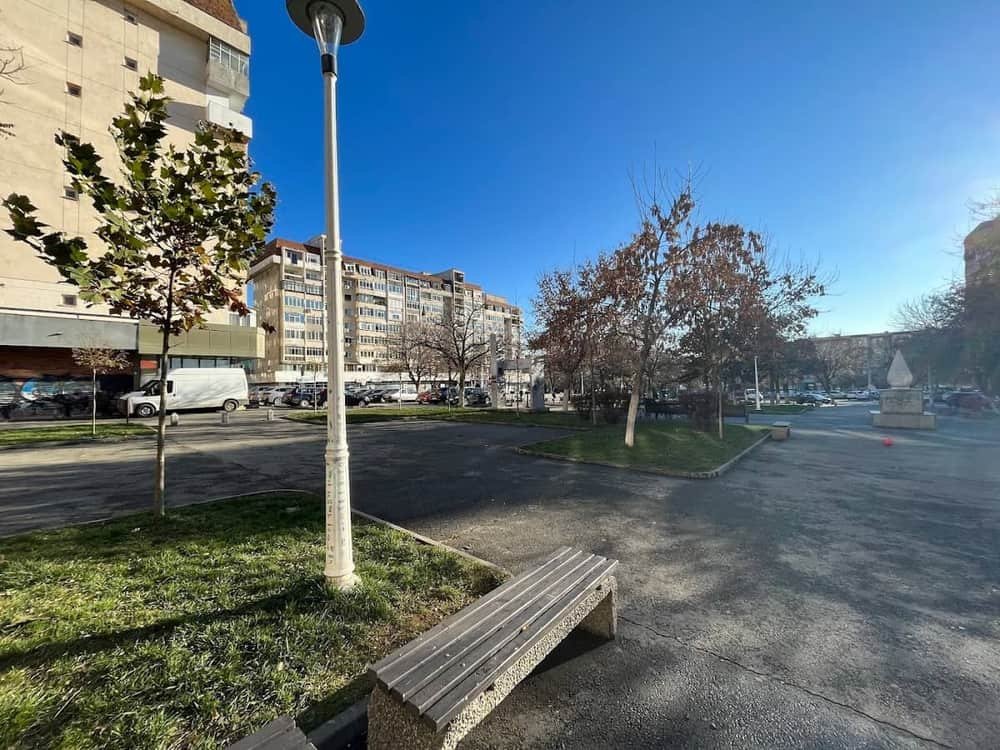
The city most of Craiova actually lives in
The Belle Époque centre is what visitors photograph. It is also where a small minority of the population lives.
Most of Craiova lives in what the socialist decades built: Craiovița Nouă, Rovine, Brazda lui Novac, Valea Roșie, 1 Mai, Lăpuș-Argeș. Blocks, wide avenues, internal courtyards, and the shops and parks that came with them.
Ignoring that is how a visitor ends up with a postcard impression of a city that has one.
Why the blocks are here
Craiova industrialised hard after the war, and the housing followed the factories.
Electroputere is the name to know. The heavy-electrical works on the eastern side of the city made locomotives and transformers, it was one of the large Romanian industrial enterprises of the period, and the city grew eastward and westward around that economy. The name survives today on Electroputere Parc, the shopping centre built on part of the site — which is itself a tidy summary of what happened to Romanian industry after 1989.
The scale of the housing is the direct consequence: tens of thousands of people needed flats near the works, and they were built fast, in systems, across what had been farmland.
Places in this piece
What it actually looks like
Not what the word "communist" conjures if your reference is grim documentary footage. Craiova's blocks are mostly four to ten storeys, in open layouts with real space between them, and the planting that went in around 1970 is now mature trees.
The courtyards are the thing. Each group of blocks encloses a shared space — benches, a playground, a shop, parked cars, and in summer people sitting outside. It is a sociable pattern, and it is why these neighbourhoods do not feel like the estates they resemble on a map.
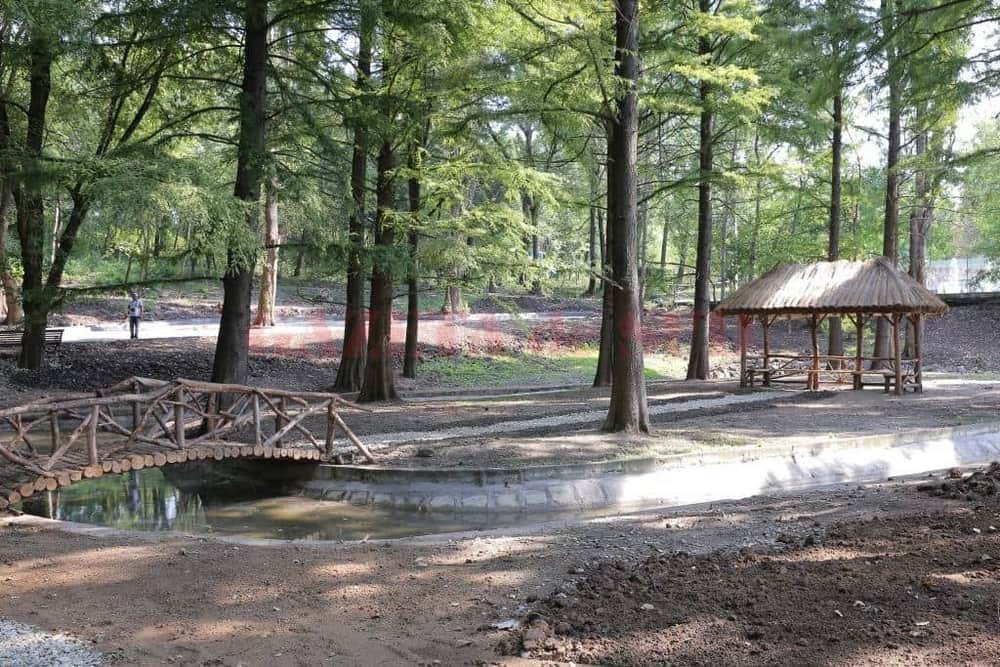
Each has its own green. Grădina Rovine in the station area, Parcul Hanul Doctorului on Calea București. Playgrounds and parks covers them.
The ground floors are commercial and always have been, which is why a neighbourhood here is more self-sufficient than a suburb in a western city. Breakfast in Craiova makes the same point about cofetării: the neighbourhood ones are cheaper, emptier and more interesting than the central ones.
Where to stay nearby
Live prices and availability on a map centred on this exact spot — hotels, apartments and hostels, so you can judge the walk from here rather than guess from an address.
Bookings made through this map earn us a commission. Your price is unaffected.
Where to go if you want to see it
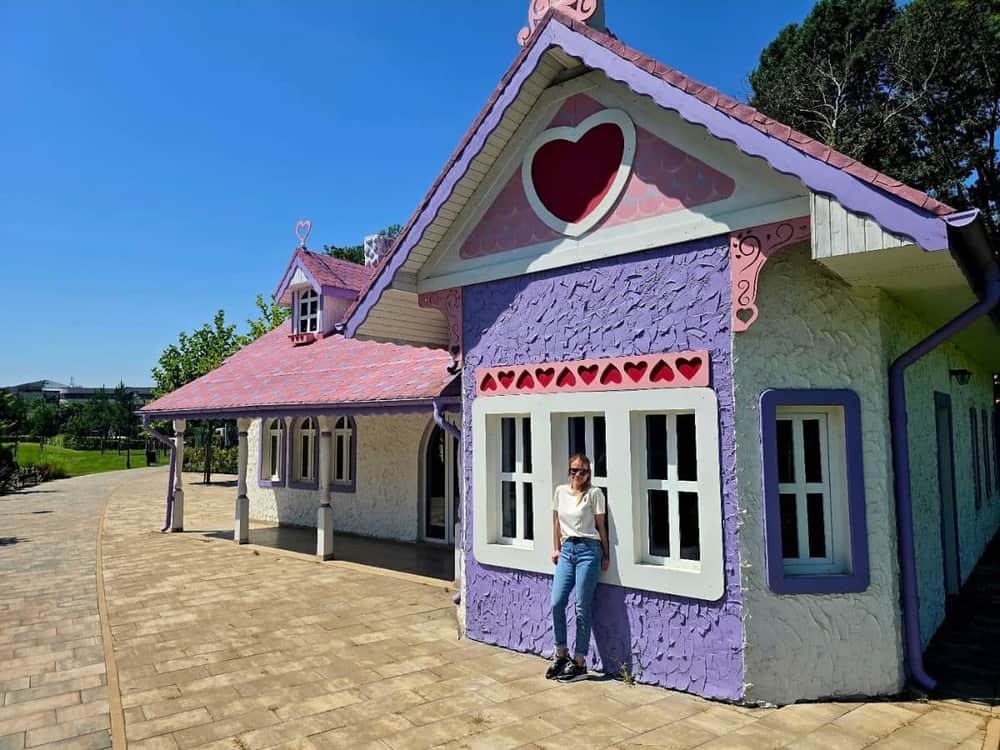
Craiovița Nouă is the largest and the most complete example. It is also where Fantasy Park is, which makes it an easy trip with children.
Brazda lui Novac is the other big one, named after an ancient earthwork rather than anything modern — the name is older than the blocks by about fifteen centuries.
Rovine is nearer the centre and mixes periods.
The neighbourhoods pages list what is actually in each one, which is more useful than a walking route — there is no monument trail here, and anyone who tells you otherwise is selling something.
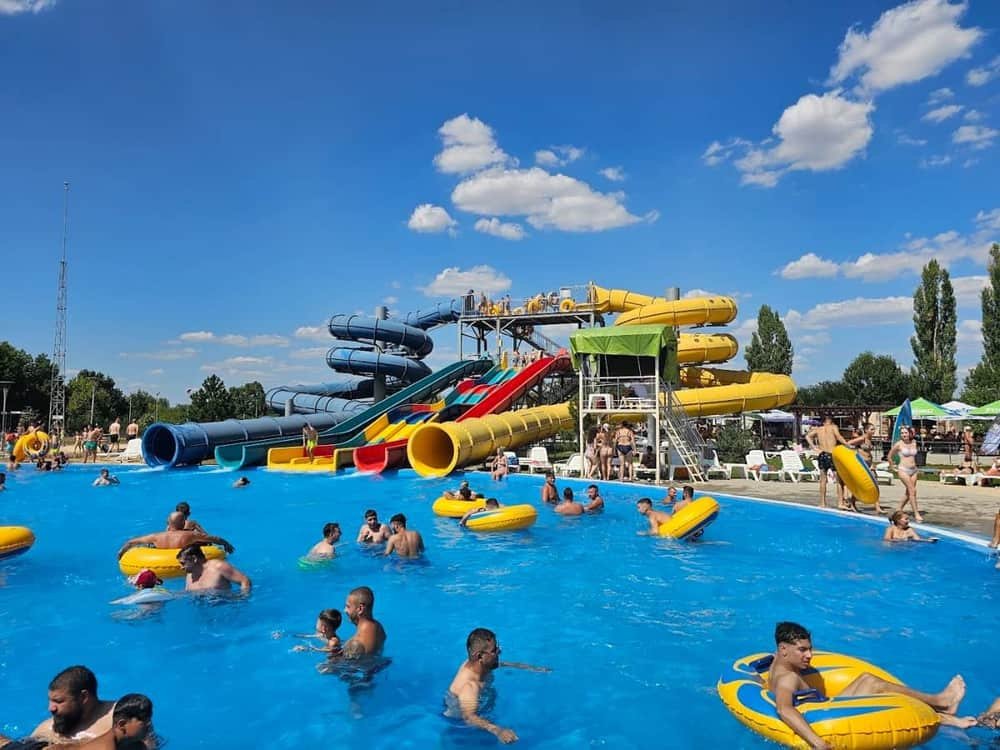
Valea Roșie and 1 Mai are smaller and quieter, and 1 Mai is where the water park is — which in July is the single most used piece of infrastructure in the city.
How to look at it honestly
It is not a tourist attraction and should not be treated as one. People live there. Photographing blocks of flats and the people outside them is the kind of tourism that deserves the criticism it gets.
What it is, is context. An hour spent out there changes how you read the centre — the Belle Époque street stops being "the city" and becomes what it actually is: one generation's deposit, surrounded by a much larger one.
The best version of the trip is practical rather than voyeuristic: go to a neighbourhood cofetărie, sit in a courtyard park, take the bus back. Getting around has the transport, and the city is flat enough that cycling works for this better than walking.
The other half of the same story
The industry that built these neighbourhoods is also why the Oltenia Museum's history collection stops feeling like a provincial afterthought, and why a short history of Craiova spends real time on the twentieth century rather than hurrying from Michael the Brave to the present.
And the football club is part of it too. CS Universitatea Craiova reached a European semi-final in 1982–83, out of a city of this size, during exactly these decades — Craiova Maxima and the 1983 semi-final. Whatever else the period was, that happened, and the city has not stopped measuring itself against it.










