
The short version
Craiova's museum quarter is four institutions within five minutes of each other, and two of them are the ones that explain the region rather than the art.
- Casa Băniei — the oldest building in the city, the former residence of the Ban of Oltenia, now holding the Ethnographic Museum of Oltenia.
- The Oltenia Museum of History and Archaeology — the documentary and archaeological side.
- The natural sciences wing — a separate building, and the one that works with children.
- The Art Museum — the six Brâncuși originals, covered separately.
Checked October 2026. None of these publishes a dependable timetable or ticket price, and this page prints neither. Most Romanian museums close on Monday and several ethnographic collections close on Tuesday as well. Telephone before a special trip — the prices page explains the policy.
Casa Băniei: why the building is the exhibit
Central Craiova is almost entirely a creation of the decades around 1900 — Calea Unirii, the Jean Mihail Palace, the Administrative Palace, Romanescu Park, all paid for by the Dolj grain trade.
Casa Băniei is the exception. It is the oldest building in the city and it predates all of that by centuries, which makes it the only structure in the centre that connects to the Craiova of the Bănia rather than the Craiova of the grain money.
It was the residence of the Ban of Oltenia — the office that governed everything west of the Olt, whose holder ranked first among the boyars of Wallachia, immediately after the ruling prince. The Bănia and the money sets out what that office actually was and why Oltenia consequently behaves like a place rather than a compass bearing.
So when you walk in, you are walking into the administrative centre of a region, four centuries before the city built the facades you came to photograph. That is the single most interesting fact about any building in Craiova, and nothing on site says it at length.
Places in this piece


What is inside: the Ethnographic Museum
The building now holds the Ethnographic Museum of Oltenia, and the pairing is better than most museum-and-building pairings: the house is the region's administrative memory and the collection is its material one.
What an Oltenian ethnographic collection covers, and why it is worth an hour:
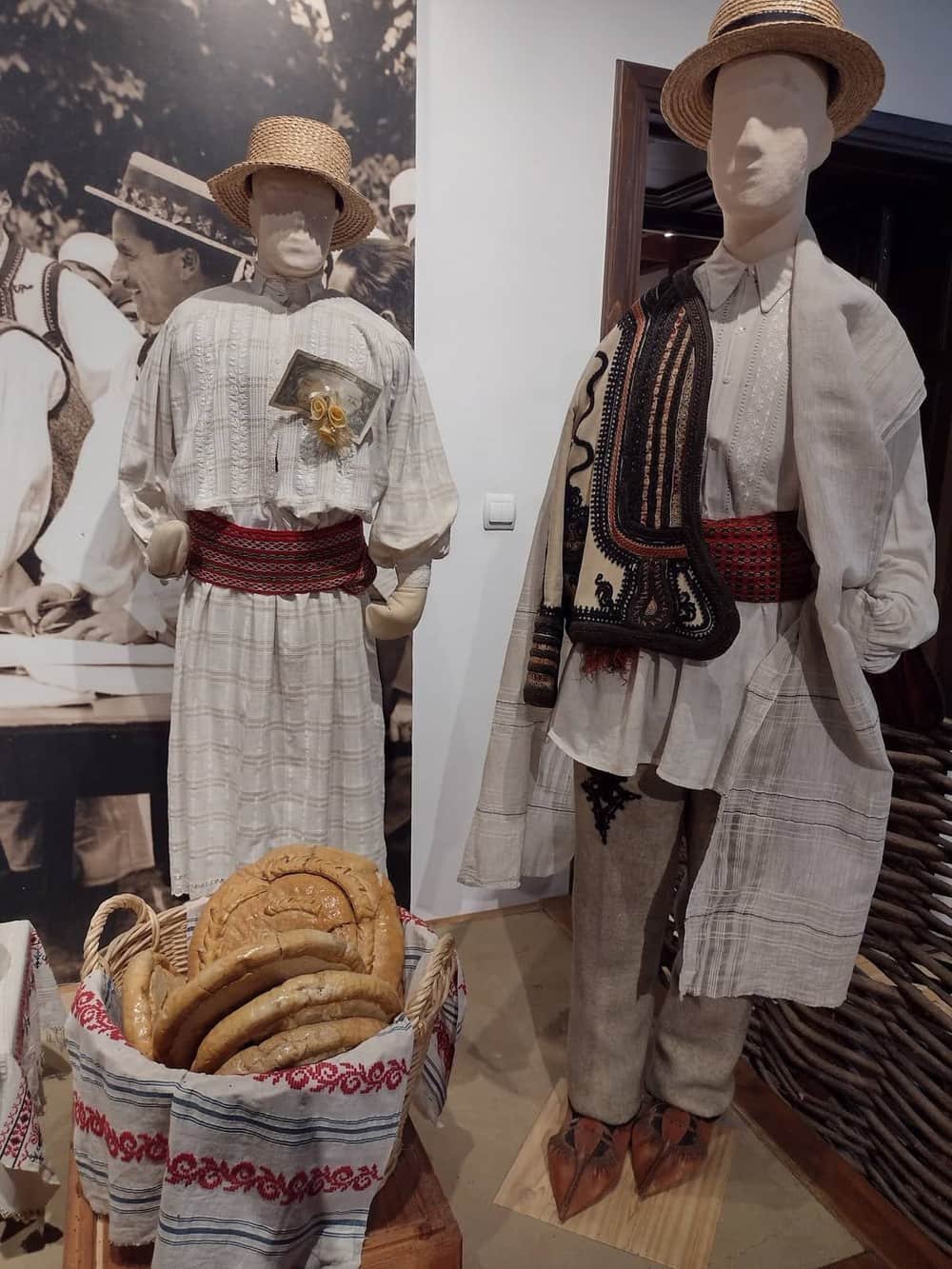
Textiles and costume. Regional dress, which in Romania is genuinely regional — Oltenian embroidery, motifs and cut are distinguishable from Transylvanian or Moldovan at a glance once you have seen the comparison.
Pottery. Which connects directly to something you can still go and buy: Horezu ceramics went onto UNESCO's intangible heritage list in 2012, and the workshops are 113 km north-east and still working. Seeing the historical pieces here and then buying from a potter two days later is the best use of this museum.
Agricultural and domestic tools. Including the apparatus of a food culture that is more distinct from the rest of Romania than visitors expect — the *țest*, the earthenware bell that bread is baked under, is the object to look for. What to eat in Oltenia explains why it matters.
Woodwork. Gorj carving, which is the vernacular tradition Brâncuși grew up inside and whose geometry turns up, stacked fifteen times, in the Infinite Column.
That last connection is the reason to do this museum *before* Târgu Jiu rather than after.
Where to stay nearby
Live prices and availability on a map centred on this exact spot — hotels, apartments and hostels, so you can judge the walk from here rather than guess from an address.
Bookings made through this map earn us a commission. Your price is unaffected.
The Oltenia Museum of History and Archaeology
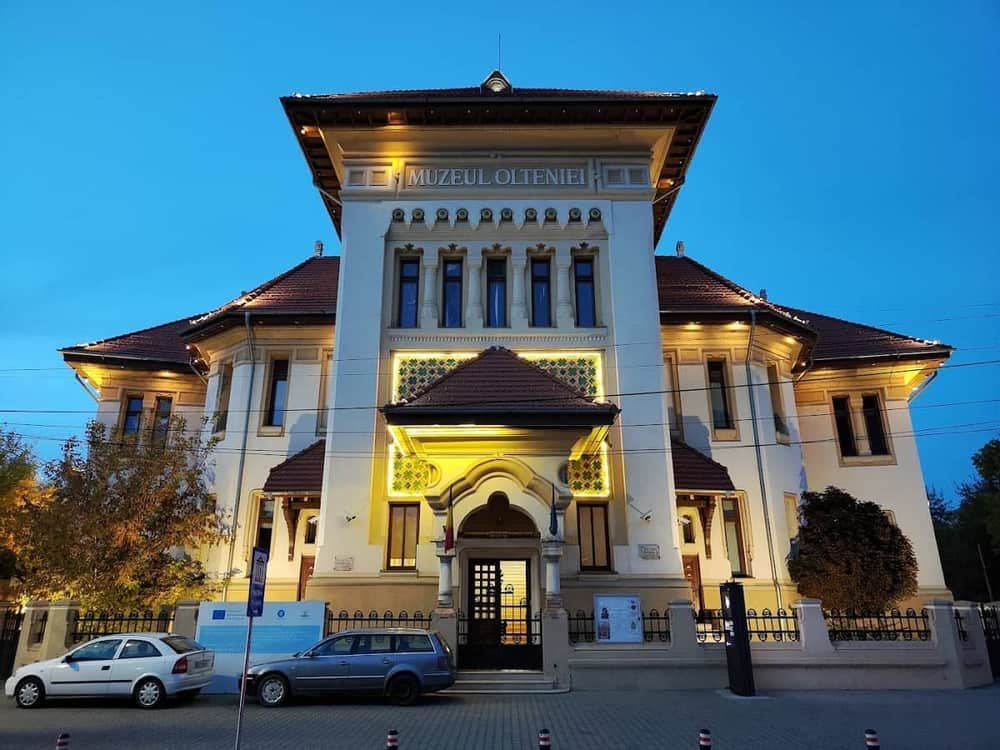
A few minutes away, and the other half of the pre-1900 story. Roman material from Pelendava, the settlement that stood where Craiova now does and whose name survives as a city street; medieval Wallachian material; and the documentary record of the Bănia.
It holds a solid review count for a provincial history museum and is the right place to go if the question you arrived with is "what was here before all this".
The natural sciences wing
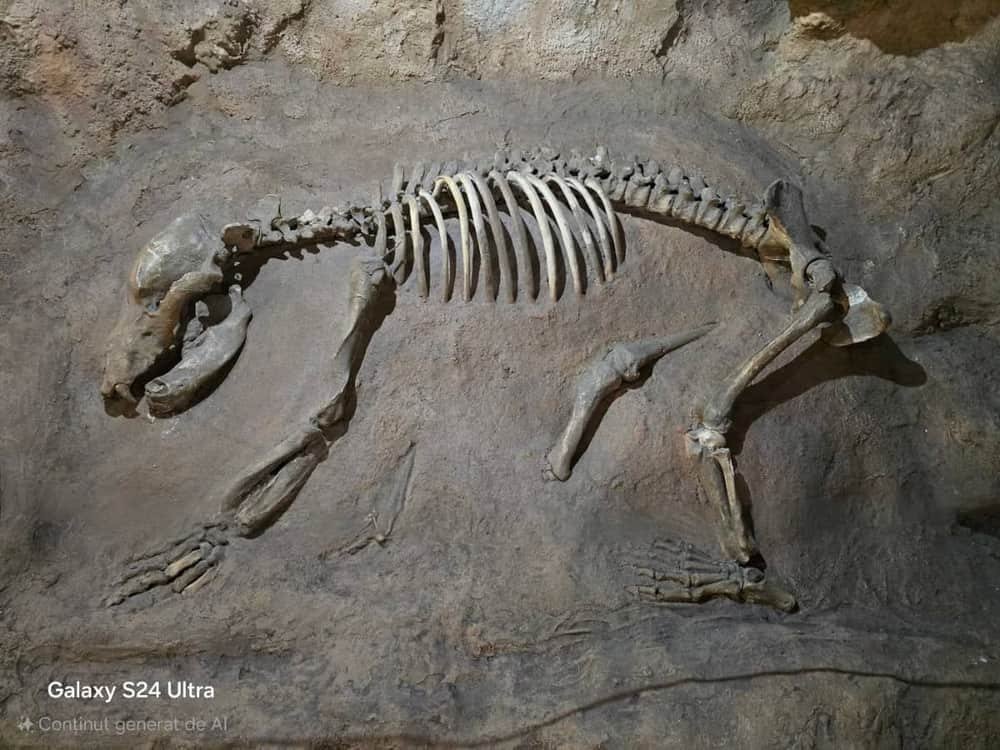
A separate building, and the one worth knowing about for a specific reason: it is the museum that works with children. Stuffed animals, minerals, bones. The ethnographic and history collections are both good and neither is for a seven-year-old; this one reliably is. Craiova with children sets out the rest of the options.
It appears both as part of the Oltenia Museum and as a free-standing entry on various listings, which is a naming artefact rather than two institutions.
How to do all of it in one morning
They are close enough that the whole quarter is one walk, and the order that works is:
09:30 — Piața Mihai Viteazul and the statue, for ten minutes and the context: he was Ban of Craiova before he was prince.
10:00 — The Art Museum. Brâncuși room first, while you are fresh. An hour.
11:15 — Casa Băniei and the Ethnographic Museum. An hour.
12:15 — History and Archaeology, or the natural sciences wing if there are children.
13:00 — lunch on or just off Calea Unirii. Casa Ghincea on Madona Dudu, or Maestro on Strada Olteț.
That is the morning of one day in Craiova, and the afternoon is Romanescu Park.
The seasonal argument
February is the right month for this quarter, which is counter-intuitive and correct. It is the thinnest month of the Craiova year — no market, no festival, January having averaged only 131 hours of sunshine and the Jiu valley holding fog for days — and four warm museums within five minutes of each other is exactly what a thin month is for. Rates are at their lowest. See Craiova in winter.
July and August, for the inverted reason: the city averages a 30.0 °C July high and 30.1 °C in August, and these buildings are cool. Put the museum quarter in the eleven-to-five block when walking outside is unpleasant. Beating the summer heat.
Not Monday. Most Romanian museums close, and several ethnographic collections close Tuesday too. If your day is a Monday, make it a walking day instead — Calea Unirii, the old town, the parks, none of which closes.
The honest assessment
These are good provincial museums, not national ones, and the ethnographic collection is the one that justifies the visit on its own terms — partly because Oltenian material culture is genuinely distinct, and mostly because it is housed in the one building in Craiova that remembers what the city was before it was rich.
If you have one museum hour in Craiova, spend it on the Brâncuși room. If you have two, spend the second here, and go to Horezu later in the week to buy the living version of what is in the cases.









