
The short version
Horezu ceramics went onto UNESCO's Representative List of the Intangible Cultural Heritage of Humanity in 2012, which makes Horezu a town of about six thousand people with two UNESCO entries: a monastery and a skill.
- The workshops are in the village and along the road, not in a museum.
- Buy from a potter directly. It costs less than the roadside stalls and it is the entire point of going.
- The cockerel is the signature motif — the *cocoș de Hurez* — and it is on everything.
- 113 km north-east of Craiova, about 1 h 57 min. Car trip; no useful public transport.
- No prices on this page, for the reason set out below.
Checked October 2026. The UNESCO inscription and the date are stable facts. Prices for a hand-thrown plate vary by size, potter and your willingness to talk, and nobody publishes a list — see the prices page.
What UNESCO actually listed
Not the pots. The craftsmanship — the whole transmitted practice, including who does what and how it is taught.
That distinction is the interesting part. The inscription recognises a division of labour that has survived: the men throw and the women decorate. It recognises the specific tools — a cow horn and a quill-tipped stick used to trail slip across the surface in the characteristic drawn lines. And it recognises transmission within families, which is the thing an inscription like this is really trying to protect, because a technique survives only as long as somebody bothers to teach it.
So when you walk into a workshop and watch a plate being decorated, what you are looking at is the listed item, not an illustration of it.
Places in this piece
How to tell the real thing
This matters, because Horezu's reputation has produced imitations, and some of what is sold on the roadside near the village is neither local nor hand-made.
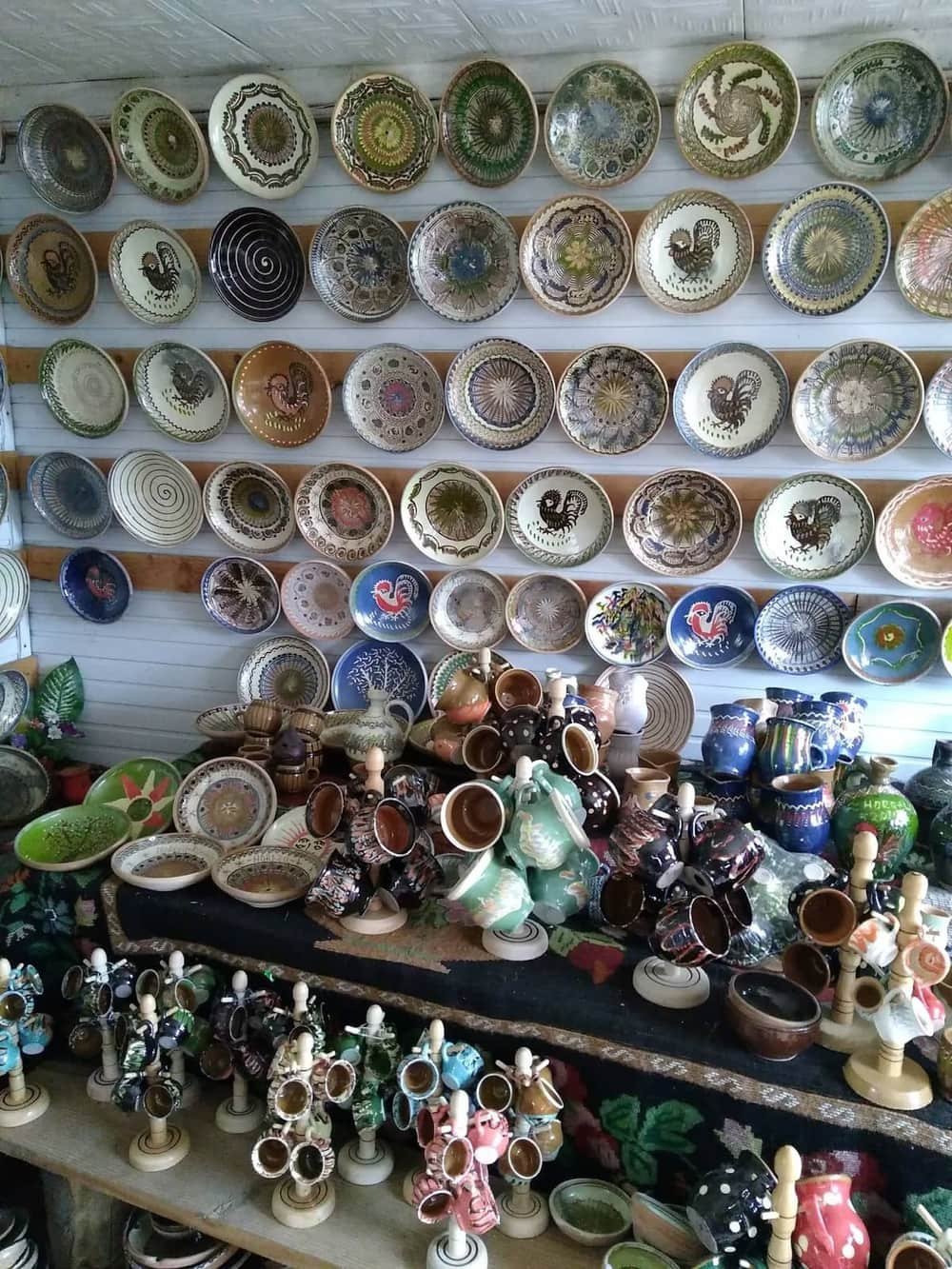
The decoration should show the tool. Authentic Horezu slip decoration is *trailed* — drawn on with a horn or a quill — which leaves lines of slightly varying thickness and a visible start and stop. Printed or transfer decoration is uniform. Look at where a line begins.
The palette is limited and specific. Dark brown, brick red, green, blue and ivory on a cream or reddish ground. A plate in a dozen bright colours is not from this tradition.
The cockerel, and the rest. The *cocoș* is the motif Horezu is known for, but the repertoire also includes the spiral, the tree of life, the fish, the snake and the star, all stylised flat. A plate with a photorealistic bird on it is a souvenir, not a Horezu plate.
Turn it over. A thrown piece shows concentric throwing rings and often the potter's mark. A pressed piece shows a mould seam.
Buy at the workshop. The simplest rule, and it solves all of the above at once: go to the house with the kiln in the yard. The village is full of them, they are signed, and you are welcome. You will pay less than at a stall and you will know what you are buying.
Why there are no prices here
Because a hand-thrown, hand-decorated plate is priced by its size, by its decoration, by which potter made it and, candidly, by the conversation you have. There is no list. Anything a website tells you is a guess dressed up as information.
What can be said honestly: it is inexpensive by Western European standards for genuine handmade work, it is cheaper at the workshop than at a roadside stall, and the large decorative plates cost several times what a small bowl does. Take cash. Many workshops do not take cards.
Where to stay nearby
Live prices and availability on a map centred on this exact spot — hotels, apartments and hostels, so you can judge the walk from here rather than guess from an address.
Bookings made through this map earn us a commission. Your price is unaffected.
The fair
Horezu holds an annual potters' fair — the Cocoșul de Hurez — which gathers potters from the village and from other Romanian pottery centres. It is the best day of the year to be there and the worst day to look for a quiet workshop visit.
The honest problem: the date is not published more than a few weeks ahead, which is the normal condition for events in this region. What's on lists only what has a source, and this generally does not. Ask locally, or ask a guesthouse when you book. If someone tells you a confident date six months out, they are guessing.
Combining it with the monastery
This is why Horezu is a day rather than a stop.
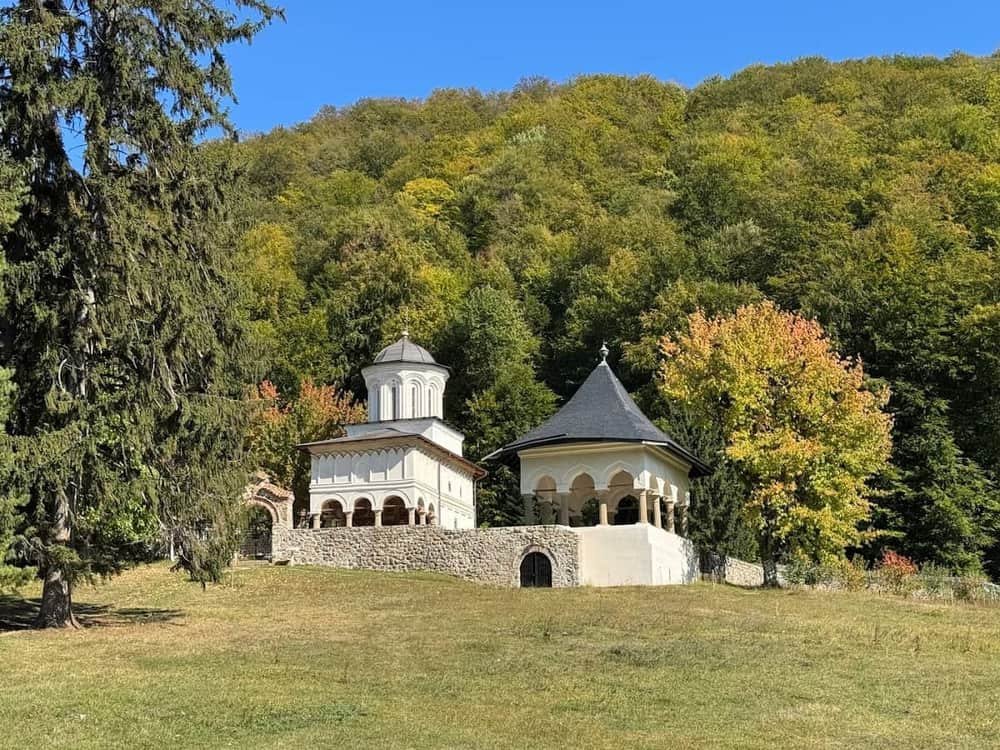
Hurezi Monastery is the other UNESCO entry — founded 1690, finished around 1697, listed in 1993 under reference 597, and the building that gave the Brâncovenesc style its name. Entry to the courtyard is free; it is a working monastic community, so dress modestly and expect services to take precedence.
Doing both in one visit is the right call, and the sequence that works is monastery in the morning (when it is reliably open and the light is good) and workshops afterwards (when a potter has started work and will talk to you).
Peștera Muierilor at Baia de Fier is on the same road — the cave whose 35,000-year-old skull had its whole genome published in *Current Biology* in 2021. Three UNESCO-grade things in one direction is more than the rest of Oltenia manages put together, and it is the argument for pointing a day north-east rather than north.
Do not add Târgu Jiu. The Brâncuși ensemble is two hours away on the opposite side of Craiova. Two days in Craiova sets out the geometry properly.
Getting there and staying
113 km north-east of Craiova, measured at about 1 h 57 min. There is no useful public transport, so this is a car trip — Craiova without a car is honest about which Oltenian destinations are reachable otherwise, and this is not among them.
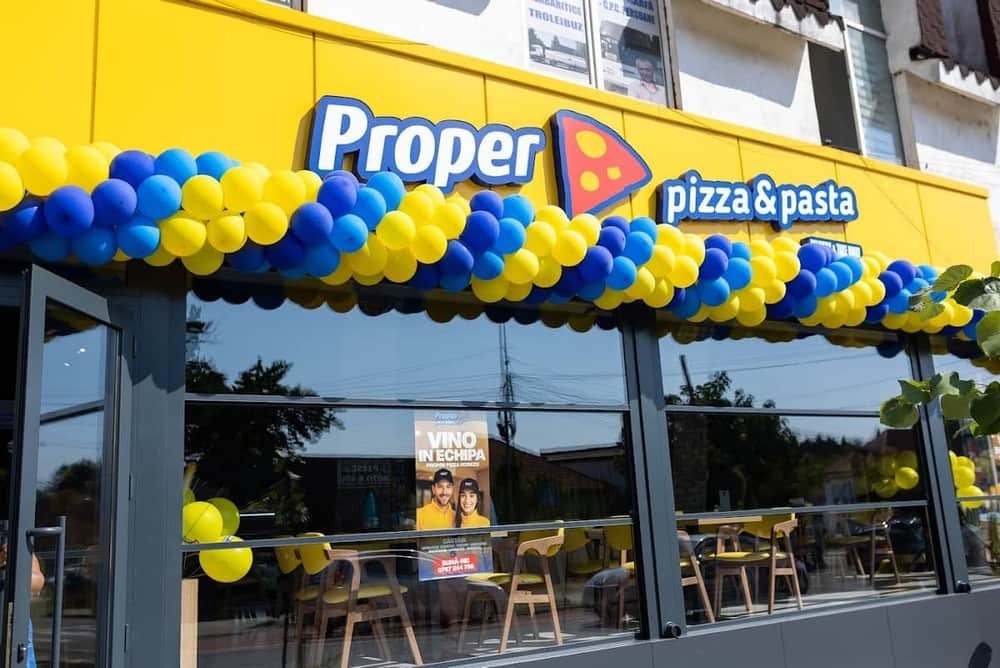
Horezu has eight guesthouses listed, which for a town of this size tells you exactly what the traffic is. Horezu Guesthouse holds a 4.7 from over nine hundred reviews; Pensiunea Andra's House and Pensiunea Dana are the next two. Proper Pizza & Pasta holds a 4.8 and Premier PALACE is the other option.
Staying the night is worth considering for one specific reason: guesthouse kitchens in this part of Oltenia cook the regional food that city restaurants only partly carry — the leek stews, the leaf soups soured with unripe grape juice, bread baked under an earthenware bell. Ask what the kitchen is cooking rather than reading a menu. What to eat in Oltenia explains the whole distinction.
Muzeul Vicșoreanu in the town is the local ceramics museum, if you want the historical version before the workshops.
What to actually buy
One large decorative plate if you want the thing Horezu is famous for. These are wall pieces rather than tableware and they are what the cockerel motif is made for.
A set of small bowls if you want something you will use. These are the cheapest route into the tradition and they get used daily.
Nothing at a motorway stall. The roadside trade between Craiova and Horezu includes genuine local work and includes imported pressed ware, and from a car window you cannot tell. Drive the extra ten minutes into the village.
A practical note on transport: these are unglazed-foot earthenware plates travelling in a car on Romanian county roads. Ask the potter to wrap them properly — they will, as a matter of course — and put them in the footwell rather than the boot.
The one-line version
A village of six thousand people where UNESCO listed the skill rather than the object, 113 km from Craiova, with a monastery of 1690 up the road. Buy at the house with the kiln in the yard.










