
The short version
Craiova's visible history has a four-century hole in it. The centre is almost entirely of the decades around 1900, built on grain money, and the one building that predates it is Casa Băniei. Everything between is out in the region, and it is mostly monastic.
- Hurezi — 113 km north-east. Founded 1690, UNESCO-listed 1993 under reference 597, and the building that named the Brâncovenesc style. Courtyard free.
- Tismana — 131 km north-west. Begun in the 1370s, the oldest surviving monastic foundation in Wallachia. Free.
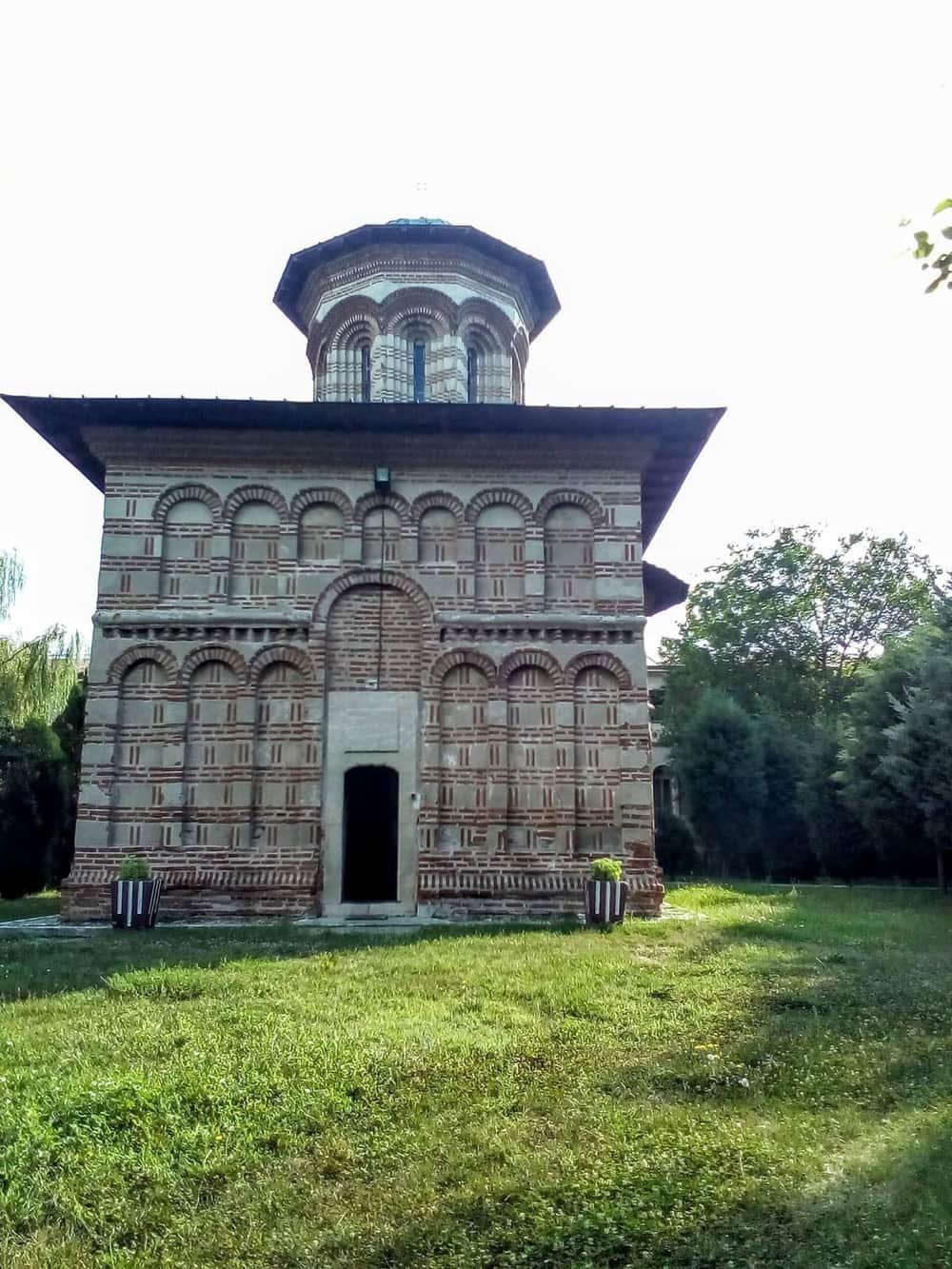
- Mănăstirea Coșuna — on the city's edge. Sixteenth century, usually empty, the oldest surviving church in the Craiova area.
- Jitianu — eight kilometres south, eighteen minutes, and almost nobody goes.
- The city churches — all free, and the only pre-1800 fabric inside Craiova itself.
Checked October 2026. The UNESCO reference and the founding dates are stable facts. Opening hours for Romanian monasteries are not reliably published anywhere in this region, and this page does not invent them — see the prices page.
Why the old architecture is not in the city
This is the structural fact that organises the whole page.
Craiova was the seat of the Ban of Oltenia, the office that governed everything west of the Olt and whose holder ranked first among the boyars of Wallachia after the ruling prince — the Bănia sets out what that meant. The city mattered for centuries.
And almost none of those centuries is visible. The Ban's residence survives as Casa Băniei, now the Ethnographic Museum; everything else in the centre was built between roughly 1880 and 1914 with money from the Dolj grain trade — Calea Unirii, the Jean Mihail Palace, Romanescu Park. A short history of Craiova explains how.
So if you want to see what Oltenia built in the seventeenth century, you drive. That is not a failing of the itinerary; it is the itinerary.
Places in this piece
Hurezi — the one that matters most
113 km north-east, measured at about 1 h 57 min. Courtyard free.
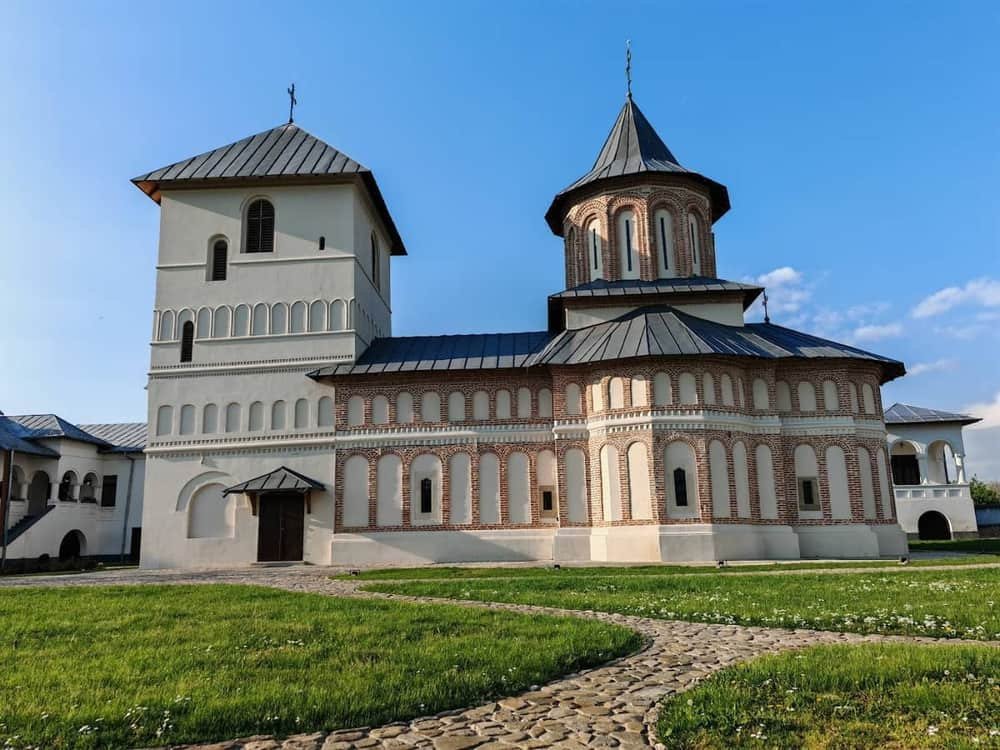
Founded in 1690 by Constantin Brâncoveanu and finished around 1697, Hurezi is the largest and most complete surviving Brâncovenesc ensemble — and it gave that style its name.
The style is the thing to come for, and it is worth knowing what to look at: the colonnaded open porch across the west front, with carved stone columns, which is its single most recognisable feature and a synthesis of Italian Renaissance proportion, Ottoman decorative vocabulary and a Byzantine plan; the shallow dense stone carving of vine scrolls and acanthus on capitals and door frames, at the highest quality of any surviving ensemble; and the painted narthex, which carries portraits of the founder's family and so is a historical document as well as a religious one.
Brâncoveanu was executed in Constantinople in 1714 with his four sons, and the building programme stopped with him — which is why a style that lasted twenty-six years would ordinarily leave fragments, and why Hurezi's near-complete survival is the reason UNESCO took it, in 1993, under reference 597.
The full guide has the visit. Pair it with the Horezu potters, whose craft is a second UNESCO entry in the same small town.
Tismana — the oldest
131 km north-west, measured at about 2 h 3 min. Free.
Begun by Saint Nicodim in the 1370s, and the oldest monastic foundation in Wallachia that still stands and still functions — a narrower and more defensible claim than "the oldest monastery in Romania". Nicodim came from the Balkans and is the figure credited with organising Wallachian monasticism as an institution; his relics are here.
The setting is what you will remember: a rock shelf above the Tismana gorge, with a waterfall falling behind and beside the church. And the story nothing on site tells at length: in 1944 Romania's national gold reserve and the archives of the Romanian Academy were concealed here, and came through the war.
The full guide. It is 20 km beyond Târgu Jiu, which makes the two a genuinely full day.
Where to stay nearby
Live prices and availability on a map centred on this exact spot — hotels, apartments and hostels, so you can judge the walk from here rather than guess from an address.
Bookings made through this map earn us a commission. Your price is unaffected.
The two nobody visits
These are the recommendations on this page you will not find elsewhere.
Mănăstirea Coșuna, on the city's edge in 1 Mai, is a sixteenth-century foundation and the oldest surviving church in the Craiova area. It is five minutes off a main road, it is usually empty, and it sees none of the coach traffic that reaches Hurezi or Tismana. If you have an hour and a car, go.
Mănăstirea Jitianu, at Braniște in Balta Verde, is eight kilometres south of Craiova — eighteen minutes by car. It holds a 4.6 from well over two hundred reviews and is the shortest of all the day trips on this site. If you are driving south towards the Danube at all, it is on the way.
In the city
All free, all open at reasonable hours, and collectively the only pre-1800 fabric inside Craiova:
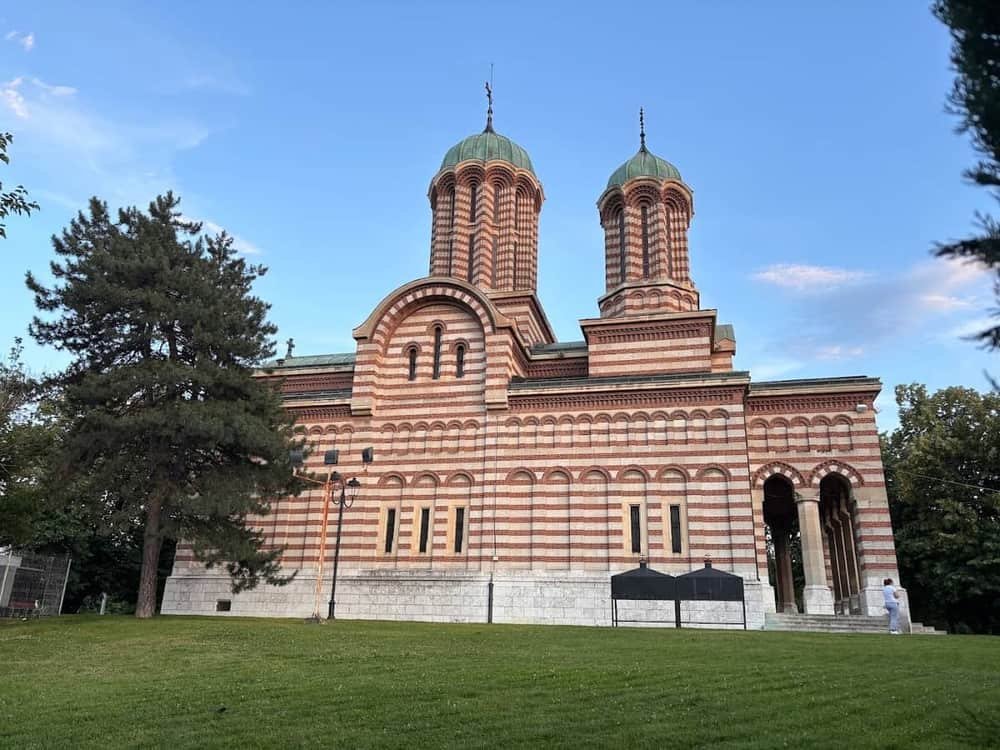
The Metropolitan Cathedral of Saint Demetrius — the main one, and the one to see if you see one.
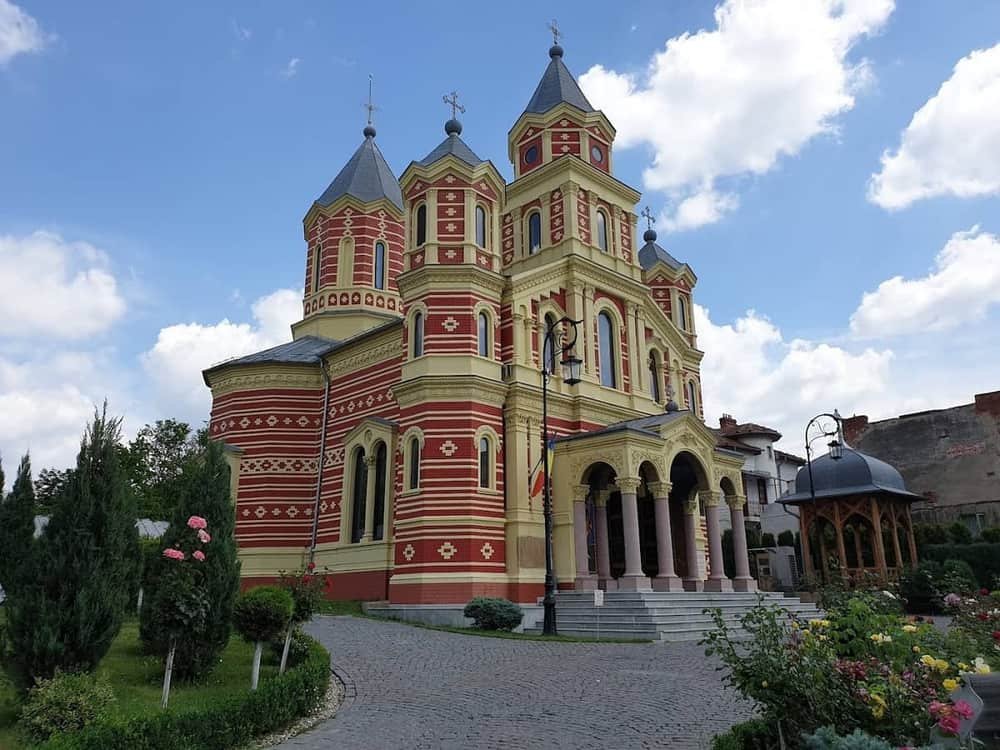
Biserica Mântuleasa, Saint Elijah, the Church of Our Lady, Saint George the New, and the Metropolitan Palace.
They are all on or near the Calea Unirii walk, which makes them a half-hour's addition rather than a separate expedition. And on a Monday, when the museums close, they are part of what is still open.
How to visit a working monastery
All of these are functioning religious communities rather than monuments, and the etiquette is simple but it is enforced rather than suggested:
Dress modestly — covered shoulders and knees, for everyone. This is checked at Hurezi.
The liturgical schedule comes first. If you arrive during a service you wait quietly, or you look at the exterior and the setting. You are a guest in a place of work.
Photography — ask, and assume no inside the church unless told otherwise.
On the hours: not reliably published anywhere in Oltenia. Hurezi's own web presence has carried a placeholder e-mail address for years, which tells you how much weight to put on the rest of the page, and the aggregators contradict each other. The practical answer is that a working Romanian monastery is open in the morning as a matter of practice — go then, or telephone. The prices page explains why this site refuses to print unsourced hours at all.
Fitting them into a trip
Pick a side of the region per day. This is the one hard rule. Hurezi is north-east; Tismana is north-west, 20 km past Târgu Jiu. They are roughly two hours apart on opposite sides of Craiova, and attempting both in a day means six hours of driving and no time at either. Two days in Craiova sets out the geometry.
Hurezi pairs with the Horezu potters and the cave at Peștera Muierilor, all on the same road — three UNESCO-grade things in one direction, which is more than the rest of Oltenia manages put together.
Tismana pairs with the Brâncuși ensemble at Târgu Jiu, which is on the way and is the best thing in the region.
Coșuna and Jitianu are both within twenty minutes of the city and fit into any day without displacing anything.
When: April, May, September and October. The Tismana gorge and its waterfall have water in them in spring and much less in a dry August; the stone courtyards are better at 18 °C than at the 30.0 °C Craiova averages in July. And winter is a fog risk in these valleys rather than a cold one — Craiova in winter.
Feast days draw large crowds and are the opposite of a quiet visit — and also the authentic version of the place, so which you want is a real choice. Dates are published locally and late; what's on lists only what has a source, and these generally do not.
How Oltenia compares
Romania's best-known religious architecture is elsewhere: the painted churches of southern Bucovina are a separate UNESCO listing and are more spectacular as painting.
Oltenia's case is architectural rather than pictorial. Hurezi is the most significant Brâncovenesc building in existence and the one that named a style; Tismana is three centuries older than anything in the city and sits in a better place than almost any monastery in the country.
And both are quiet. Hurezi holds a 4.8 from under three thousand reviews, and on an ordinary October weekday morning the courtyard can be largely yours. For UNESCO sites two hours from a city, that is unusual — and it is the honest reason to come here rather than north.










